NEWS June 3, 2026
Innovative Headquarters Reimagines Half-Timbering in Biogenic Materials
When the Novo Nordisk Foundation’s new headquarters is completed in 2027, it will feature a reimagining of the traditional half-timbered structure, with a load-bearing system of timber columns and CLT floor decks. The 13,000-square-meter building in Hellerup demonstrates how biogenic materials can be used in large-scale office construction without compromising safety, functionality, or architectural quality.
The Novo Nordisk Foundation Headquarters will be one of the first large-scale office buildings in Denmark constructed without a concrete core. Timber is the primary material, defining both the spatial experience and the architectural expression. We have designed a terraced building with horizontal facade lines that step down toward a biodiverse landscape on the former Tuborg industrial site in Hellerup.
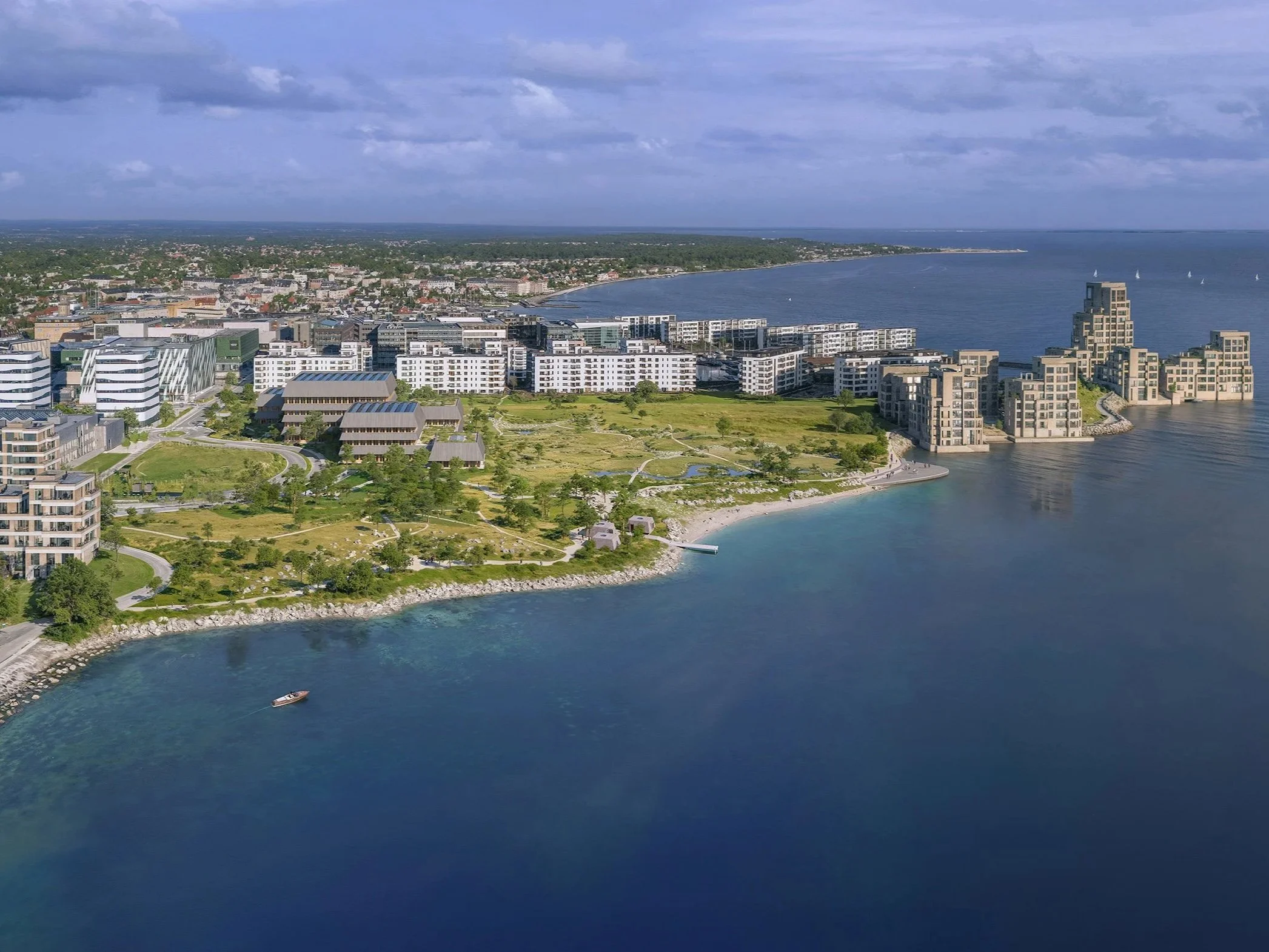

The building’s proportions arise from both the movement of the landscape and the tectonic potential of timber, which has been a defining design parameter from the first sketch. Rather than simply replacing concrete with wood, the structure and architecture have been developed from timber’s own spans, joints, and load-bearing capacity, giving the building a form specifically rooted in its site.
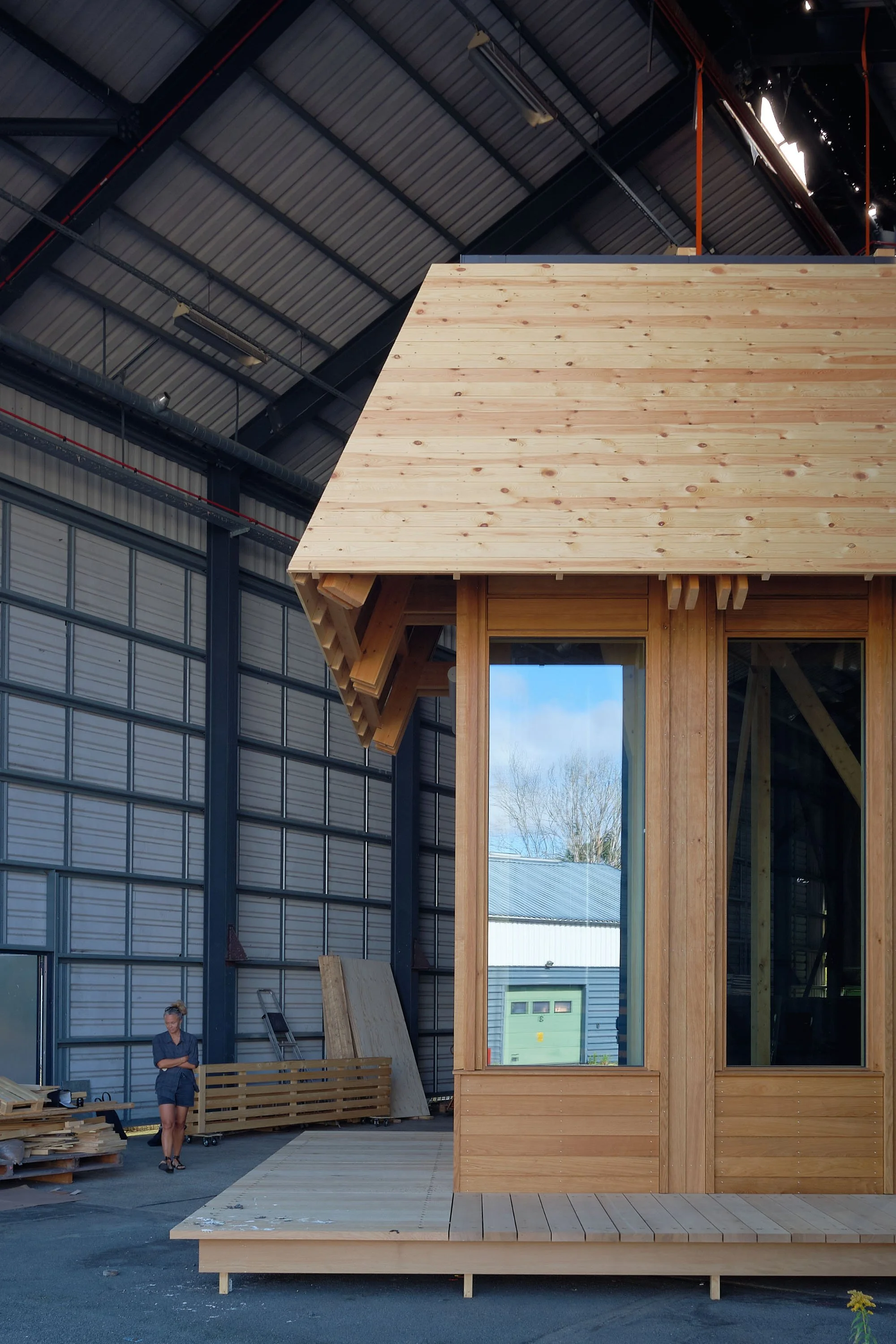
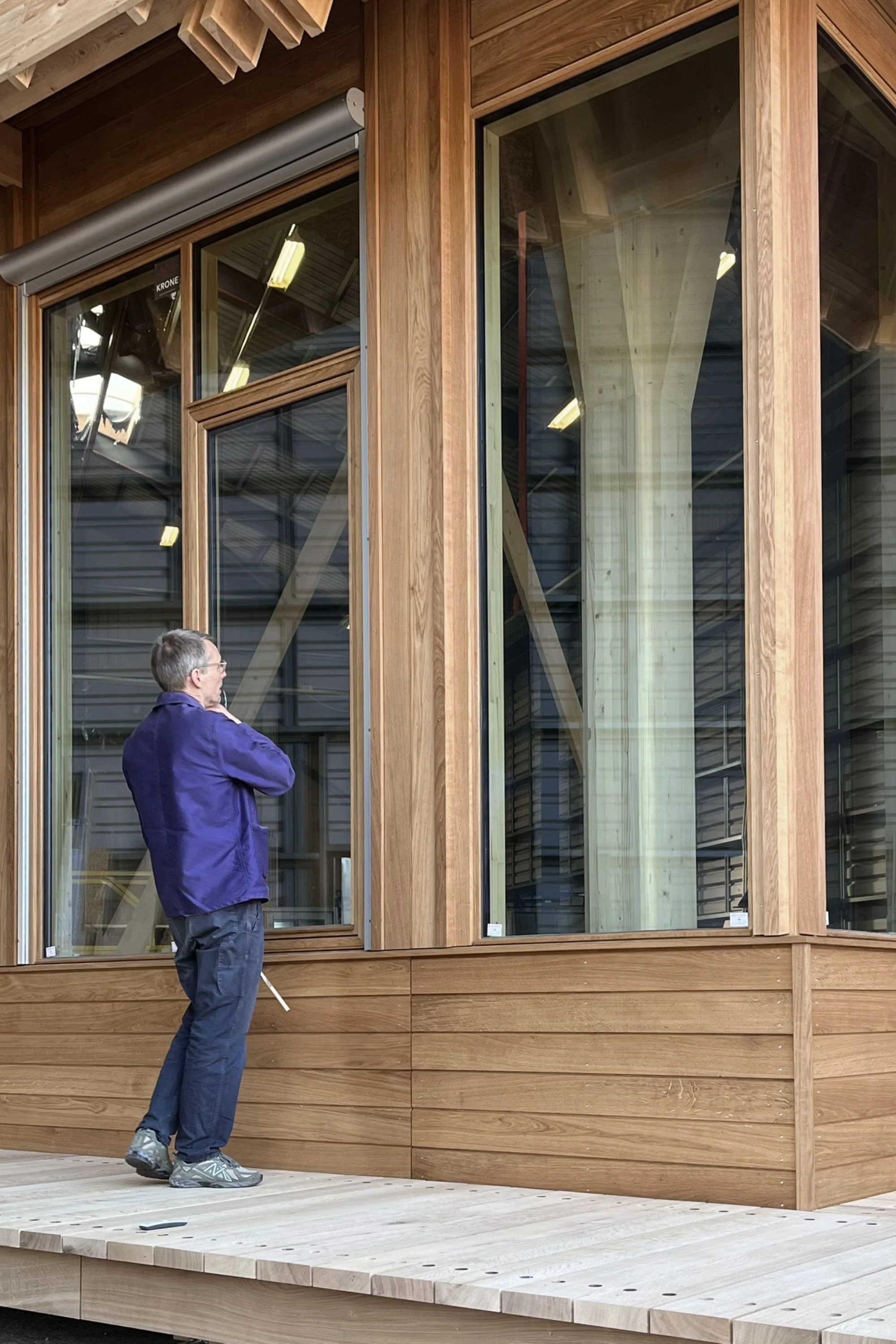
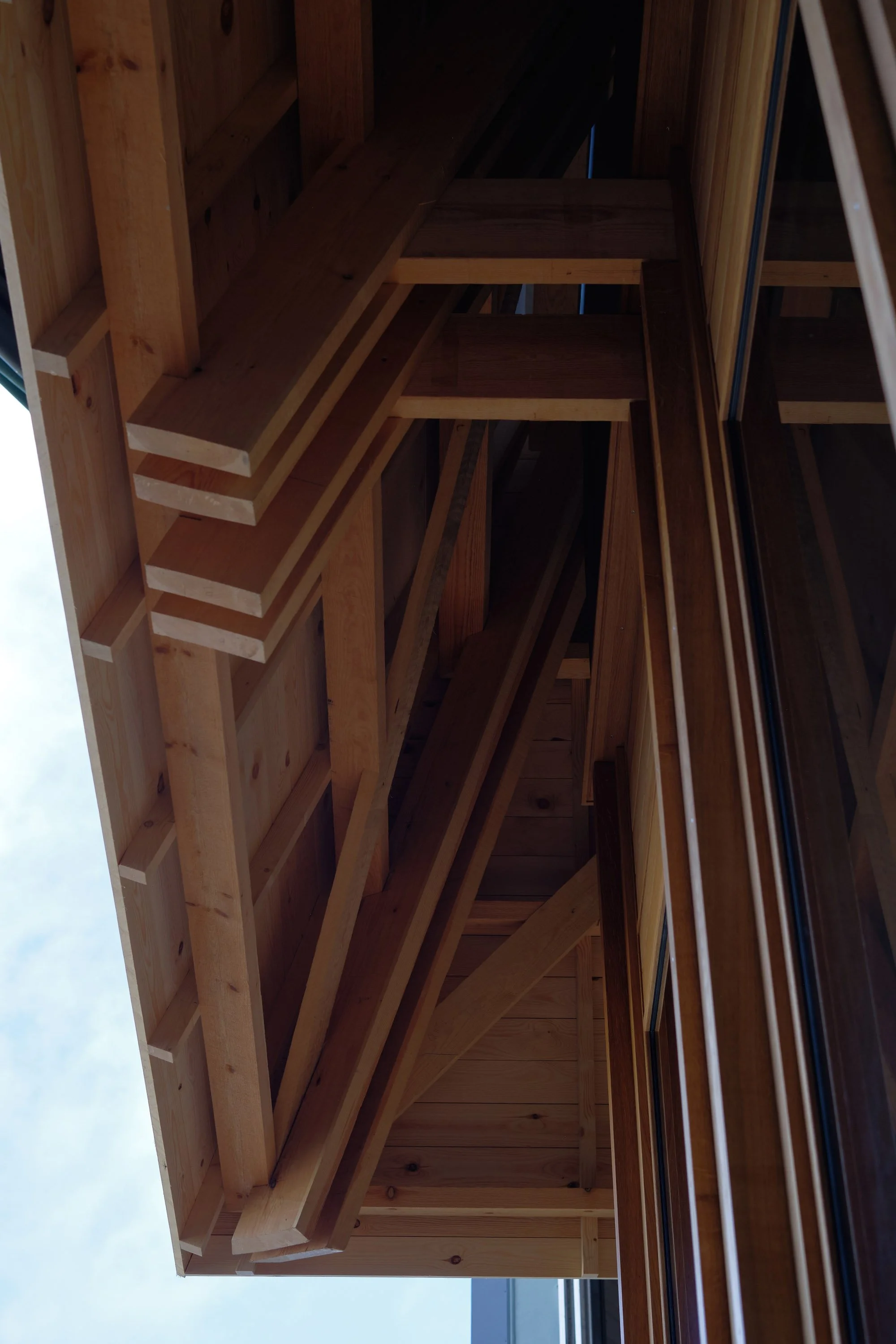
The roof overhangs on each floor protect the timber facades from the weather, act as active solar shading, and help shape the building’s architectural presence in the landscape. The building and landscape are conceived as one architectural whole, creating a harmonious transition from the Øresund to the city of Hellerup. The office building is constructed across three floors, with floor-to-floor heights ranging from 4.5 to 5.6 meters.
“The headquarters is a pioneering project—in its approach to materials, design for disassembly, and the integration of building and landscape. Everyone involved has made a tremendous effort, and we can now point to a genuine alternative to conventional headquarters built with large quantities of gypsum and concrete. Extensive fire testing at DBI has shown that clay and biogenic materials such as timber can be used in complex office buildings with high requirements for fire safety, acoustics, and durability. We hope this new knowledge can become part of a shared knowledge base for fire testing and benefit future construction projects.”
Kåre Rønne
Project Manager Architecture, Lundgaard & Tranberg Architects
The project introduces new ways of thinking about structure, materials, and flexibility as an integrated architectural strategy.
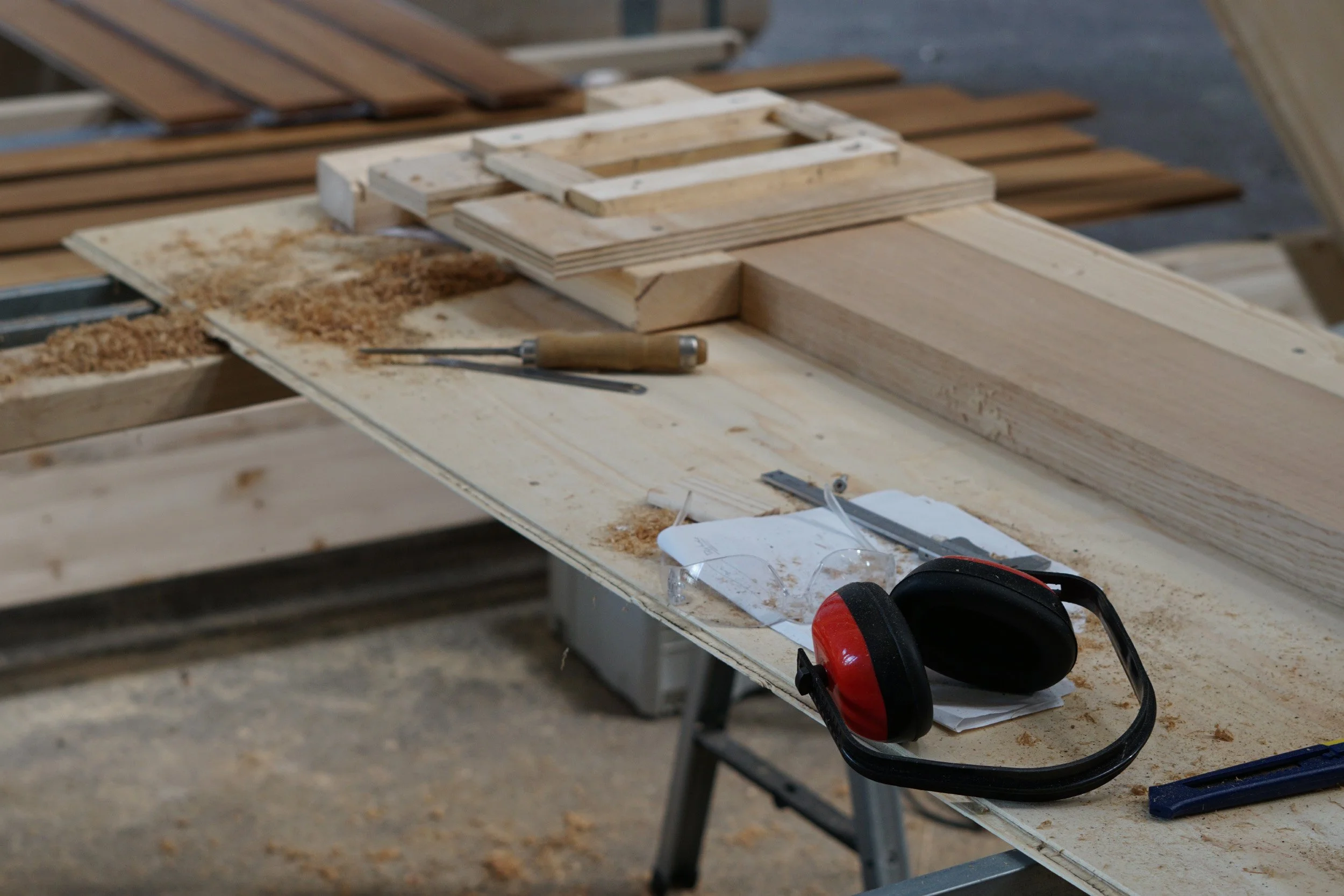
Fire Testing of Large-Scale Half-Timbering in Clay and Timber
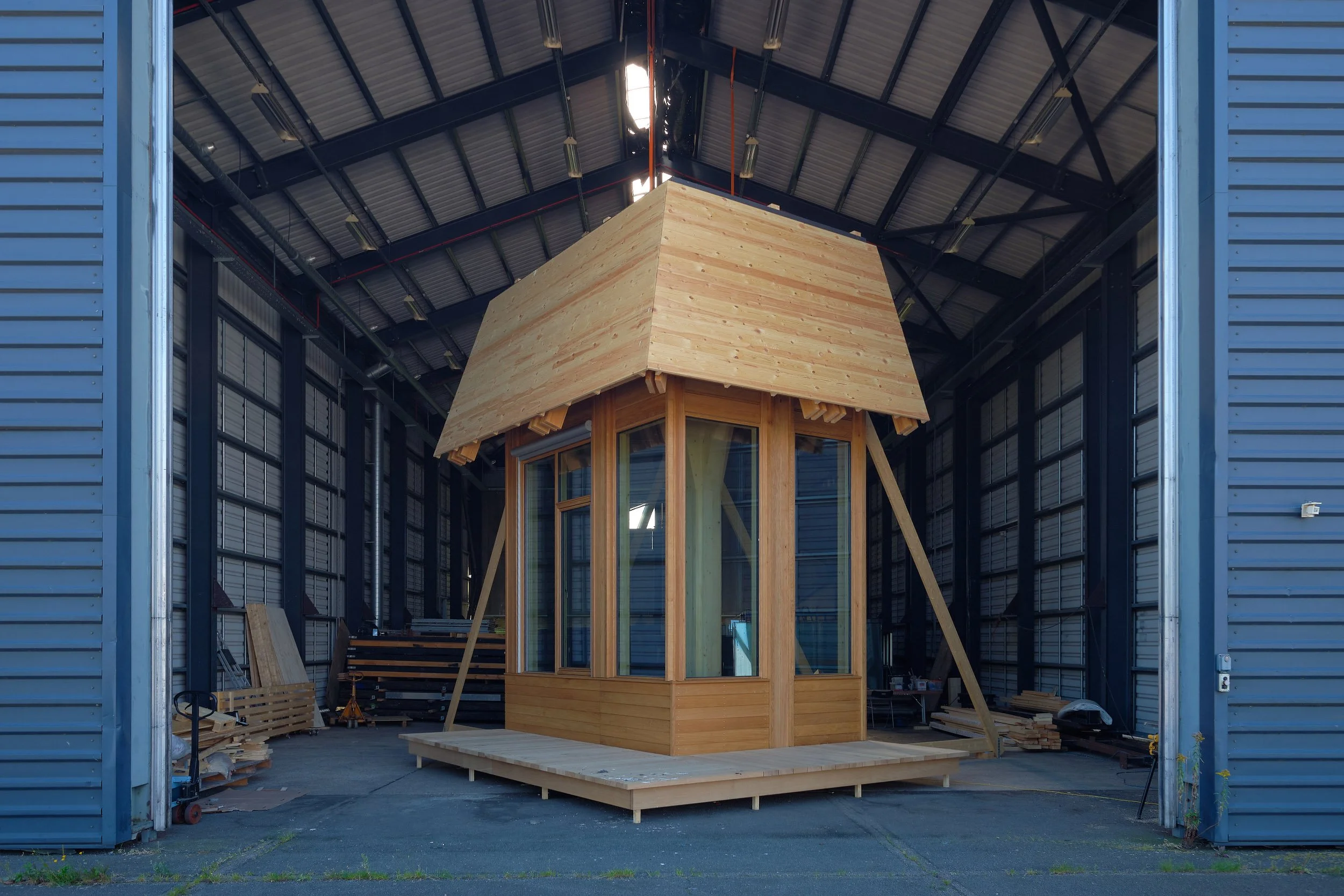
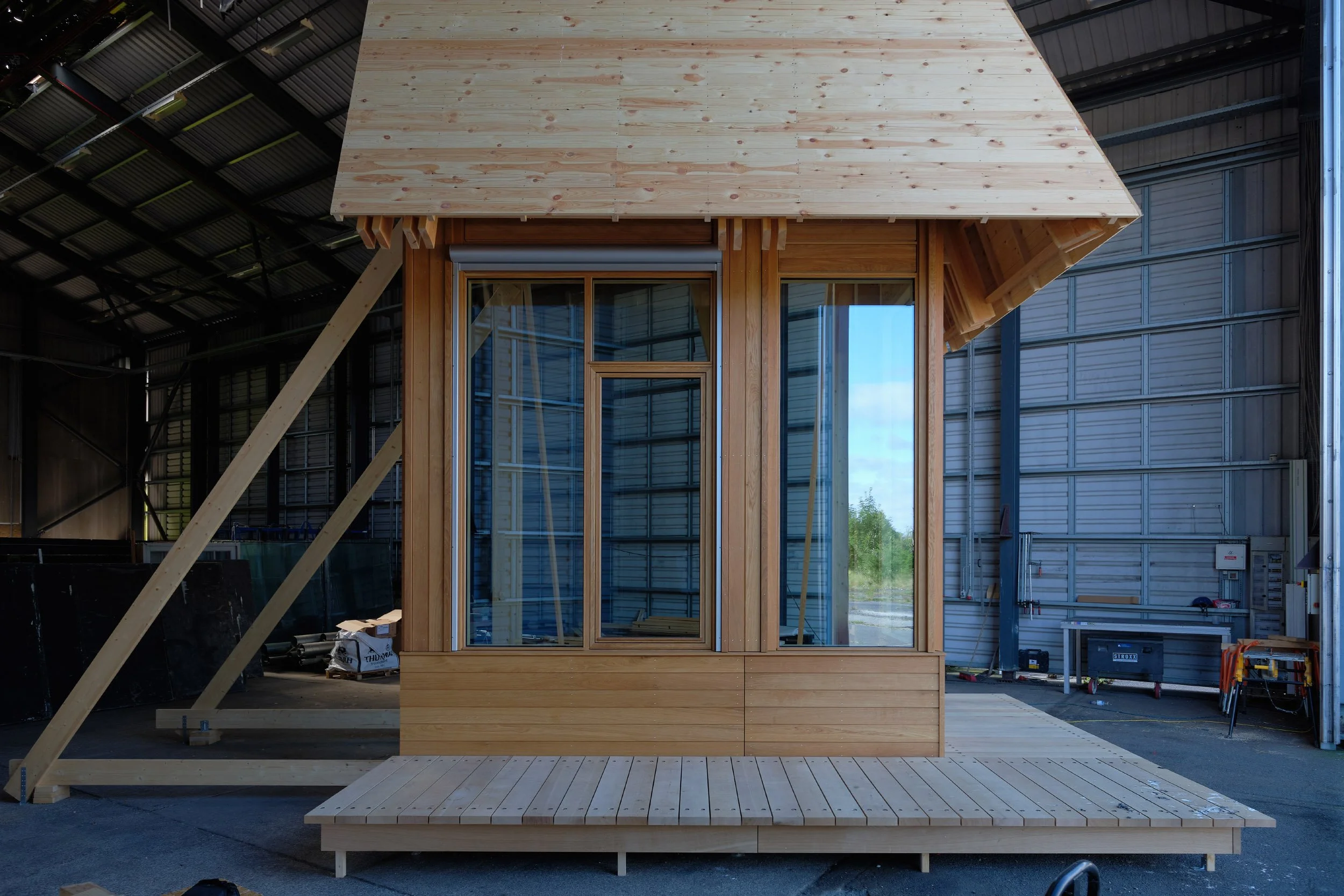
A central innovation in the project is the wall construction. The fire-separating walls, including the stair cores, are built according to a long-established half-timbering principle, here scaled up in glulam and infilled with clay boards and mineral wool. The construction was developed in collaboration with Schmidt Brandrådgivning and tested in fire trials at DBI, the Danish Institute of Fire and Security Technology.
The wall assembly of clay boards and glulam demonstrates a high fire resistance of 90 minutes, classified as EI90, and shows that the system is highly robust.
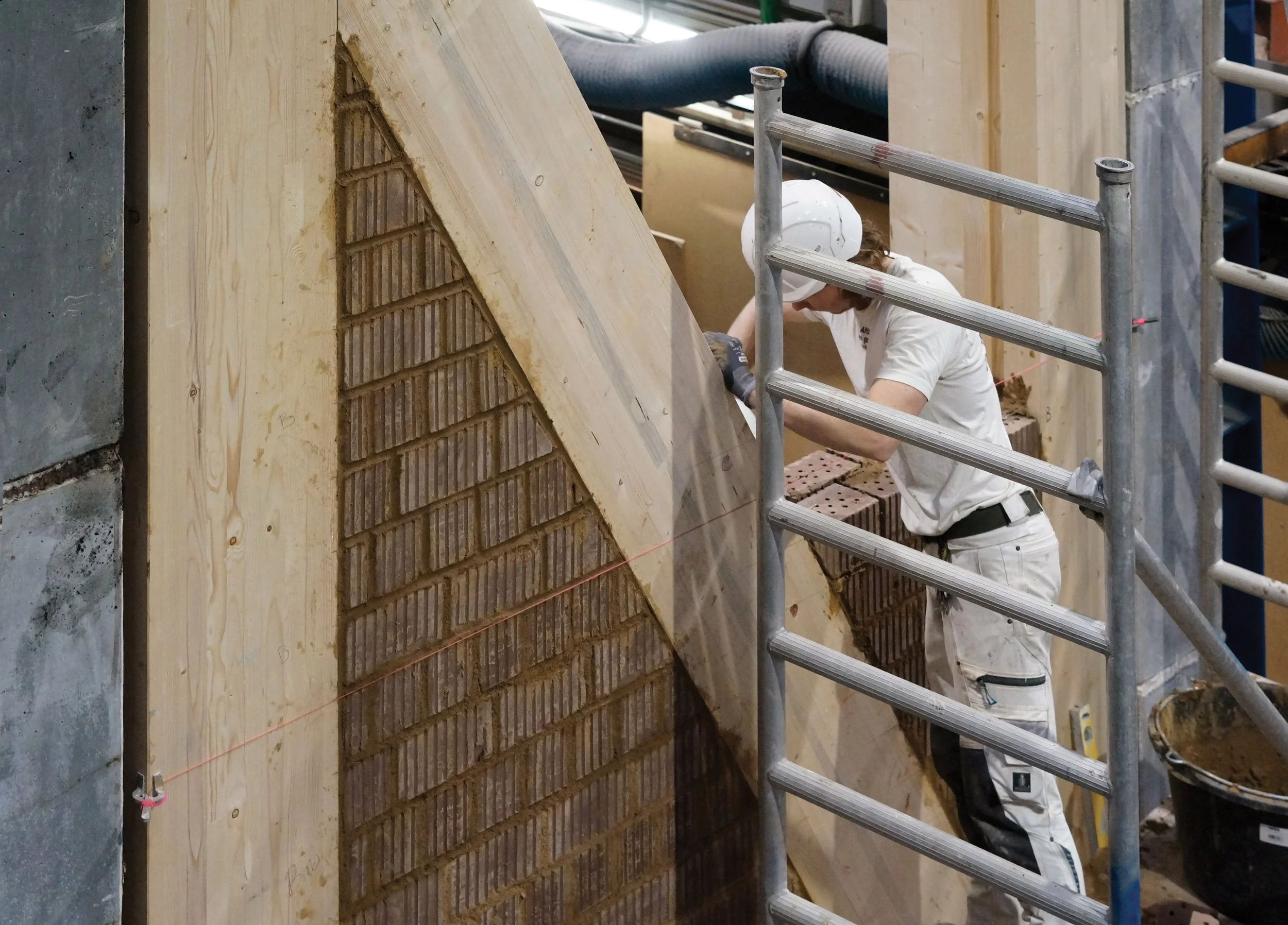
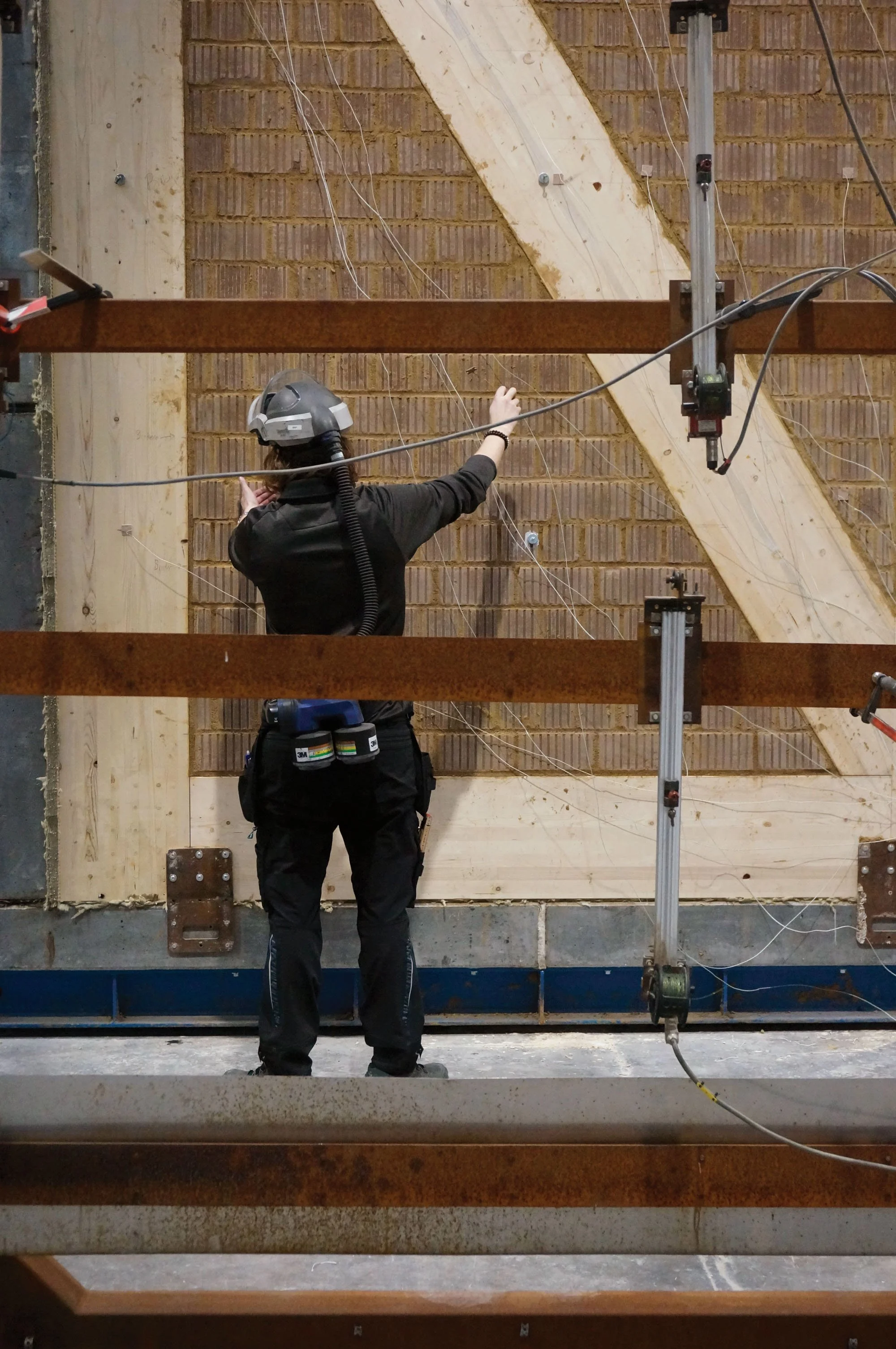
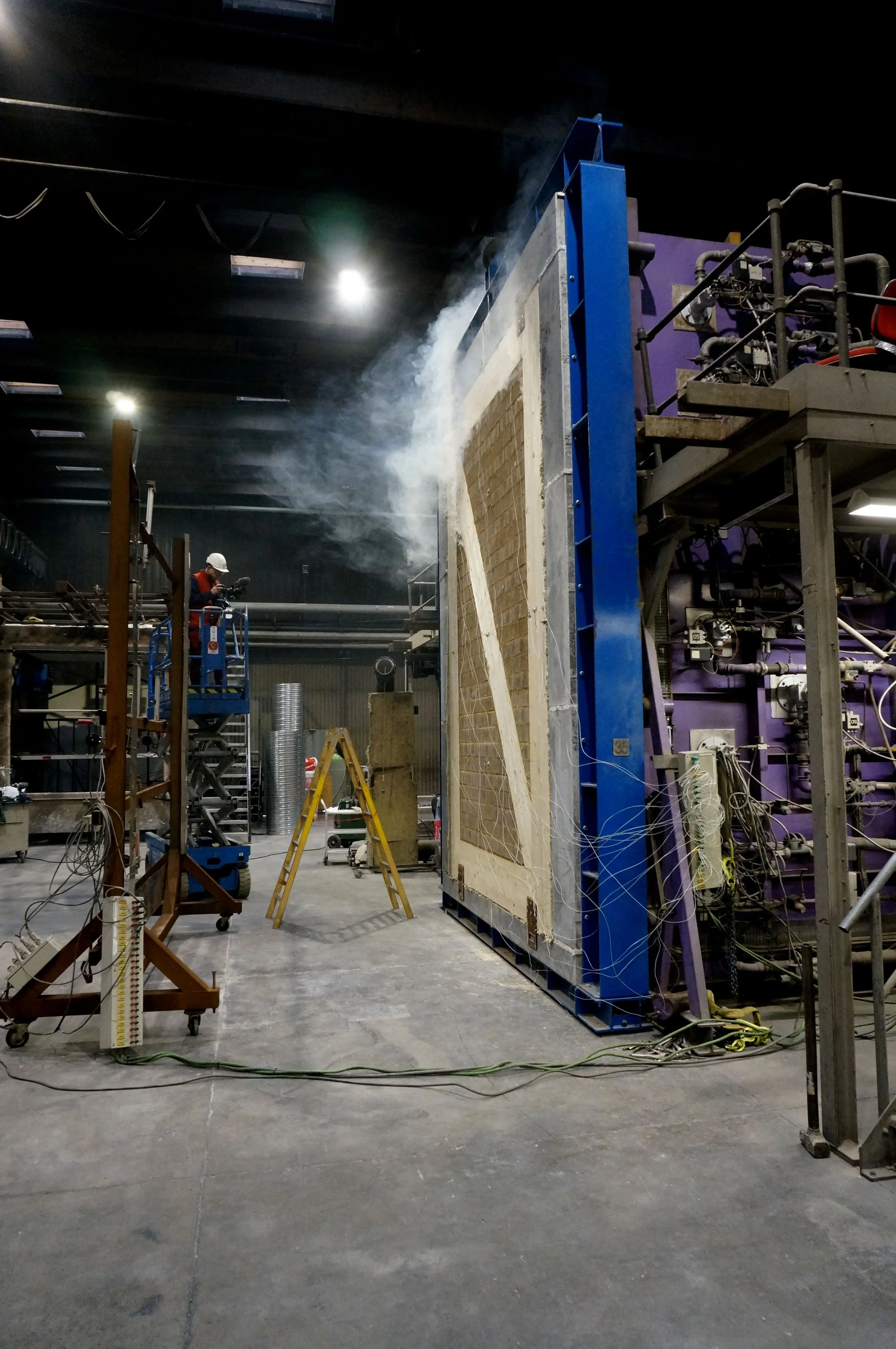
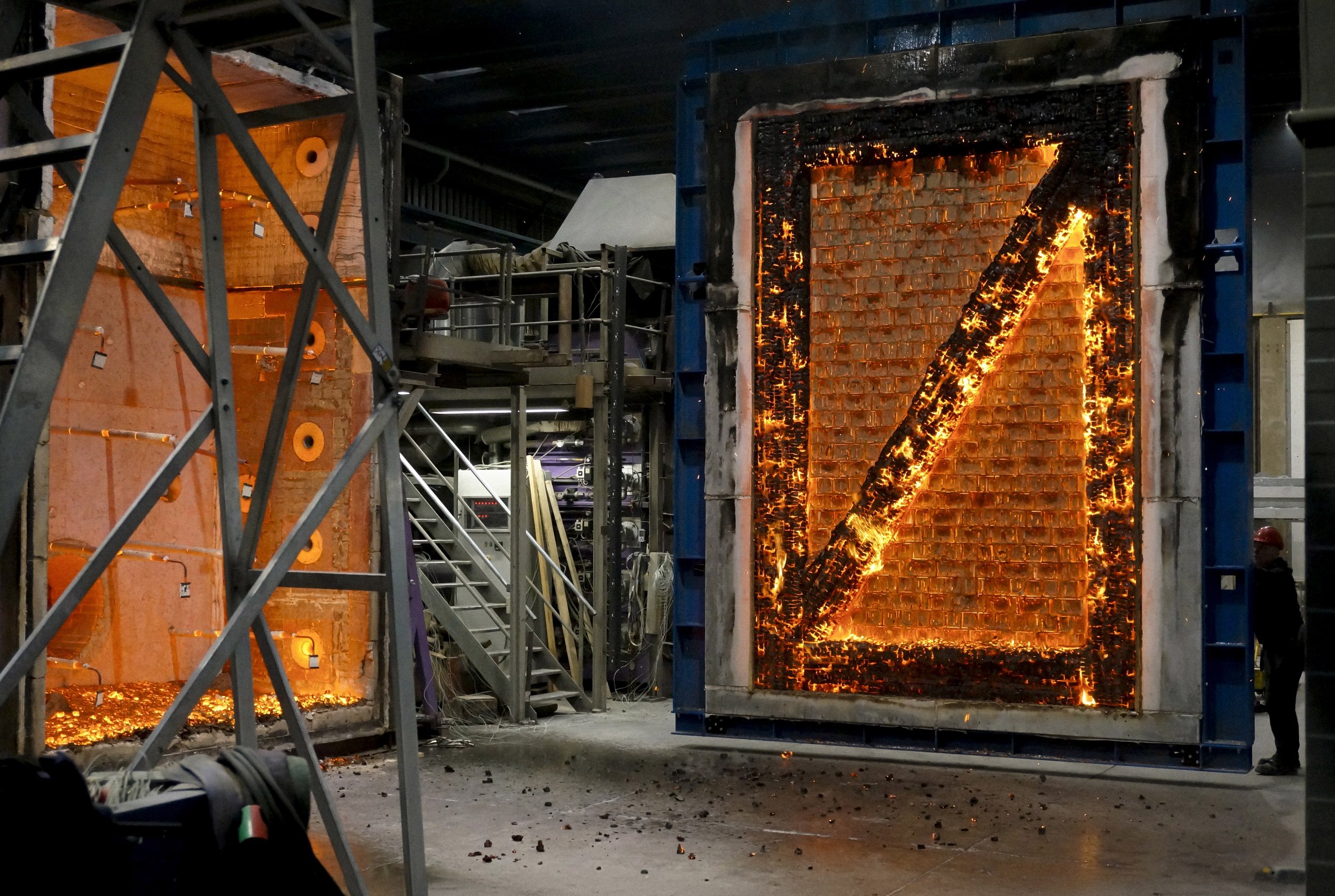
The fire tests document that the biogenic core walls achieve a fire resistance of EI90, equivalent to 90 minutes. This exceeds the typical requirements for multi-story buildings, where fire resistance is often EI60.
Timber as the Load-Bearing System
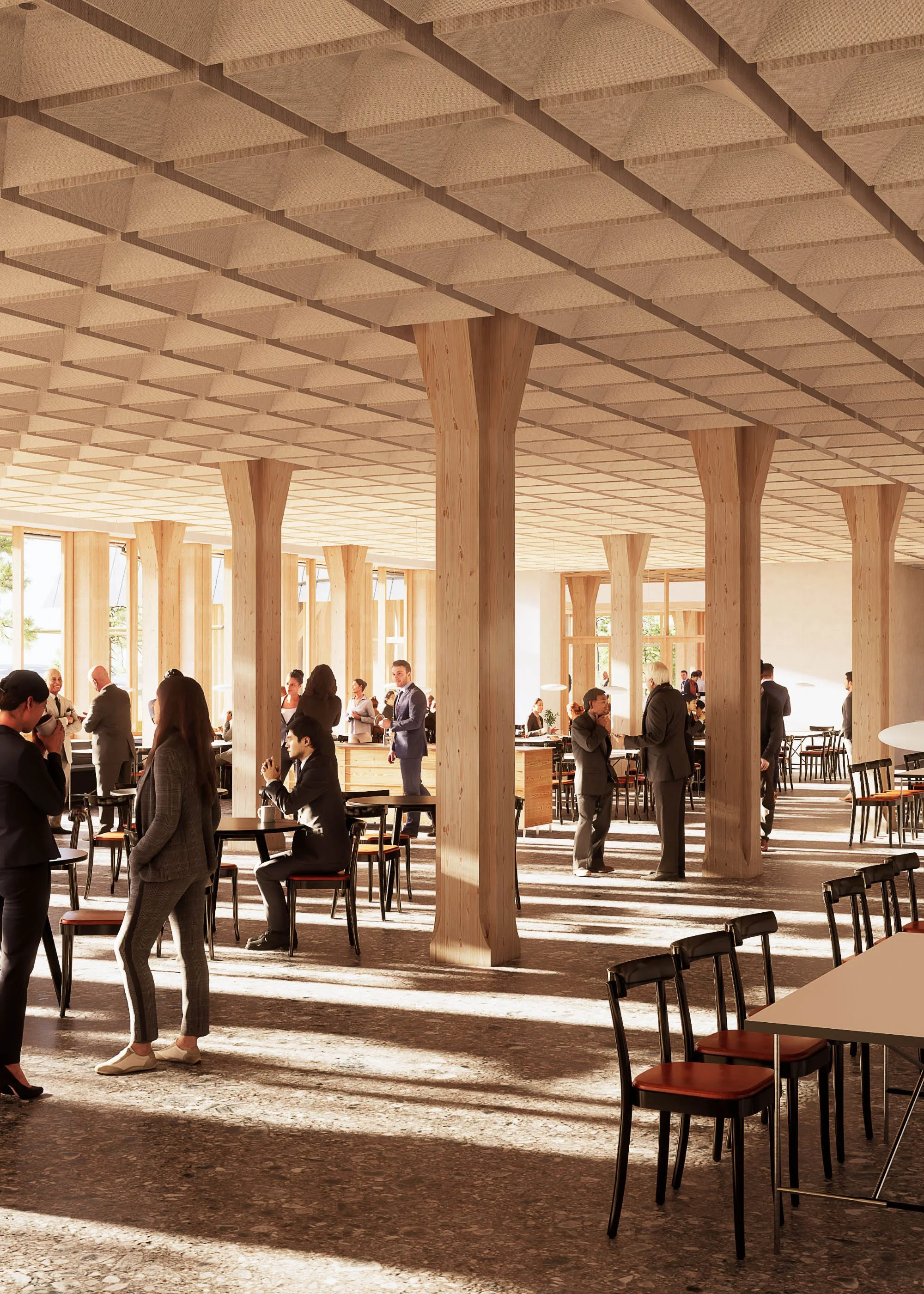
The building’s load-bearing structure consists of timber columns and CLT floor decks, spanning directly from column to column without secondary beams. Timber reduces carbon emissions and stores carbon throughout the building’s lifetime. The structural principle is simple, making optimal use of the floor decks’ load-bearing capacity while providing a high degree of flexibility.
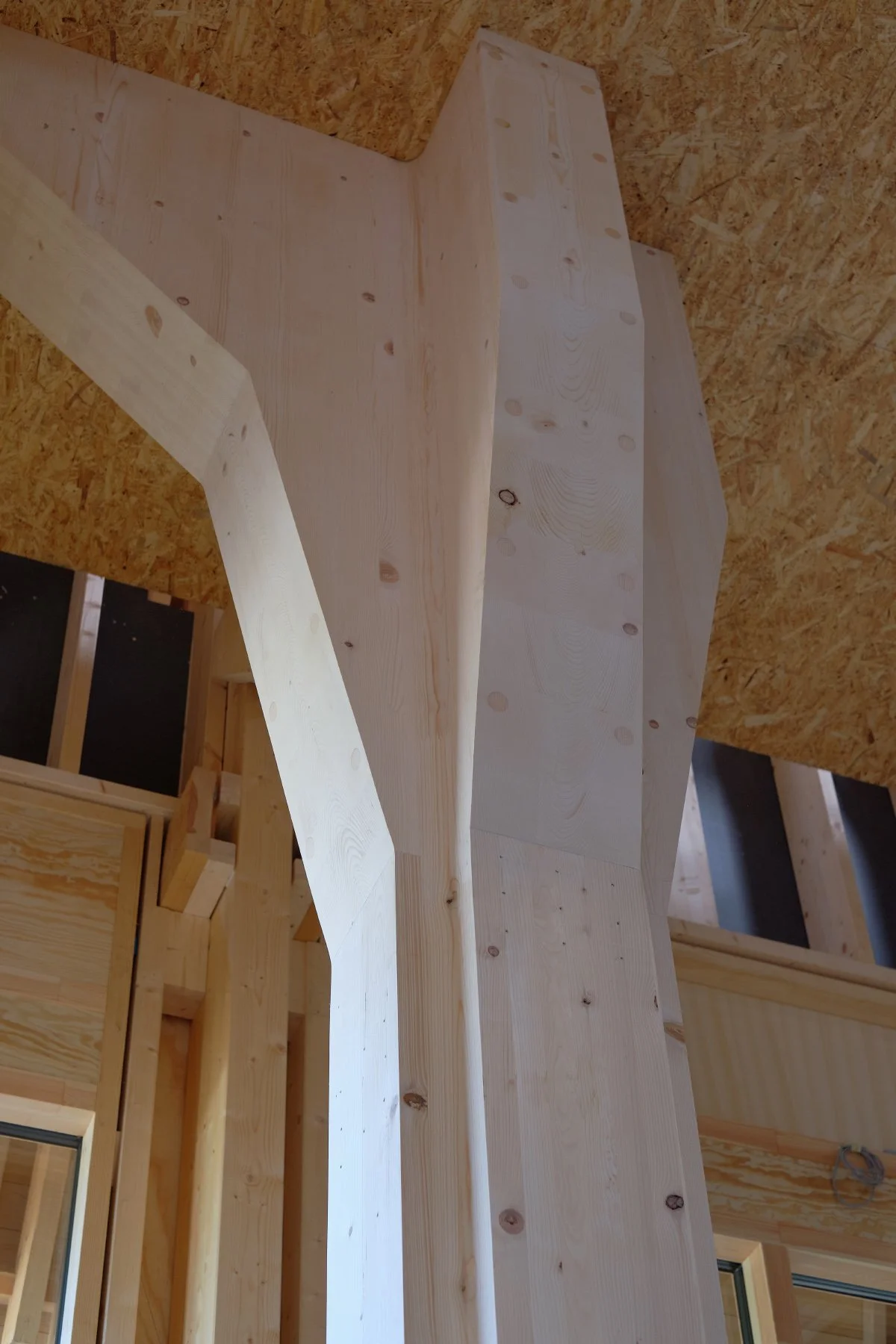
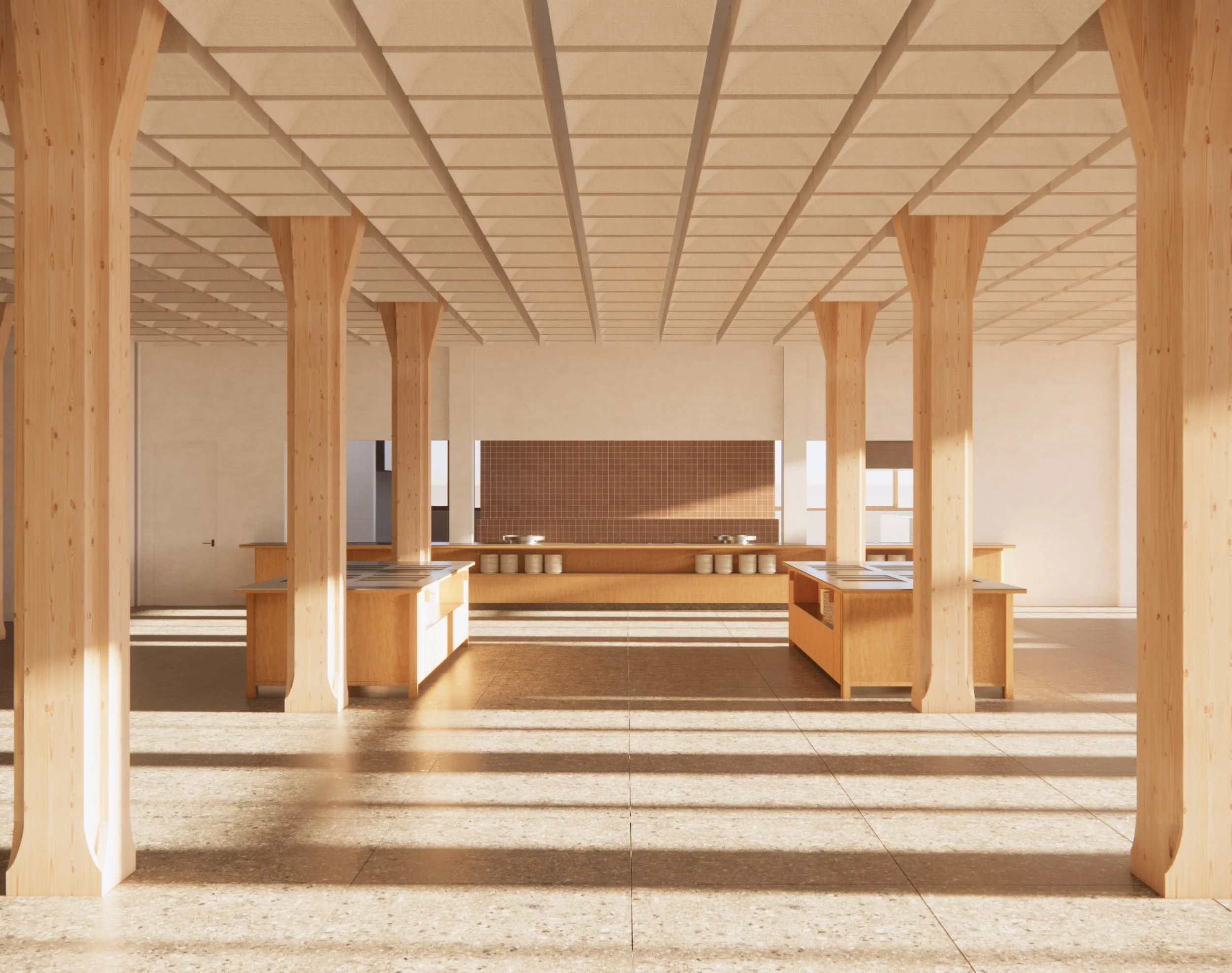
The “forest of columns” is arranged on a 4.8-meter grid, allowing considerable freedom in the floor plan and enabling ongoing adaptation. The columns and capitals are shaped with precise edge details, giving the structure a refined and character-defining expression.
The structure has been optimized to minimize material use, and custom-designed timber-based connections between columns and floor decks have been developed to replace conventional steel brackets.
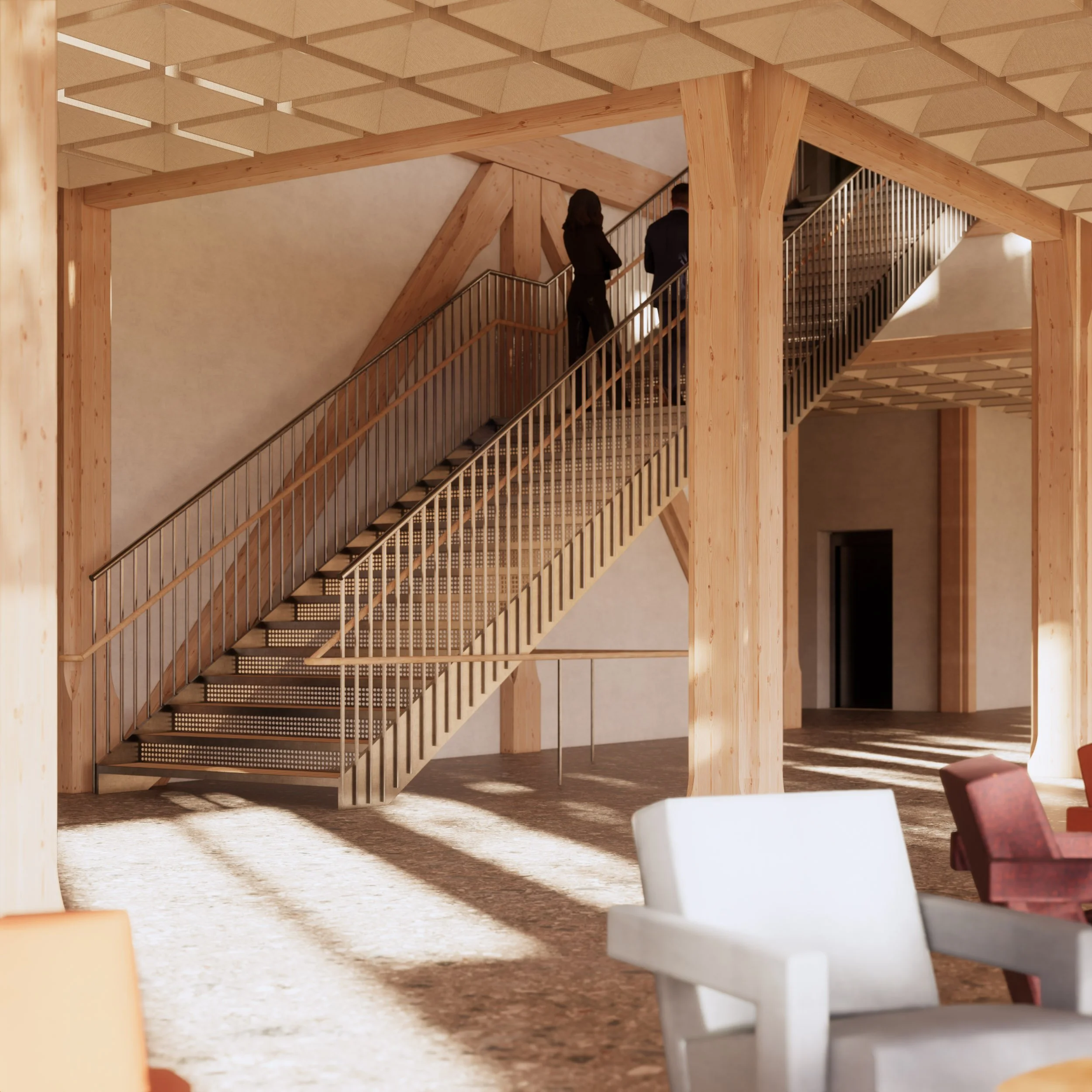
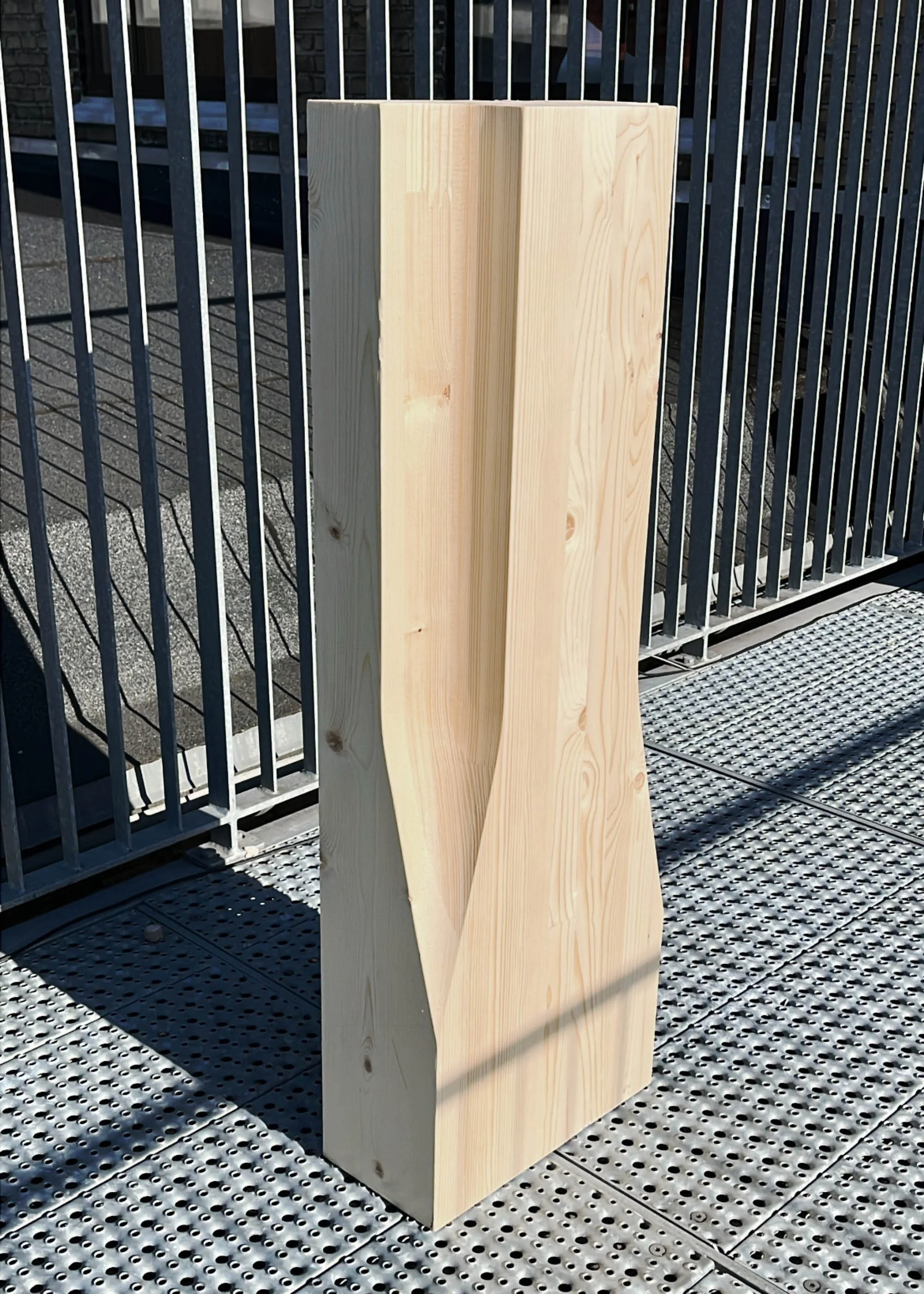
The CLT floor decks, which account for the majority of the timber used, are produced from softwood sourced from Södra, a cooperative based on small-scale forestry in southern Sweden. The columns come from Mayr-Melnhof Holz in Austria.
A Mushroom Slab System in Timber
The structure is inspired by the classic mushroom slab, known from concrete construction, where the slab is supported directly by columns with capitals. Here, the system has been translated into timber, reducing the need for steel brackets while making the structural principle both distinctive and clearly legible.
The absence of beams also means that technical installations can run freely beneath the floor decks, reducing the need for fire encasement. The result is a structure that is rational, flexible, and future-ready.
At the same time, the exposed timber structure is an important identity-forming element in a tactile environment, where CNC-machined details convey a high level of craftsmanship.
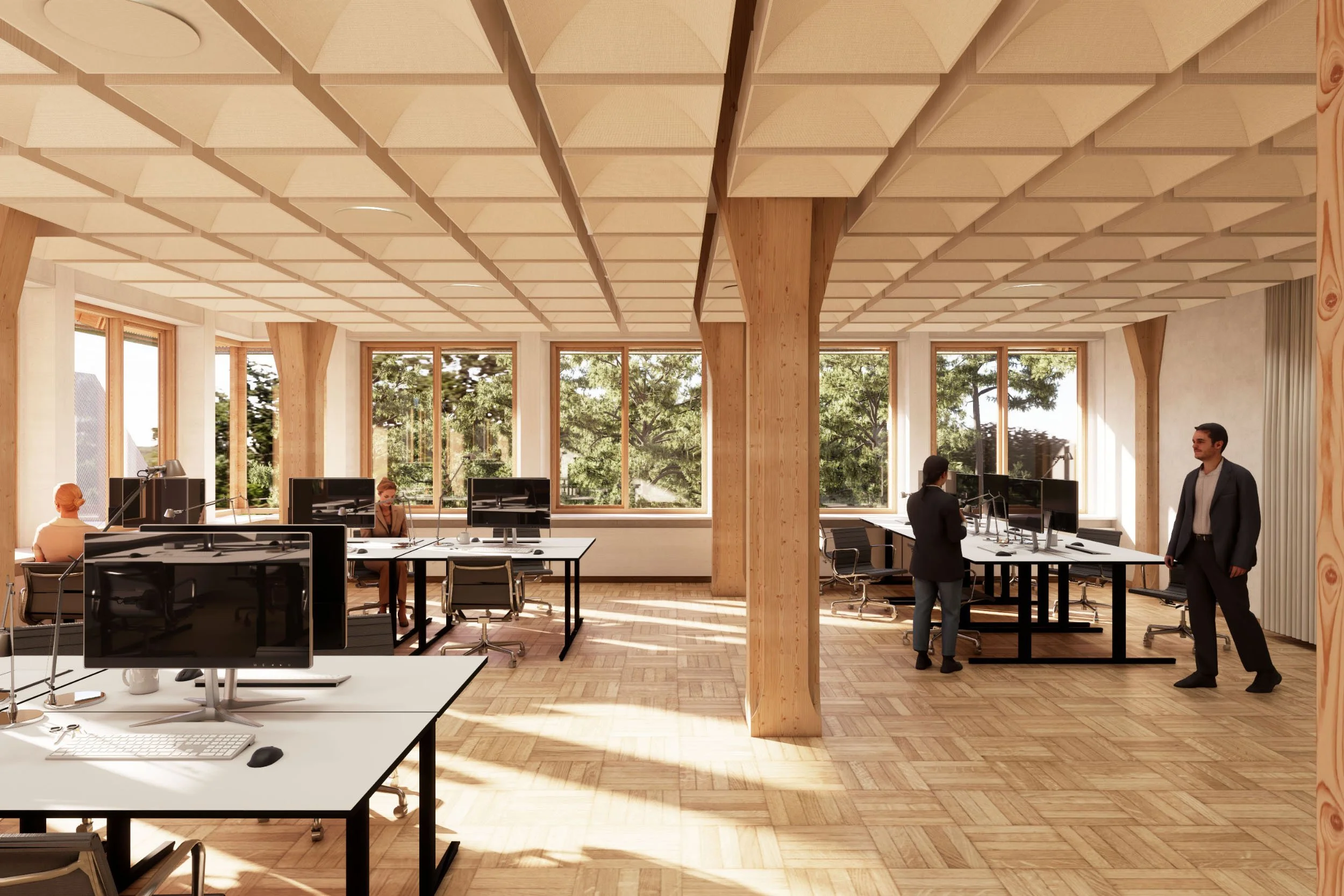
The newly developed ceiling system from Kvadrat Soft Cells integrates lighting, ventilation, and technical installations into acoustic ceiling cassettes clad in textile. The system makes it easy to modify room layouts while also contributing to a healthy indoor climate.
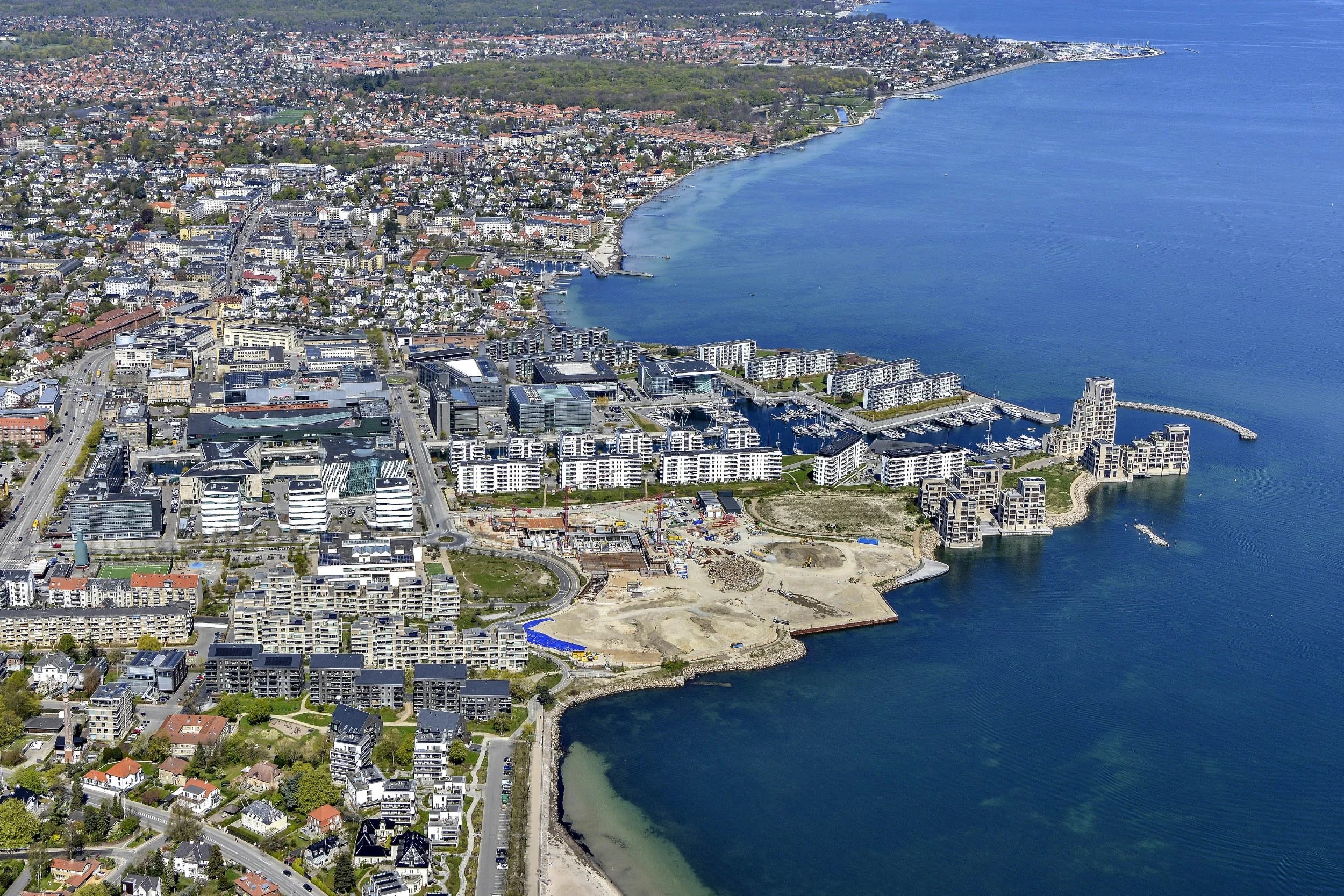
Building site, May 2026. The new headquarters is completed in 2027.