NEWS December 4, 2025
Recreated Skønvirke Frieze Adds New Insight to the Architectural History of the Workers’ Museum in Copenhagen
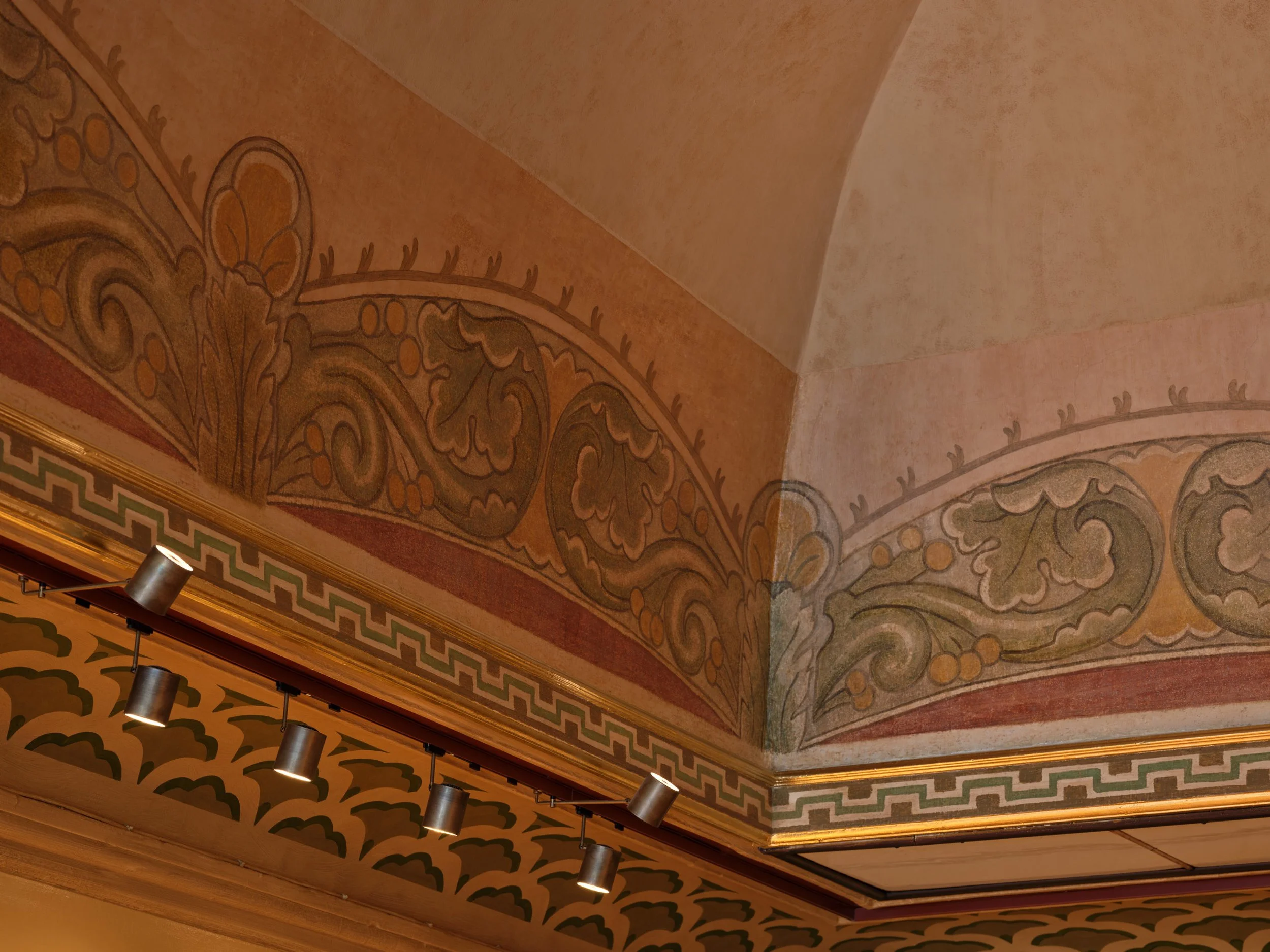
The restoration of the Workers’ Museum’s Great Hall in Copenhagen has revealed a rare and previously hidden Skønvirke (Art Nouveau) frieze in the hall’s vaulted ceiling. Skønvirke is a Danish variant of the Art Nouveau period. The frieze, which had been concealed beneath layers of paint since the 1950s, is one of the few surviving Danish examples of Skønvirke decoration on a monumental scale. It has now been fully restored and tells an important story about the cultural heritage of both craftsmanship and the labor movement.
We have been the museum’s architects since 1985. One of the great pleasures of this long collaboration is continually deepening our understanding of the building’s many historical layers and meanings. During the 2021 restoration of the Great Hall, a number of original decorations were uncovered in and around the space: floral motifs in the Skønvirke style along the walls and former stairways, as well as hand-painted marbled surfaces. The most striking discovery, however, was the frieze in the vaulted ceiling. It is now fully restored. Conservators from the National Museum describe it as “very beautiful and unusual, as there are not many surviving decorations from this period in Denmark.”
Restoration Revealed a New Frieze
The Workers’ Museum building from 1879 has undergone several renovations, the most extensive of which took place in 1913. At that time, a main staircase hall was constructed, the access route to the Great Hall was altered, and the hall itself was expanded. It is believed that the ceiling frieze was created in connection with this renovation. Comparisons between the frieze and the glass ceiling from 1907 show clear stylistic and chromatic parallels: repeated colors, leaf shapes, berries, and especially the distinctive contour-like linework. Everything indicates that the painter drew direct inspiration from the glass ceiling’s ornamentation to create a cohesive decorative scheme for the room.
Punchwork and Precision
The frieze is executed in the Skønvirke style, which characterized Danish applied arts from around 1900 until roughly 1915. The decoration features a base coat in an oil/glue mixture, while the ornamentation itself is painted in oil — in several places as transparent oil glazes. The motif was transferred using pounced dots, created by tracing the design on parchment, perforating it with a pounce wheel, and dusting it with charcoal powder to leave a precise dotted guide for the painter.
Cultural Heritage of International Significance
With its scale, level of detail, and rarity, the newly uncovered frieze enhances our understanding of what is the oldest workers’ assembly building in Europe and the second oldest in the world. The frieze is among the very few surviving Danish examples of monumental Skønvirke decoration — and represents an important new chapter in the architectural history of the Great Hall.
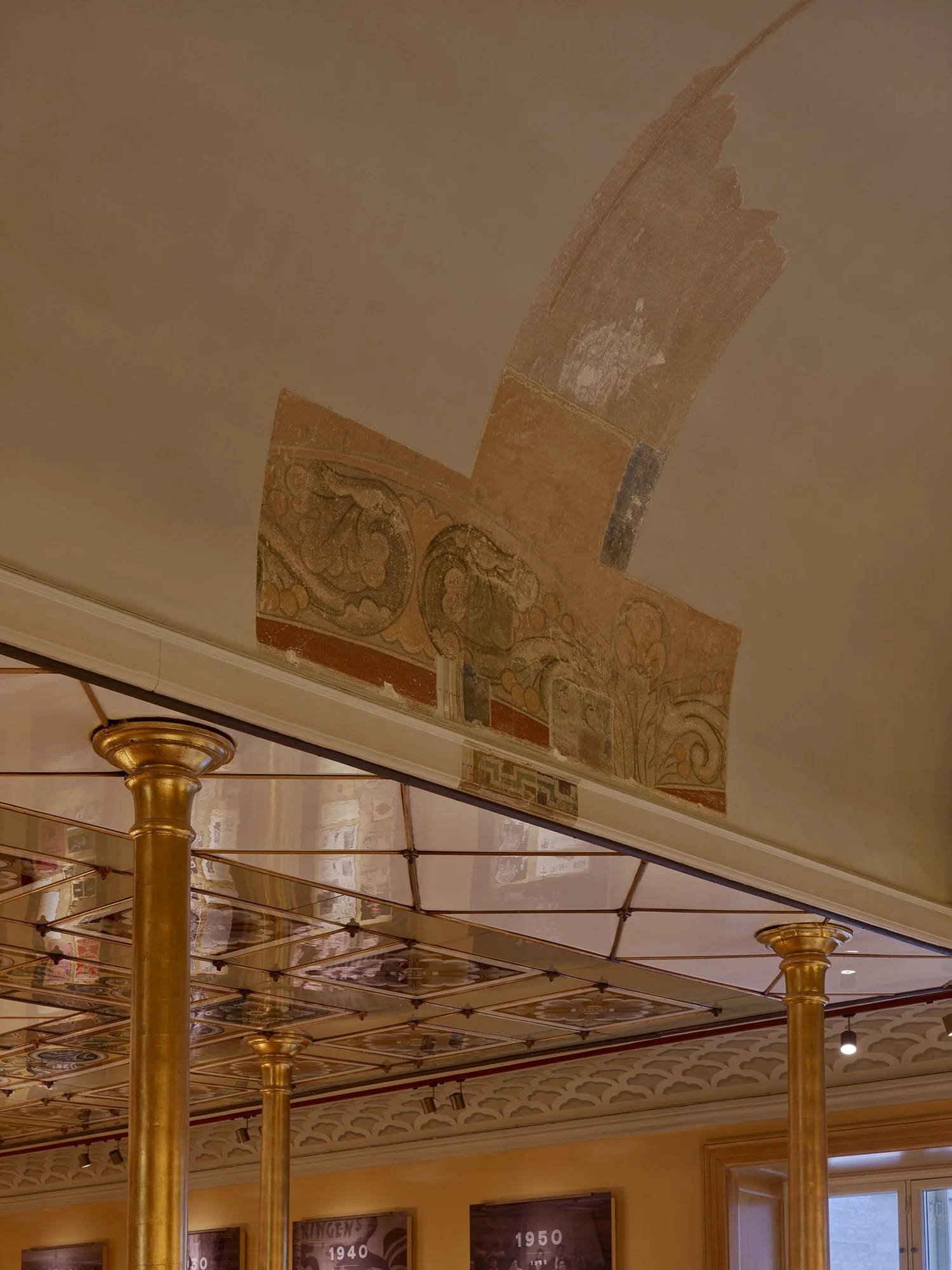
The frieze was discovered during the 2021 restoration.
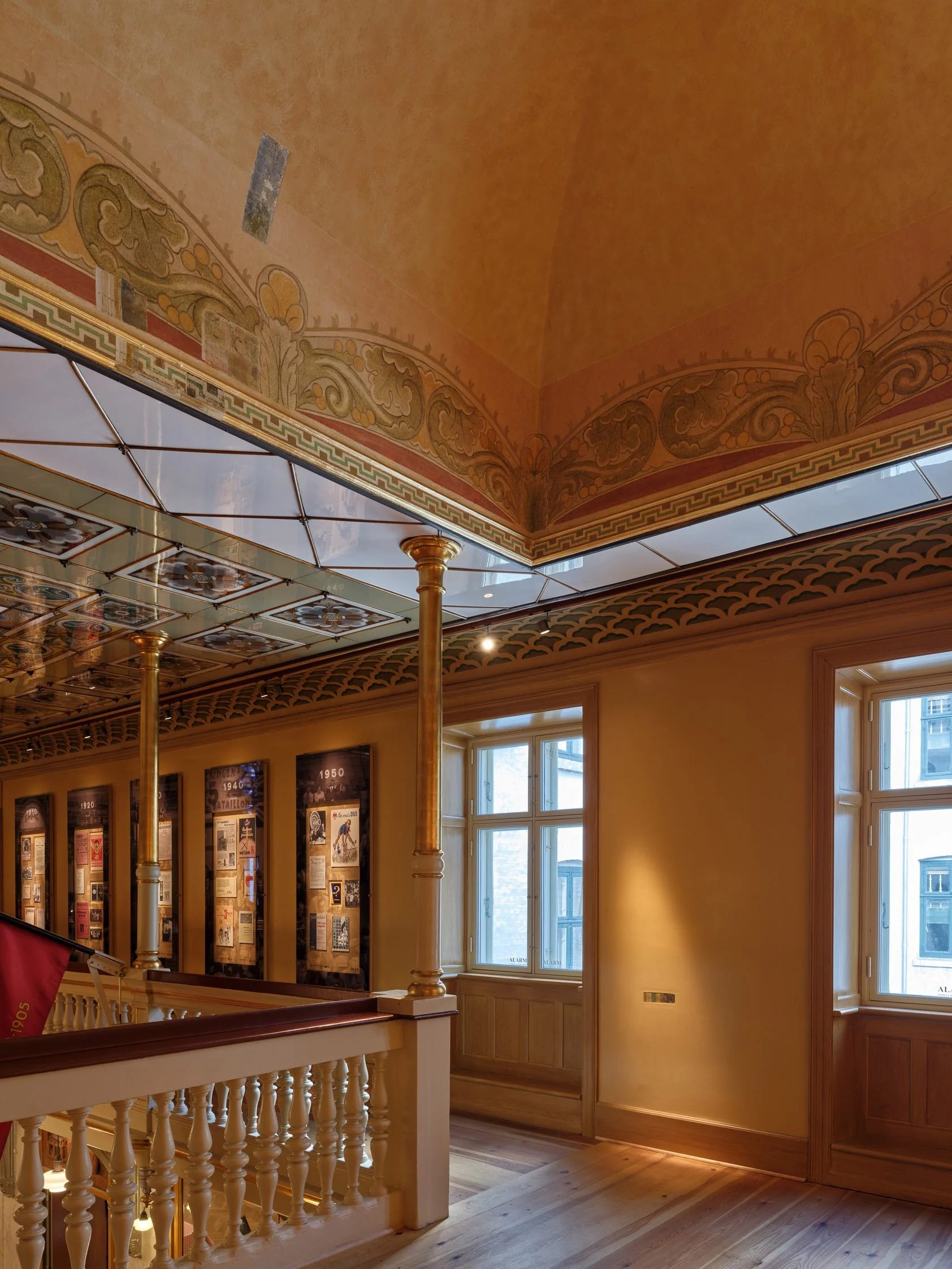
Repetitions of colors, leaf shapes, berries, and a contour-like linework characterize the Skønvirke frieze.
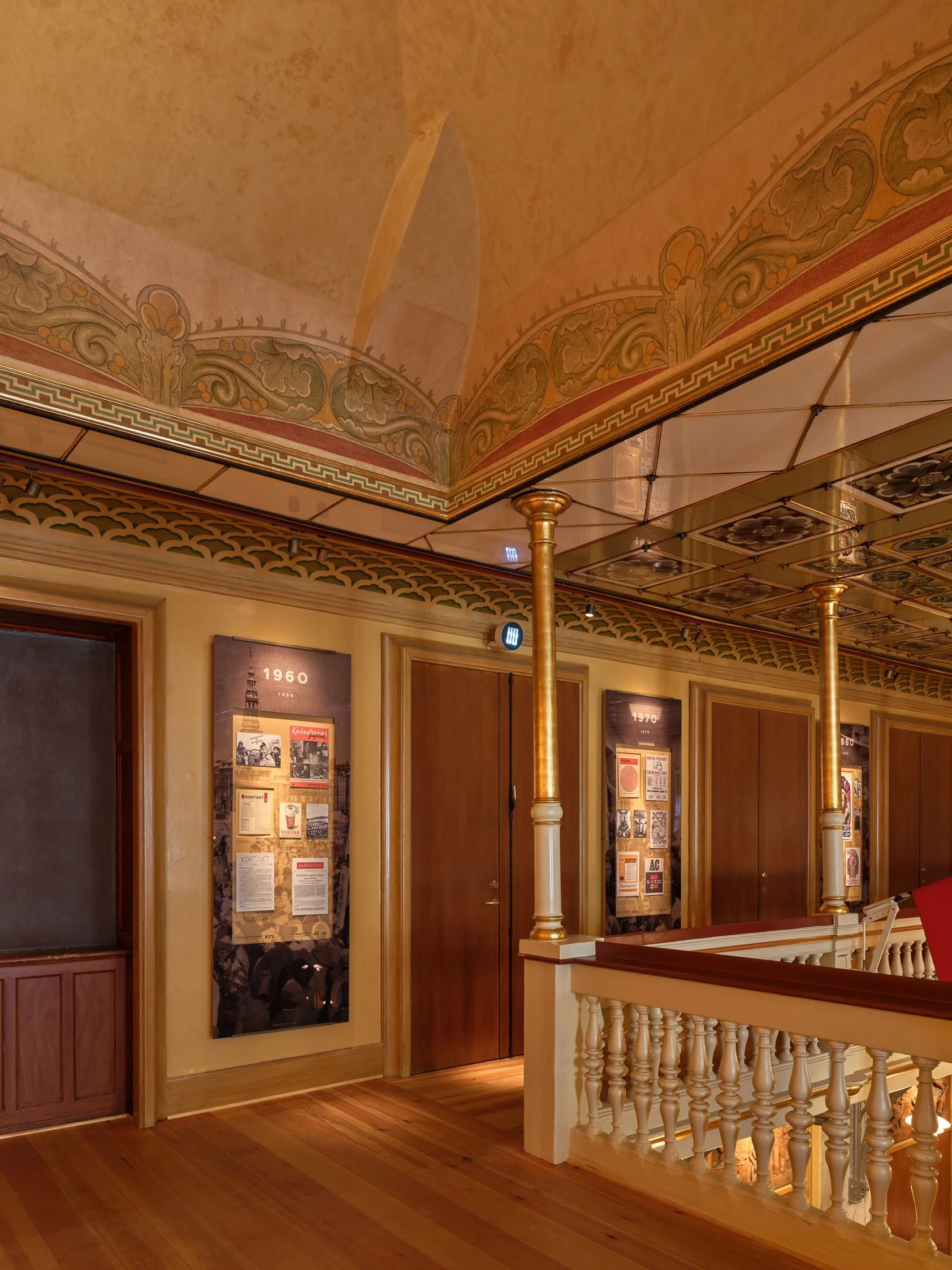
The frieze is one of the few surviving Danish examples of Skønvirke decoration on a monumental scale.
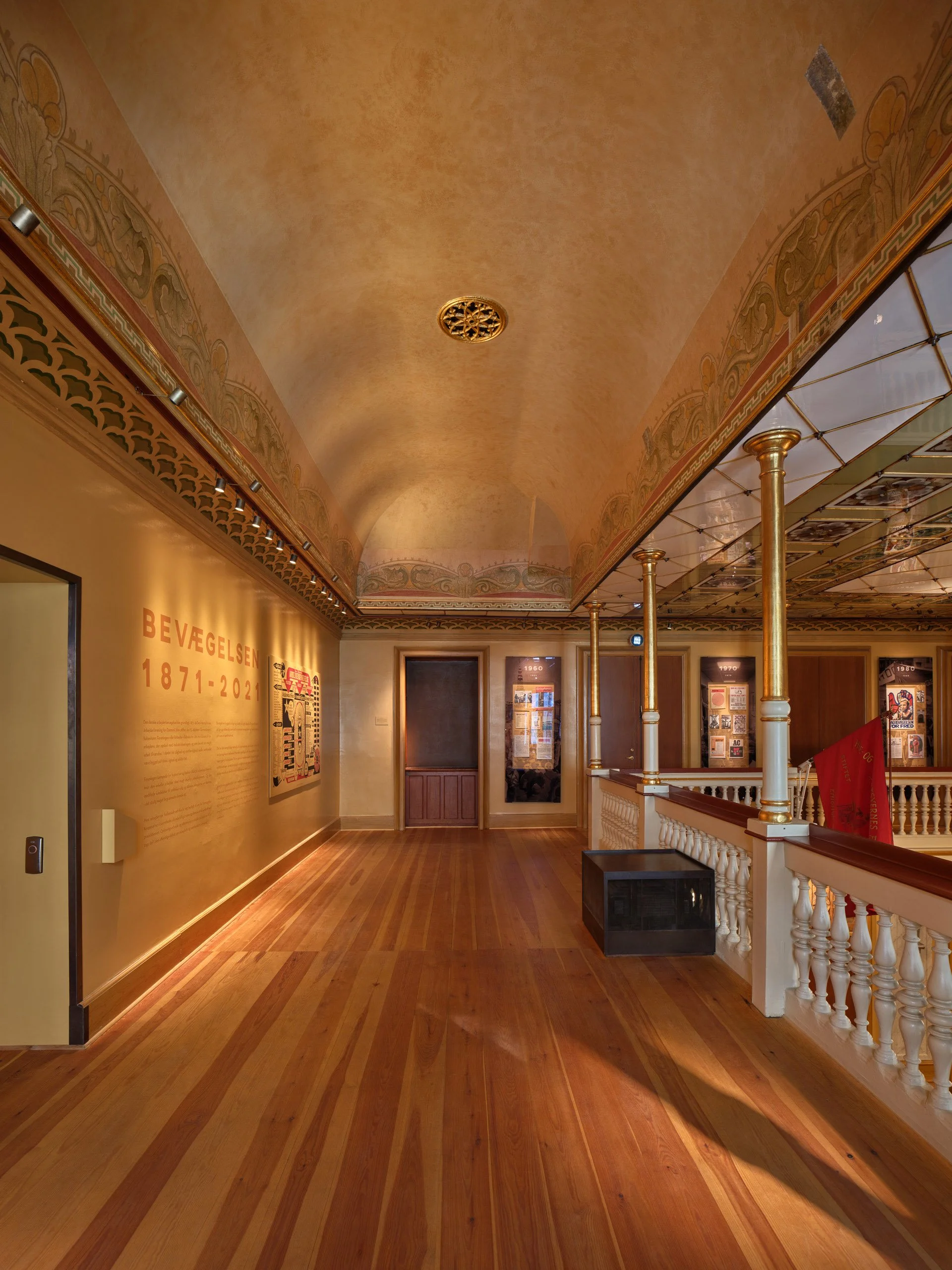
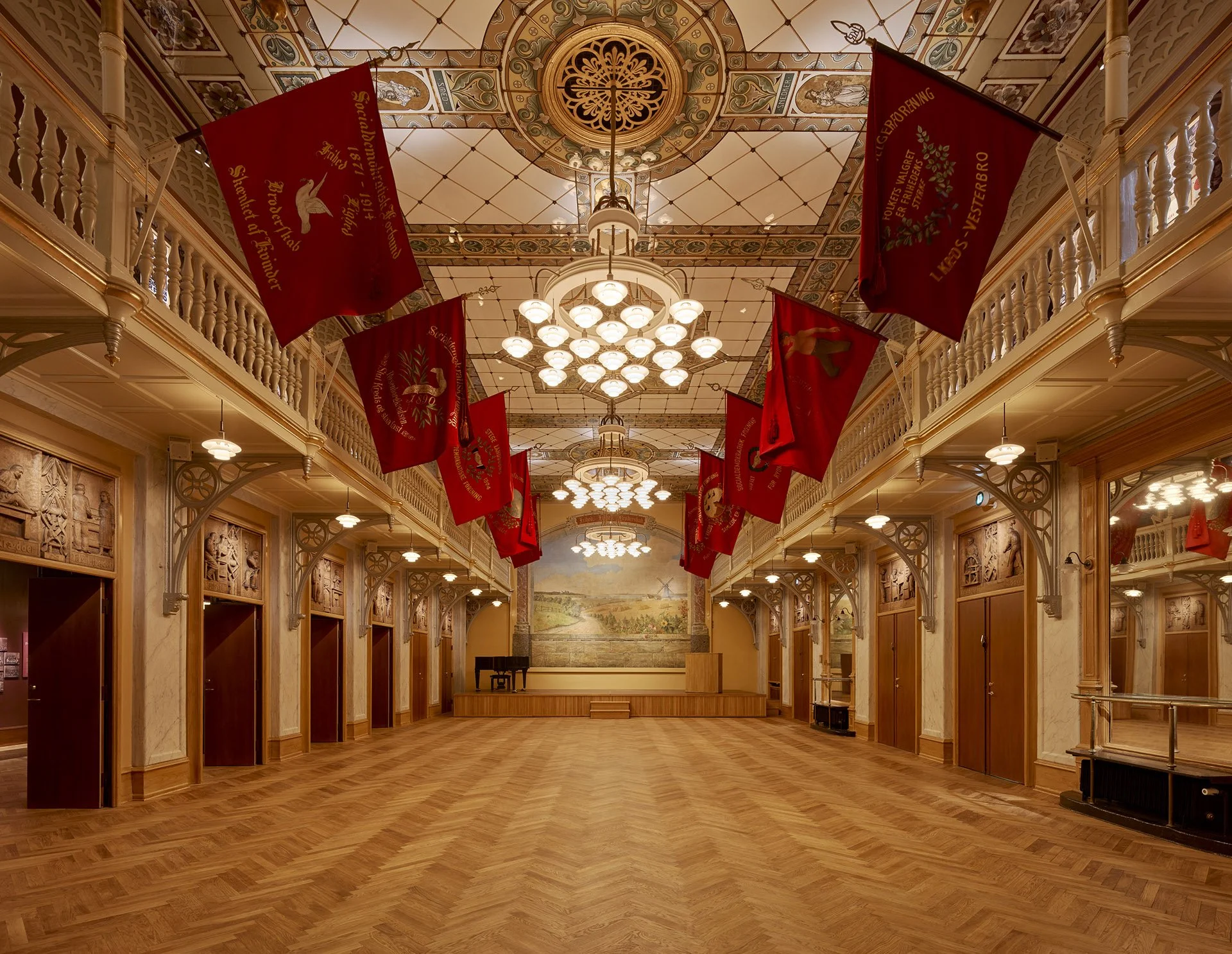
The Workers’ Museum building from 1879 has undergone several renovations, the most extensive of which took place in 1913. At that time, a main staircase hall was constructed, the access route to the Great Hall was altered, and the hall itself was expanded. It is believed that the ceiling frieze was created in connection with this renovation.
