News February 4, 2026
Competition Proposal for Fabrikken Cultural District Hedelund
Many smaller towns in Denmark face the same question: What happens when industry shuts down and the buildings remain? Our proposal for the transformation of Fabrikken takes the existing structures as its point of departure—treating them as resources. How can their identity and materials become part of the city’s future without losing its history?
The property foundation Ejendomsfonden Fabrikken sought to transform the former PN Beslag factory building in central Brønderslev, located in North Jutland, into a vibrant and inclusive cultural center in the Hedelund Cultural District. The competition encompassed approximately 6,600 m² (71,000 sq ft) of existing buildings constructed between 1899 and 2000, of which about 4,800 m² (52,000 sq ft) were to be converted into a cultural school, theater, exhibition spaces, event facilities, and more. The ambition is for Fabrikken to become the city’s primary gathering place—the beating heart where people connect across communities.
The Local as a Resource
Our competition proposal was developed in collaboration with Pihlmann Architects, BOGL, and Søren Jensen Consulting Engineers.
We reuse as much of the existing buildings as possible and add as little as possible—with the greatest possible impact. We work from the fundamental structure and distinct character of the buildings. From there, we make adjustments so that new functions and requirements fundamentally adapt to the premises of the buildings—not the other way around.
Materials are treated as evidence, not decoration. Every surface, every trace, and every joint carries a story of use and time. Therefore, we preserve as much as possible. Structures, floors, brick, and steel are reused in situ. Elements that must be relocated are catalogued and reinserted in new contexts. New additions are made only where function and safety require them—and are designed as visible, reversible connections.
New components such as staircases and fire-rated sliding gates are executed as steel elements—true fittings that assemble and can be disassembled again. In this way, we propose building with the same matter-of-fact clarity with which the original structures were created. The result is a low carbon footprint, simple operation, and flexibility for future adaptation.
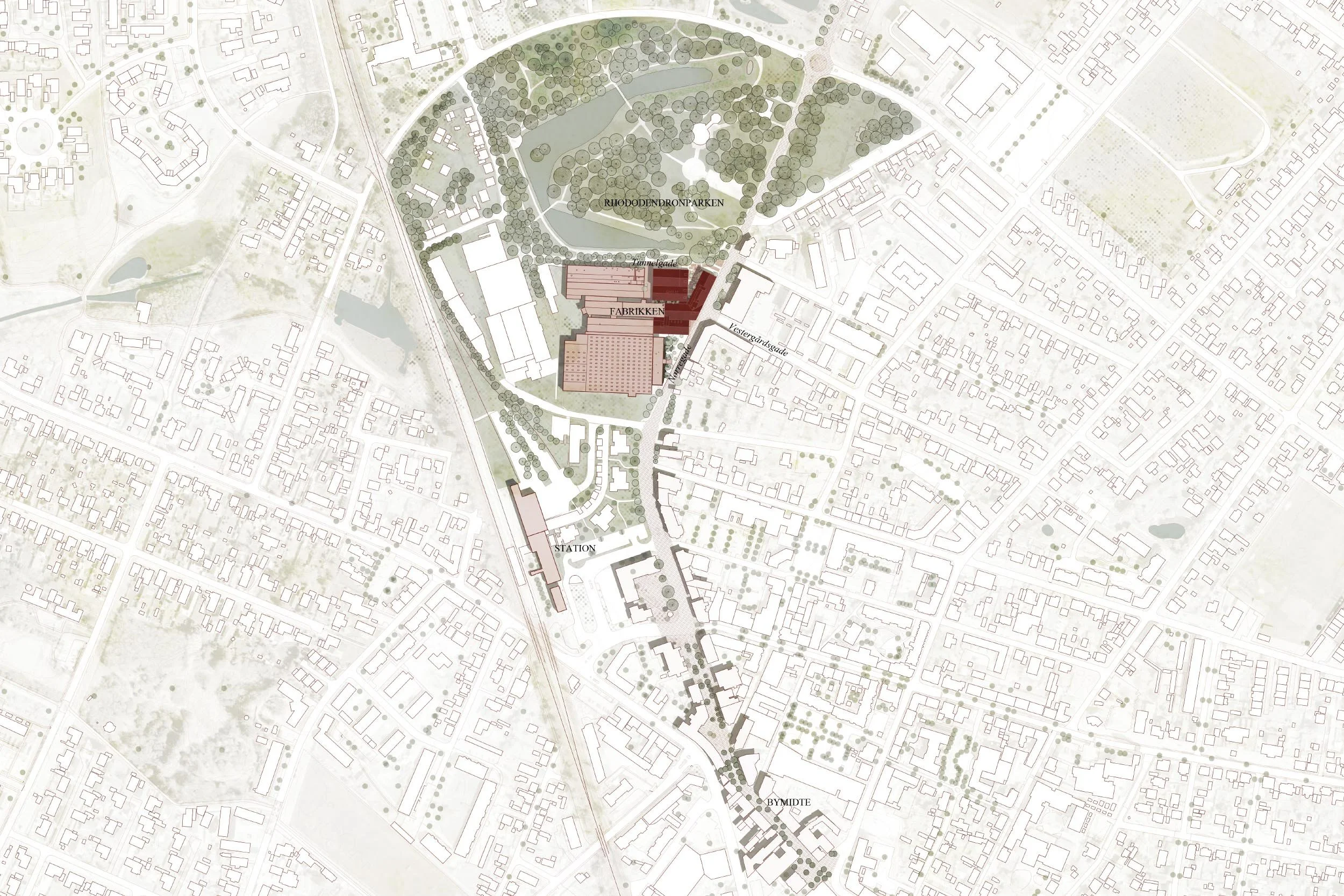
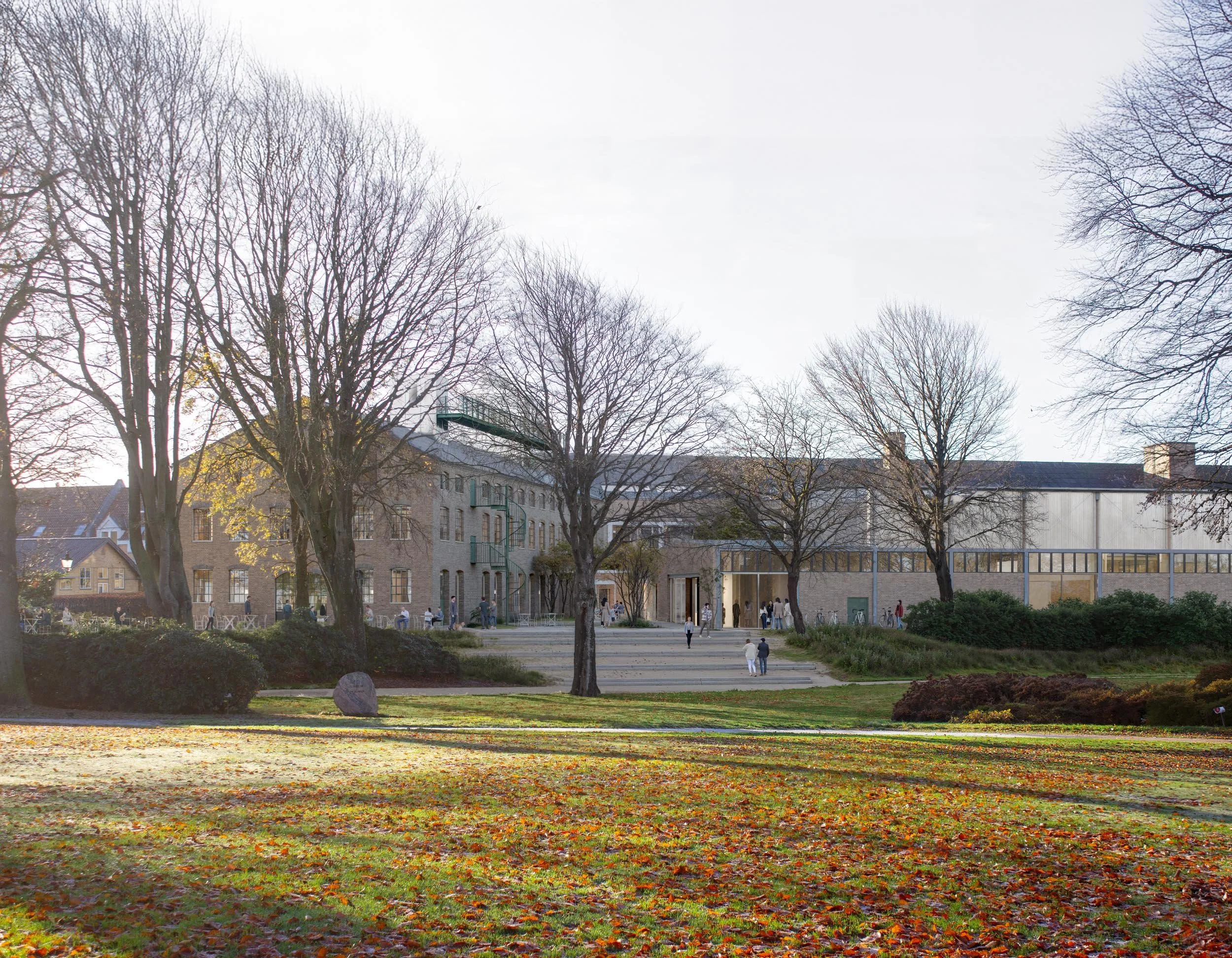
Peder Nielsen’s factory, which produced metal fittings, relocated to Brønderslev in 1886 because of the railway connection. The factory was situated adjacent to the large Hedelund plantation. Ten years later, the plantation was converted into a public park where factory workers could relax. Since then, the factory buildings and Rhododendron Park have developed closely side by side, yet sharply separated by walls, fencing, terrain, and vegetation. Our proposal creates a new, softer transition between the factory and the park.
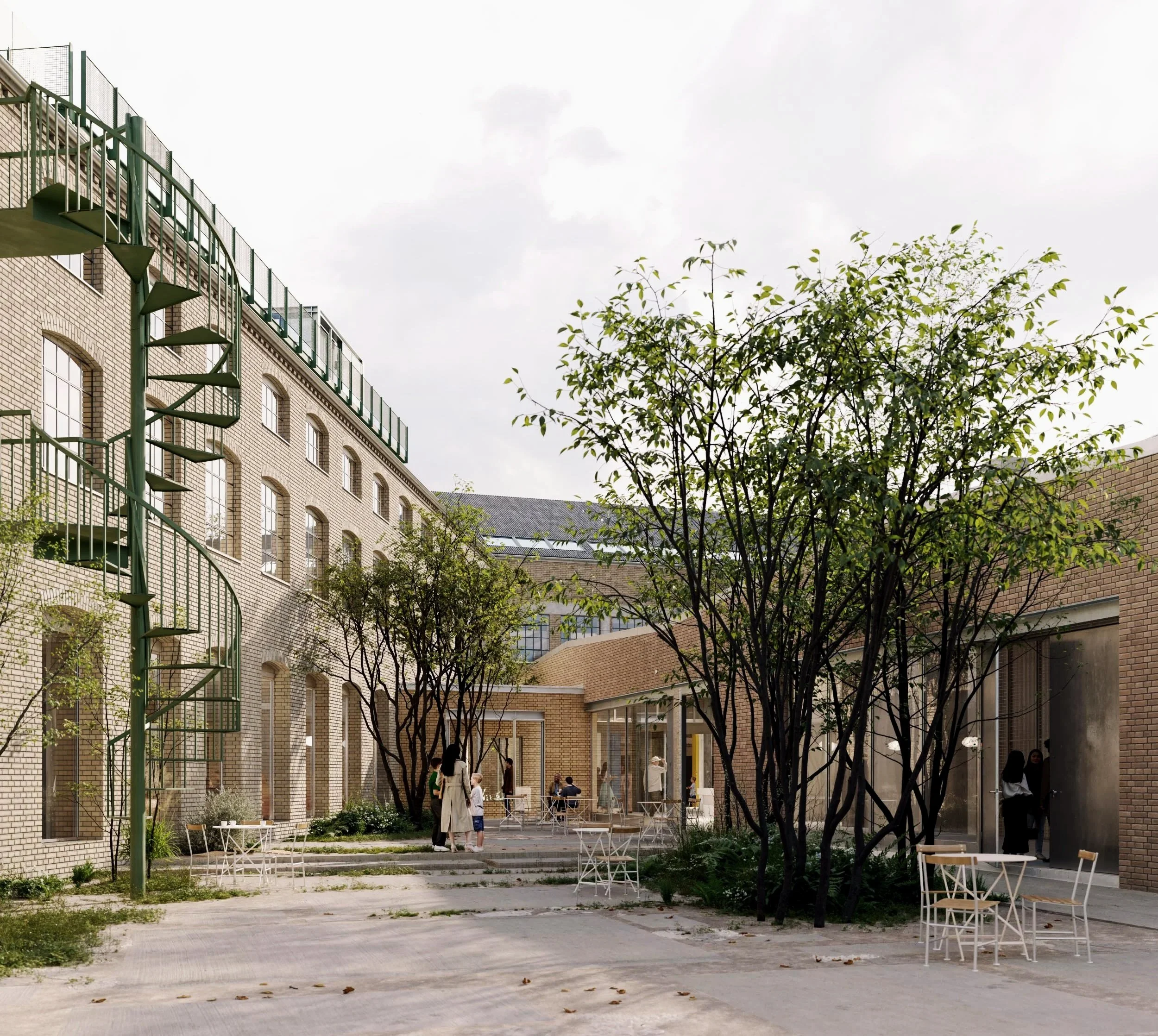
On a spring day, guests from the Restaurant have spilled out into the courtyard, which overlooks Rhododendron Park.
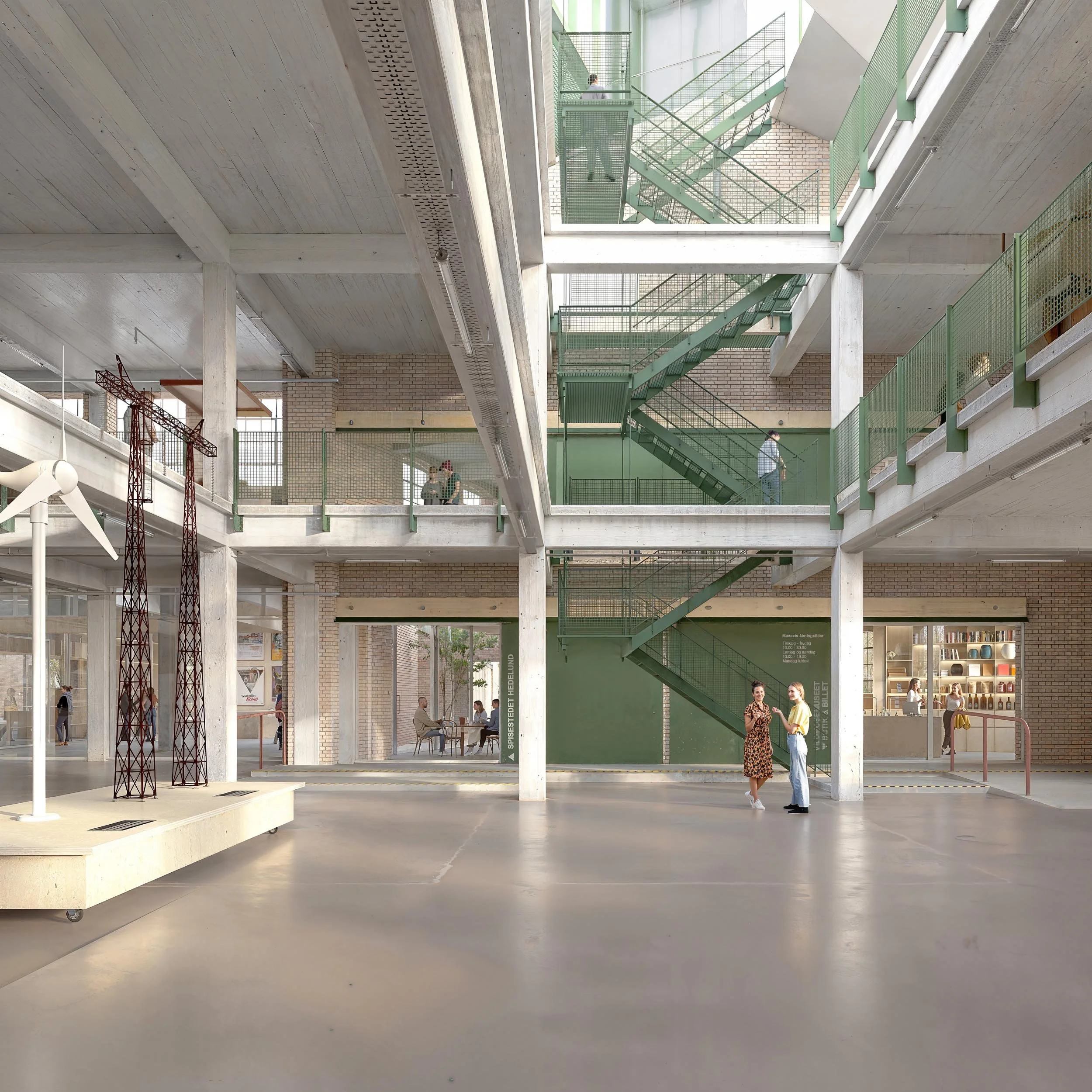
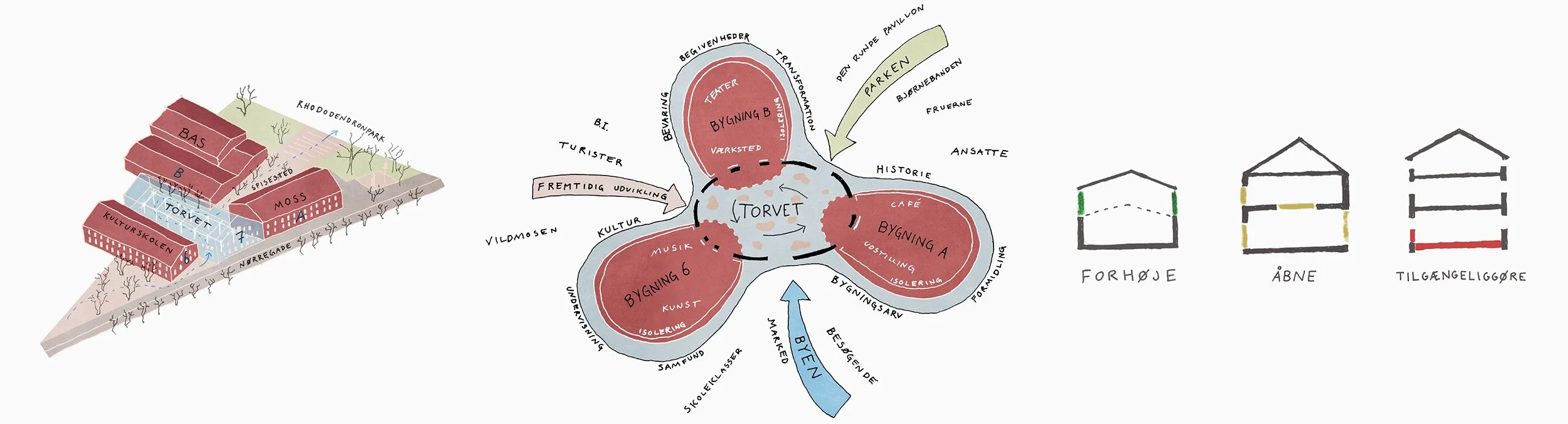
The Square is more than a space—it is an internal circulation hub that gives Fabrikken rhythm and direction. From the Square, everything branches out: the Cultural School, the Museum, Brønderslev Amateur Stage, and the Restaurant. Each has its own functional element that extends into the Square and shapes its character.
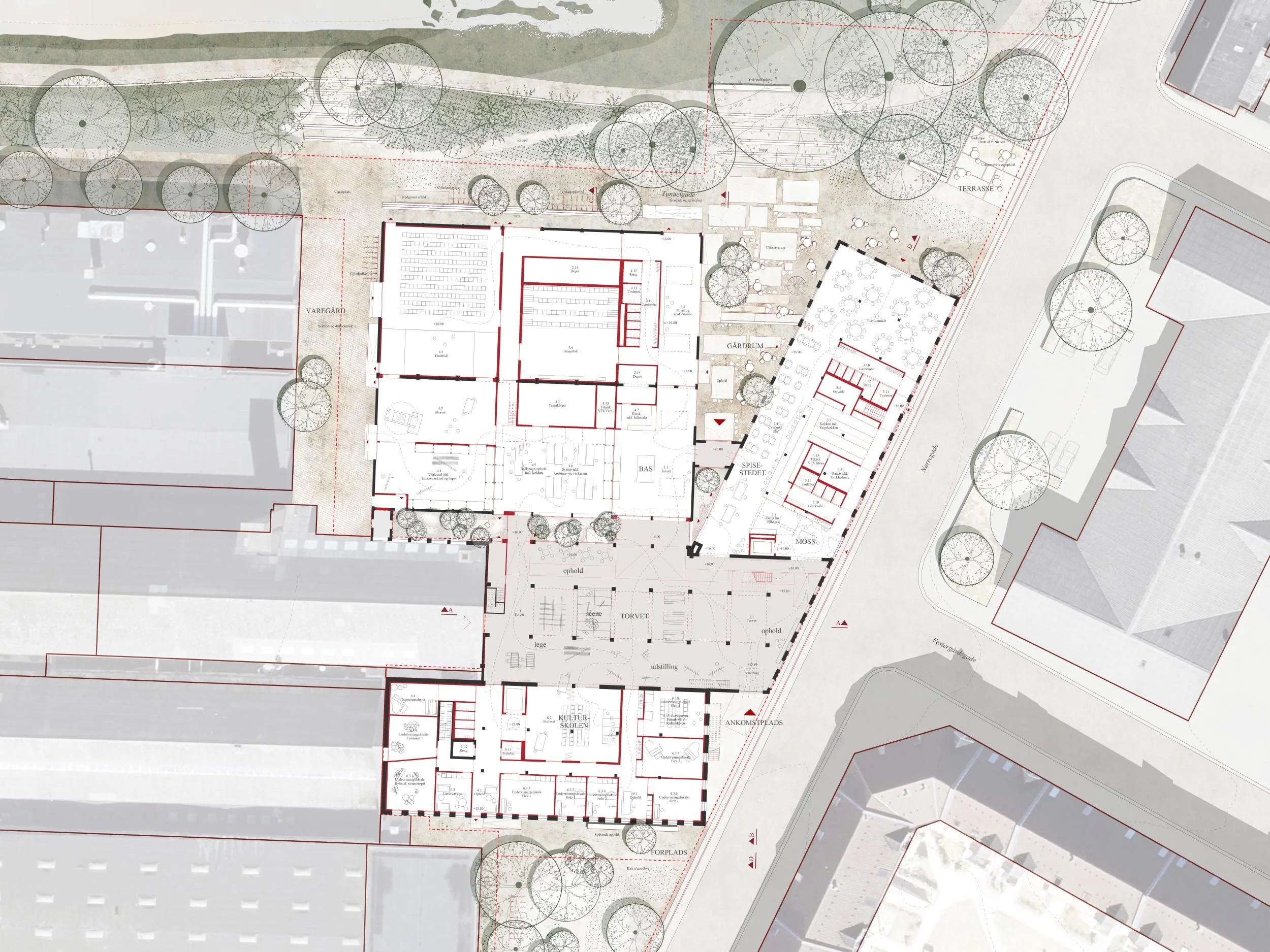
Ground Floor Plan. The Square is Fabrikken’s social and functional heart. It is an unheated, covered space located at the center of the complex. By removing selected portions of the existing concrete deck, a large double-height space is created from which all of Fabrikken’s programs can be seen and accessed. In daily use, activities in the Square are contained within Building 7. During larger events such as concerts or theater performances the Square can expand and function as a stage or reception hall, while the kiosk, shop, and restaurant temporarily relocate and serve visitors from the edge of the space.
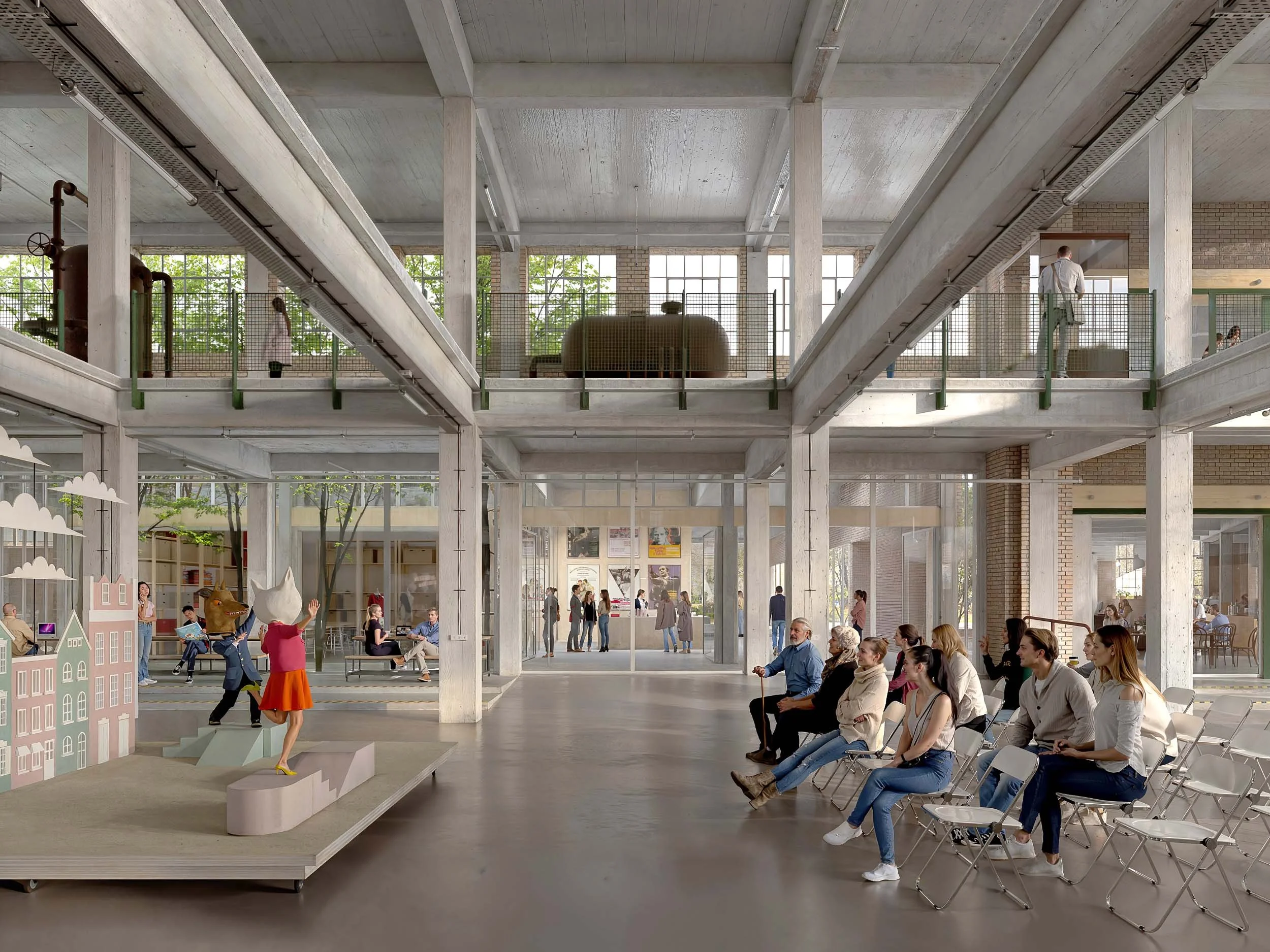
Here, an informal children’s theater performance takes place in the Square’s open space.
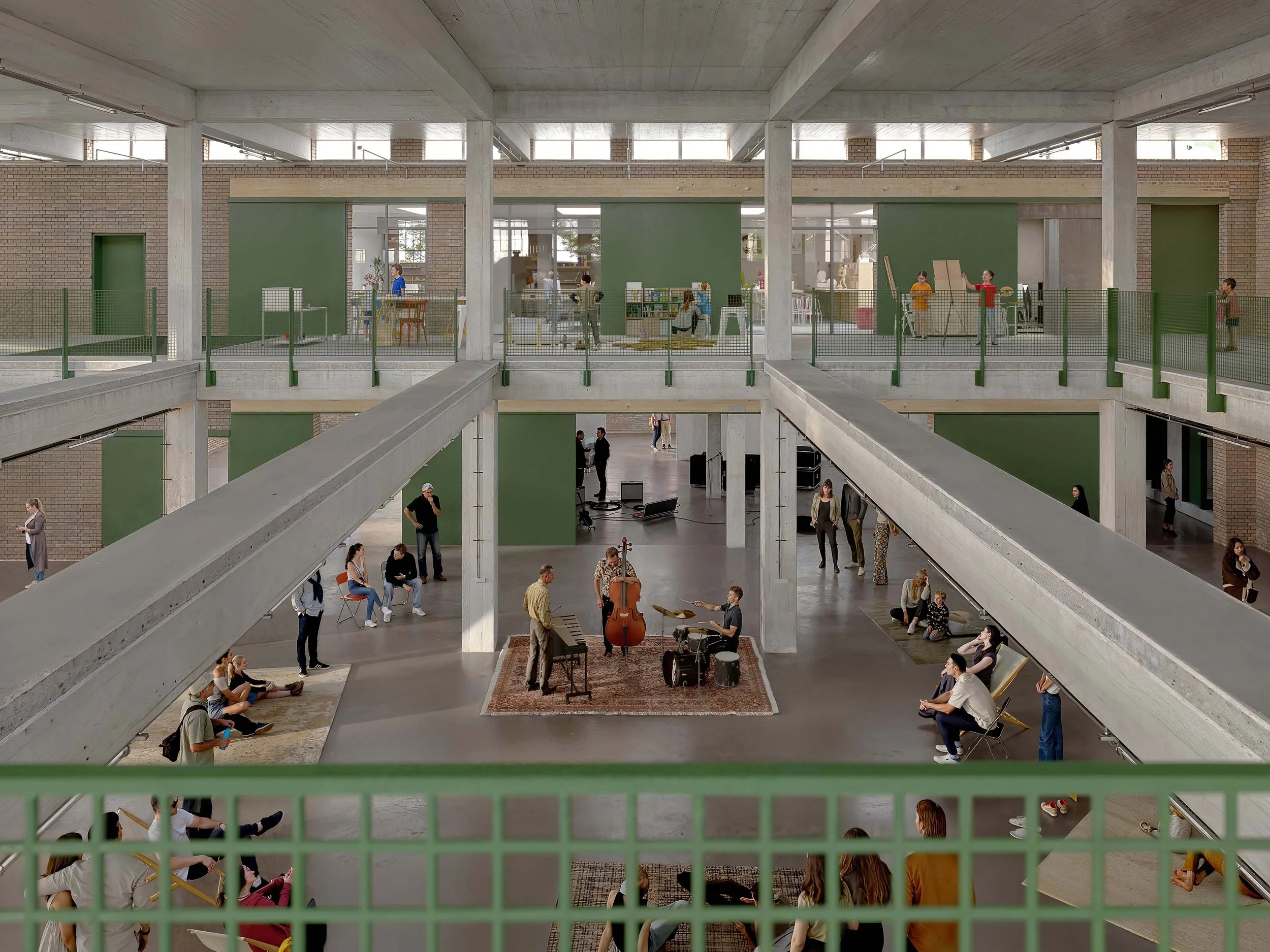
The Cultural School is organized on a single, continuous level with direct access from the Square’s ground floor.
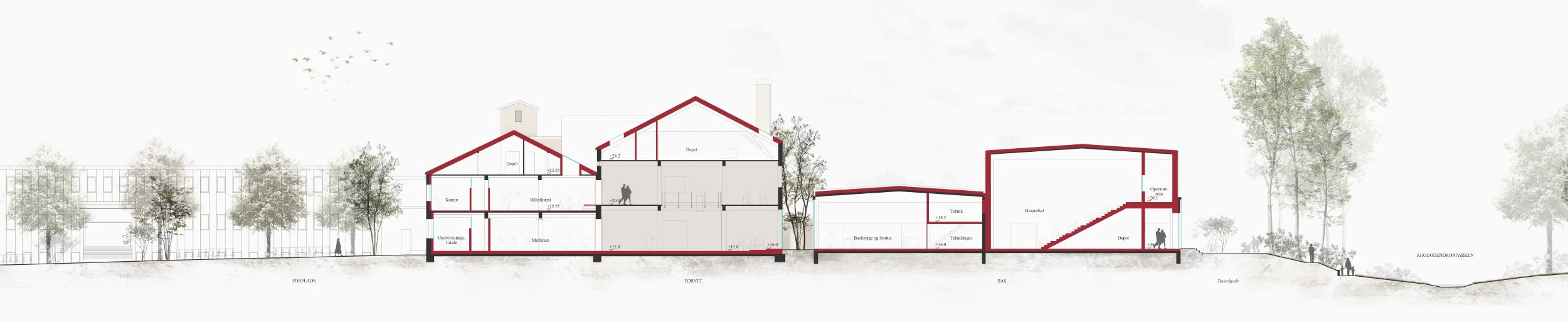
Section CC
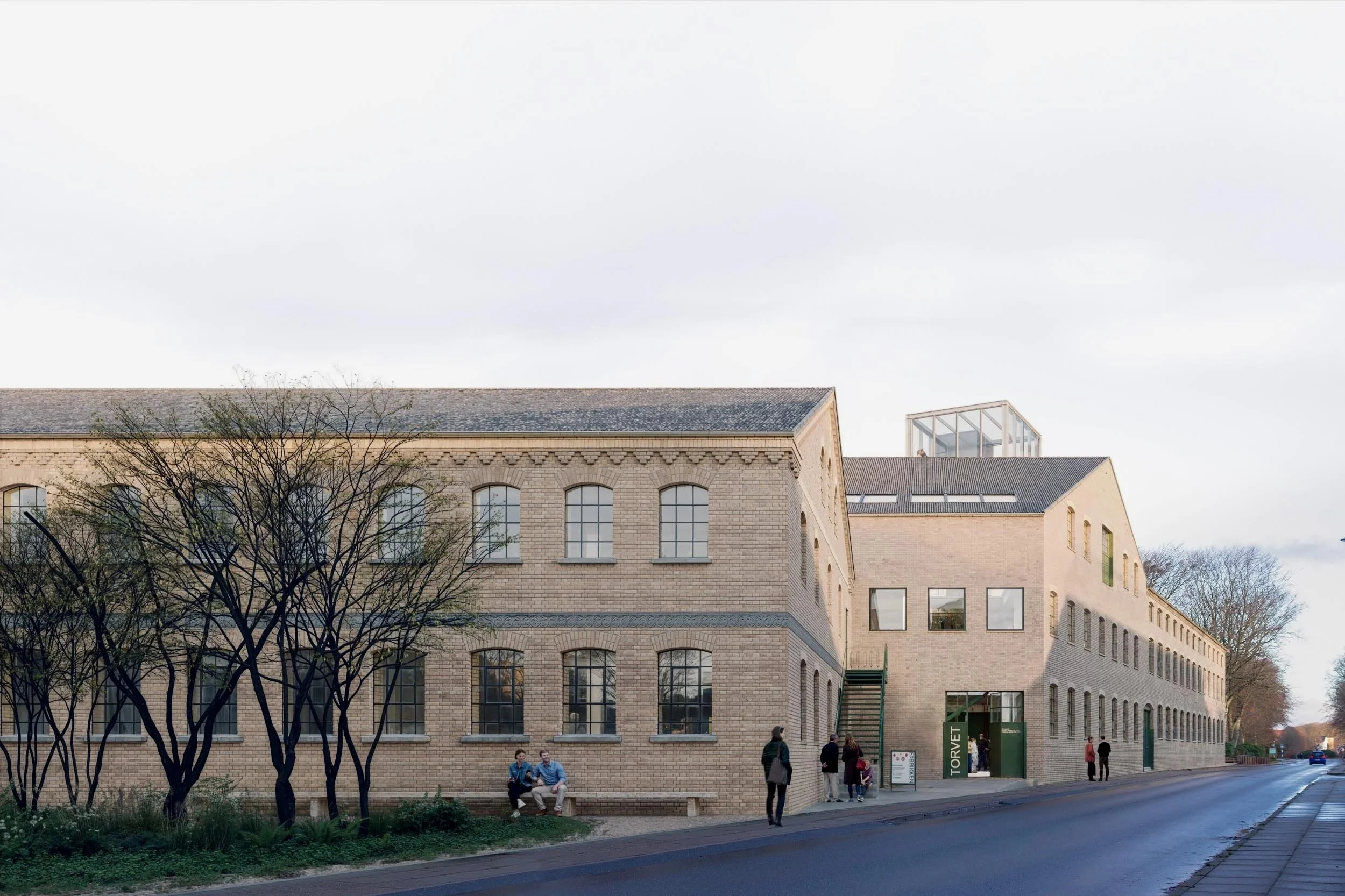
From the main entrance, visitors are guided through the Square and out to the various programs within Fabrikken. A long bench runs along the façade, providing a place to sit and enjoy the weather, while movable furniture can be pulled out onto the sunny plaza.