Local Development Plan for the New Viking Ship Museum
Type
Local development plan for construction, landscape, access, and public use
Address
Vindeboder 12, 4000 Roskilde, Danmark
Area
New exhibition building 3217 m², transformation Viking Ship Hall 2750 m²
Landscape 24.975 m²
Client
Vikingeskibsmuseet
Landscape Architect
Marianne Levinsen Landskab
Collaborator transformation
Christoffer Harlang Architects
Engineer
Niras
Aaen Engineering
Exhibition Architect
JAC Studios
Lighting Design
Fortheloveoflight
Year
1. prize in international competition 2024
Local development plan 2025
Expected completion 2030
Photo
Ramus Hjortshøj
Renders
Kvant-1
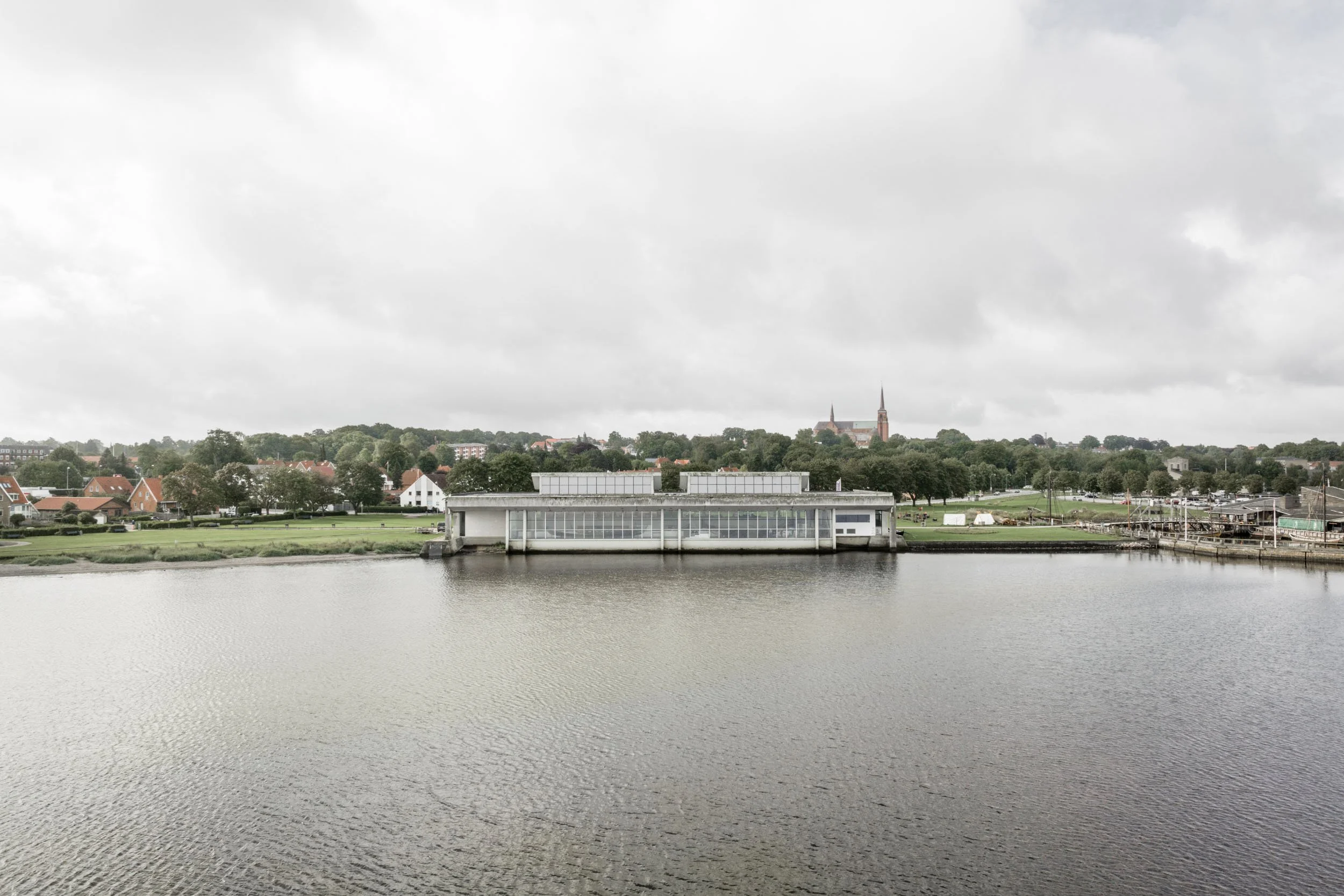
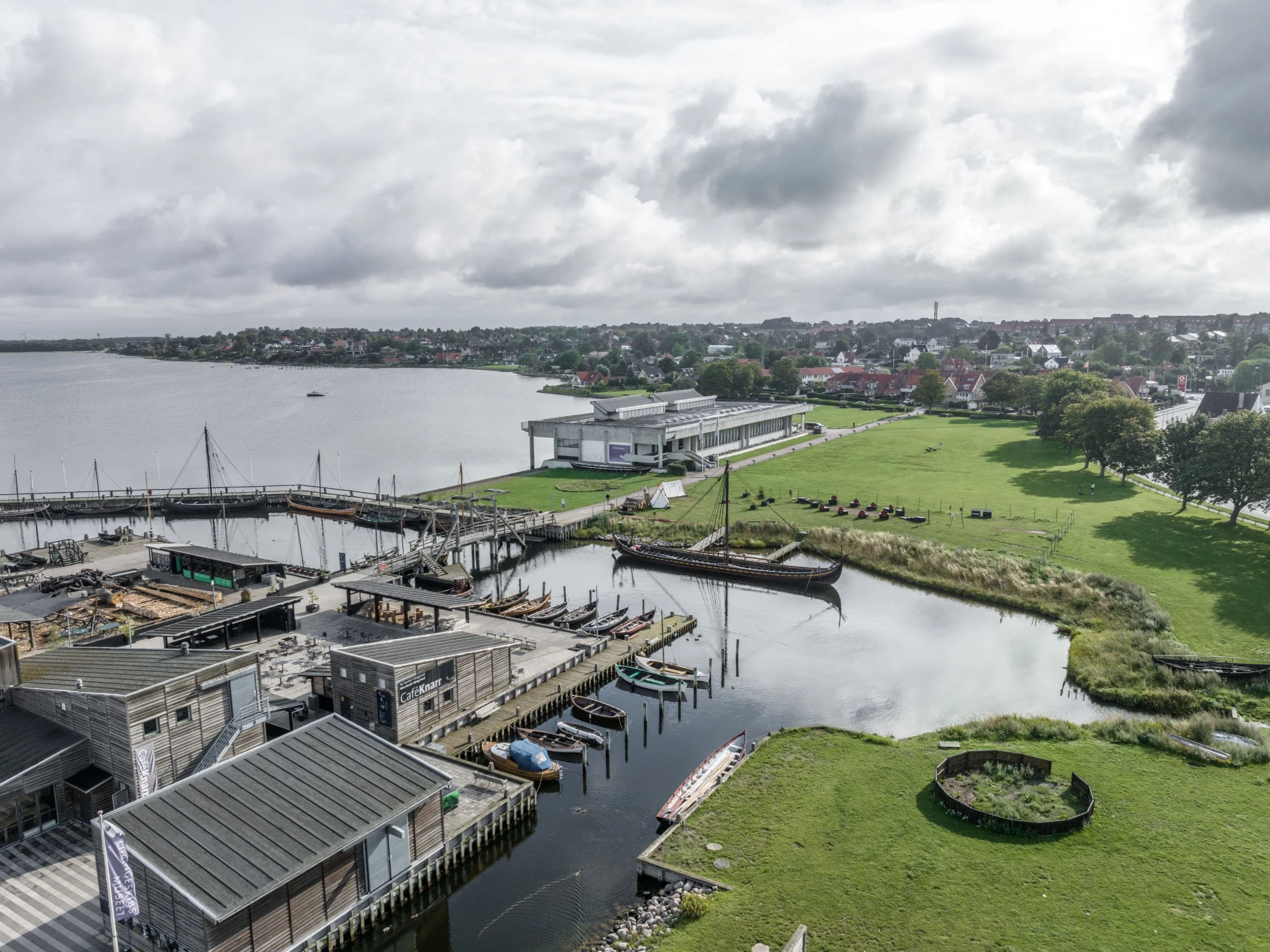
The New Viking Ship Museum includes a new exhibition building for the five Viking ships, the renovation of the Viking Ship Hall from 1969, the creation of a coastal meadow landscape, and the preparation of a local development plan. We developed the material for the local development plan and supported the associated planning process, including stakeholder coordination and dialogue with the Municipality of Roskilde.
The local development plan defines the future use of the area and establishes the specific framework for the new exhibition building, the coastal meadow landscape, and access to and public use of the museum grounds. The ambition is to strengthen the openness between the city of Roskilde and the fjord, ensure public access to the site, and make the landscape an active part of the museum experience. At the same time, the museum must have the best possible conditions for attracting paying visitors.
The plan also creates the foundation for new public connections and gathering spaces along the fjord, the transformation of the lawn into a coastal meadow landscape, a new parking area, and opportunities for parking and motorhome parking near the gasworks, the hostel, and Snekken. The new local development plan was adopted in June 2025.
“The new Viking Ship Museum is an excellent example of a new direction in which architecture is about far more than simply shaping cities and buildings. Here, Lundgaard & Tranberg Arkitekter has demonstrated how architecture can help create well-being, strengthen communities, and support cohesion between the town of Roskilde, the coastal landscape, the fjord, and the existing architecture. At the same time, the project shows how architecture can help drive the green transition and address the very tangible consequences of climate change.”
Johnny Svendborg
President of the Danish Association of Architects and Chair of the jury’s professional judges

The goal is to create a beautiful and clearly defined connection between the fjord, the town, and Roskilde Cathedral much as the Vikings did when they sailed out in the Skuldelev ships 1,000 years ago.

The new museum building is positioned to create an open connection between the town of Roskilde and the fjord.
Drawing: Marianne Levinsen Landscape

The proposal is based on the idea of ships pulled ashore. As part of the local development planning process, we defined the site boundary and zoning status, subdivision, and the scale and placement of the buildings.
“The winning proposal by Lundgaard & Tranberg Arkitekter creates an exceptional connection between the new building for the Viking ships, the existing Viking Ship Hall, the town of Roskilde, and the landscape. It introduces a large coastal meadow capable of managing water while inviting local plant life into the area, in harmony with the surrounding fjord landscape. In this way, it is an architectural work whose quality lies not only in the individual building, but in the interplay between landscape, nature, history, and people.”
Tomas Breddam
Chair of the jury and Mayor of Roskilde
“For us as architects, this is a dream come true. We have the opportunity to work in the space between preservation and renewal of the unique cultural heritage represented by both the Viking ships and the Viking Ship Hall. From the outset, we focused on finding the clear and compelling design move that could unlock the potential of this remarkable site while preserving public access to the fjord. We placed the new museum building so that it brings together three very different architectural characters while also creating spaces and natural transitions to the landscape between them. The result is one cohesive museum experience, with the fjord and the coastal meadow — indeed, nature itself — as the great unifying force”
Lene Tranberg
Co-founder and Chair of the Board, Lundgaard & Tranberg Arkitekter

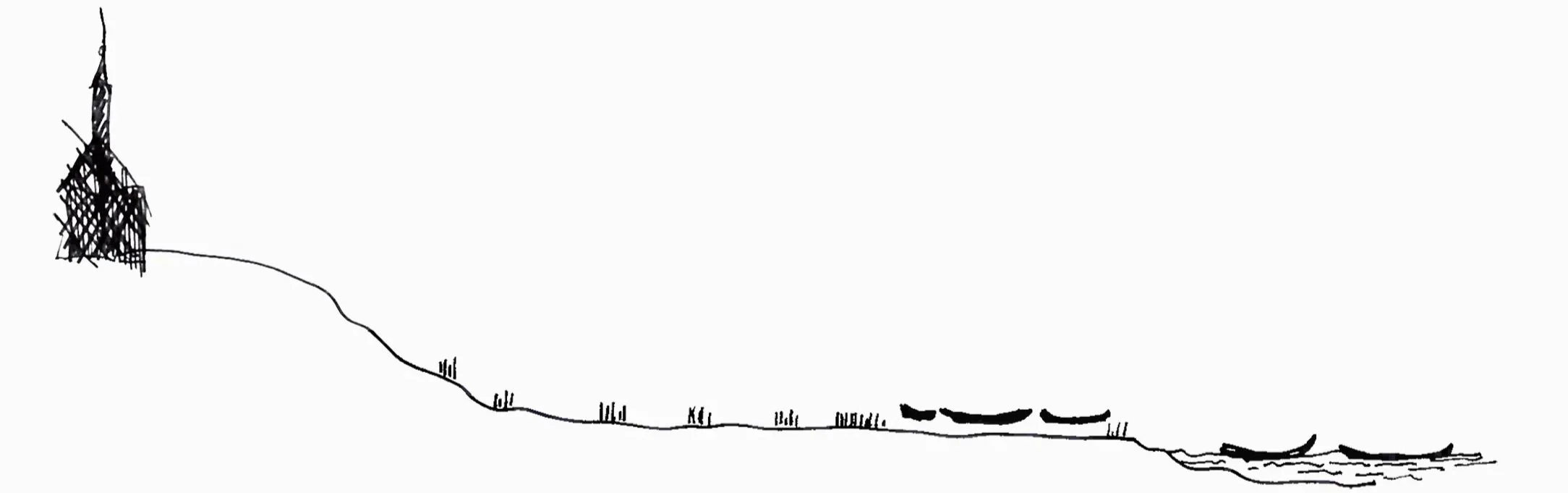
The new museum building emphasizes and strengthens the connection between the cathedral and the fjord.