Tietgen Dormitory
Type
Dormitory
Address
Rued Langgårdsvej 10-18, Copenhagen, Denmark
Area
26,500 m² total
21,900 m² above ground
Client
Fonden Tietgenkollegiet
Nordea Danmark Fonden
Client consultant
Niras A/S
Hasløv & Kjærsgaard
Freja Real Estate
Engineer
COWI A/S
Landscape Architect
Marianne Levinsen A/S
Henrik Jørgensen A/S
Years
Constructed 2003-2006
1st prize in invited competition 2002
Awards and nominations
2007 RIBA European Award
2007 The Concrete Element Award
2007 The Aid Forum Award/Best Nordic Interior
2006 Copenhagen Building Award
2006 Danish Wood Award
2006 The Copenhagen Cultural fund
2005 Diploma, Society for the Beautification of the Capital
How do you create the optimal framework for community among 400 students while still giving each individual space to focus, reflect, and grow? Tietgen Dormitory was commissioned by an ambitious client who wanted to rethink the dormitory as a housing typology and create a reference project at an international level.
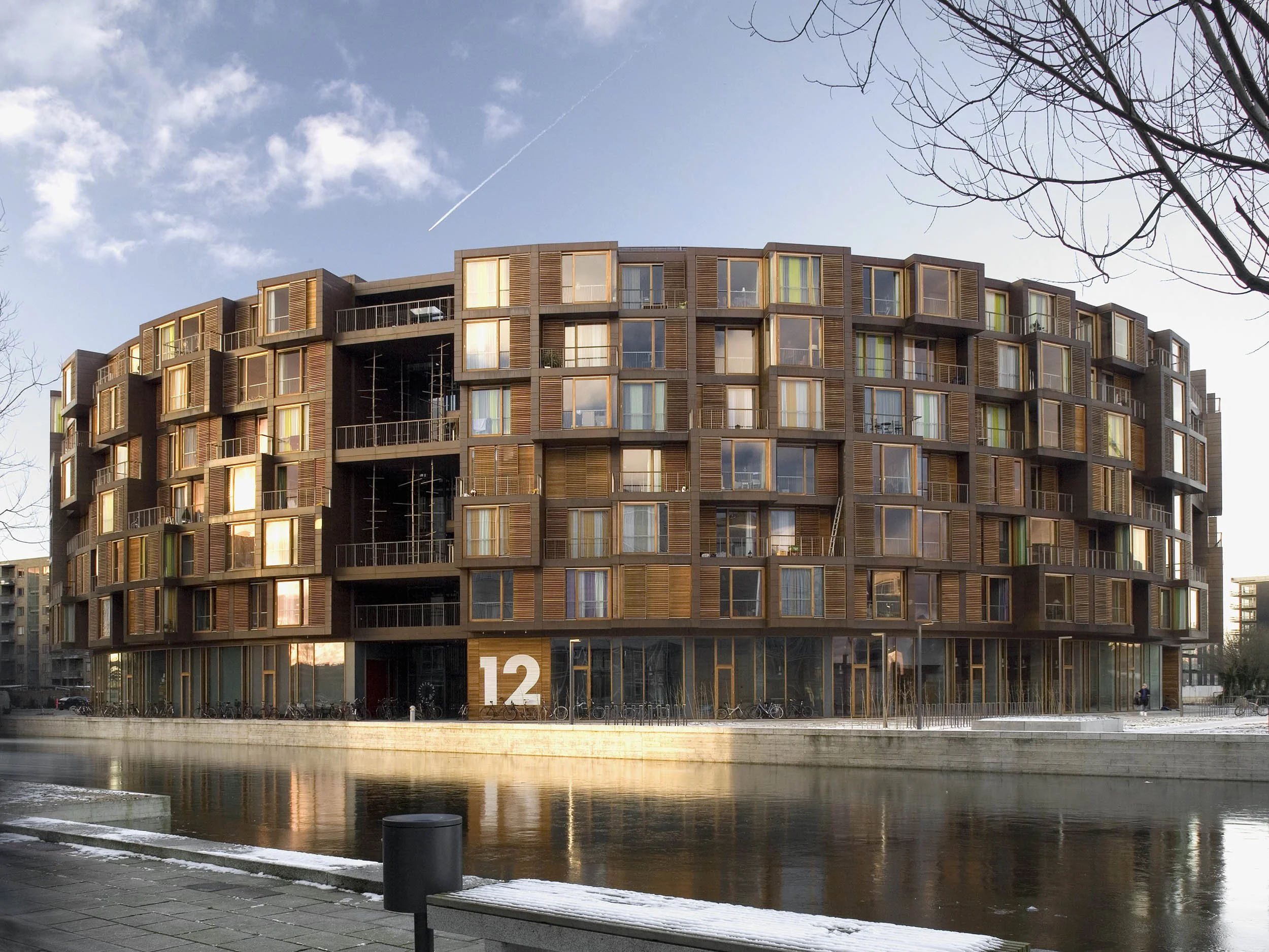
Tietgen Dormitory is a circular building in Ørestad, Copenhagen. According to the local master plan, another linear block was supposed to be built to align with the surrounding parallel rows along the metro line. We chose to challenge that plan and instead create a building that would give more public space back to the district and establish a connection between the two canals on either side of the site. The circular form now counteracts the speed and energy drain created by the long, linear buildings around it.
During the competition phase, we drew inspiration from, among others, the circular dwellings of the Hakka people in China and the Viking ring fortresses. Community means creating something together. The dormitory’ss architecture should therefore not primarily be seen as a circle, but as a community you enter and leave.
No one lives at the end of a corridor
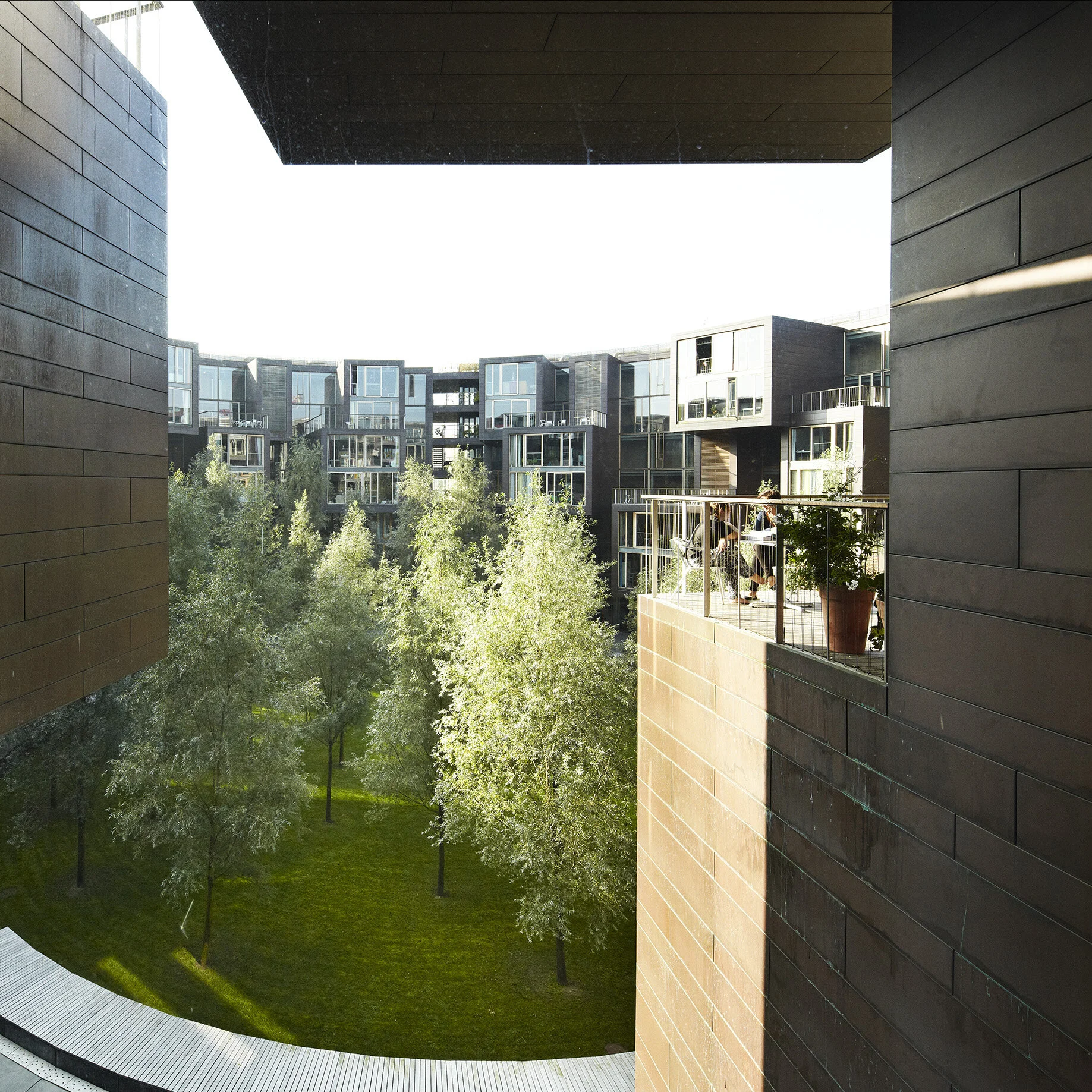
The circular form provides a clear and logical organization: the 360 student rooms are placed along the outer edge with views of the surrounding city, while the shared functions face inward toward the courtyard. Kitchens and balconies are located in the bay windows. From here, residents can see where social life is happening across the courtyard and seek out community to the extent they wish.
It is essential to the experience of living here that no one is tucked away at the end of a hallway, far from the shared kitchen. Everyone is equally close. You connect to—or withdraw from—the community simply by crossing the corridor. In this way, the architectural idea reflects the essence of the dormitory as a housing type: the optimal balance between the individual and the collective.
At ground level, the building contains shared facilities for the entire residence: administration, meeting and study rooms, workshops, laundry, mailroom, and a common hall for events. The six upper floors house the 360 student residences, organized into 30 groups of 12, each with its own shared kitchen, living space, and utility room.
“You feel a sense of community across the kitchens—not necessarily because you know everyone, but because you can see them across the circle. If I notice a big party somewhere in the building, I might just head over. You feel welcome everywhere in the house.”
— Nicholas, resident

Site plan

Plan, ground floor

Plan, 4th floor

Section