The Post District
Type
Masterplan
Address
Bernstorffsgade, Copenhagen
Area
202,000 m² (including 80,000 m² of public space)
Client
Danica Ejendomme
Engineering
COWI A/S
Landscape
Lundgaard & Tranberg Architects + Julie Kierkegaard A/S
Year
2027
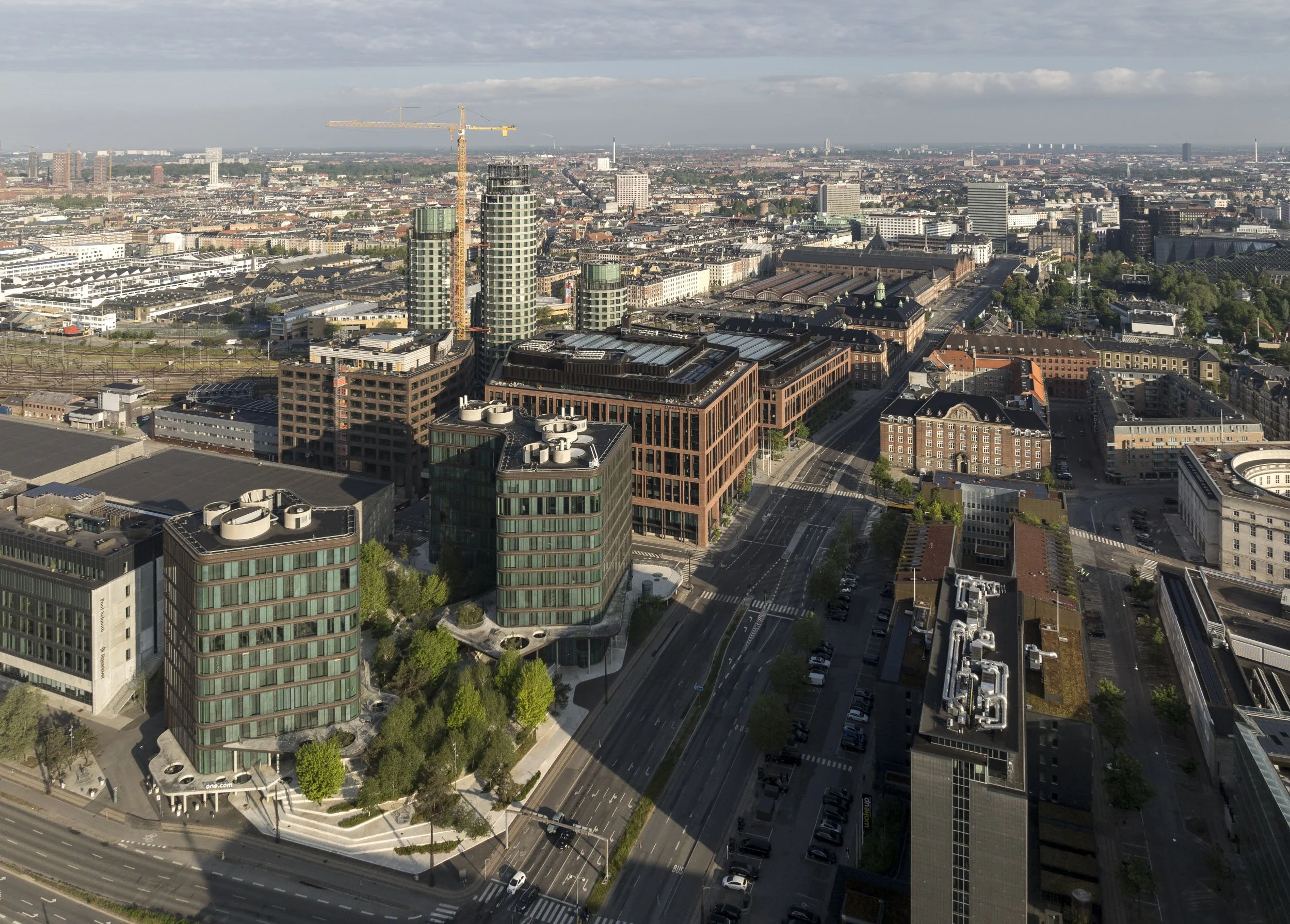
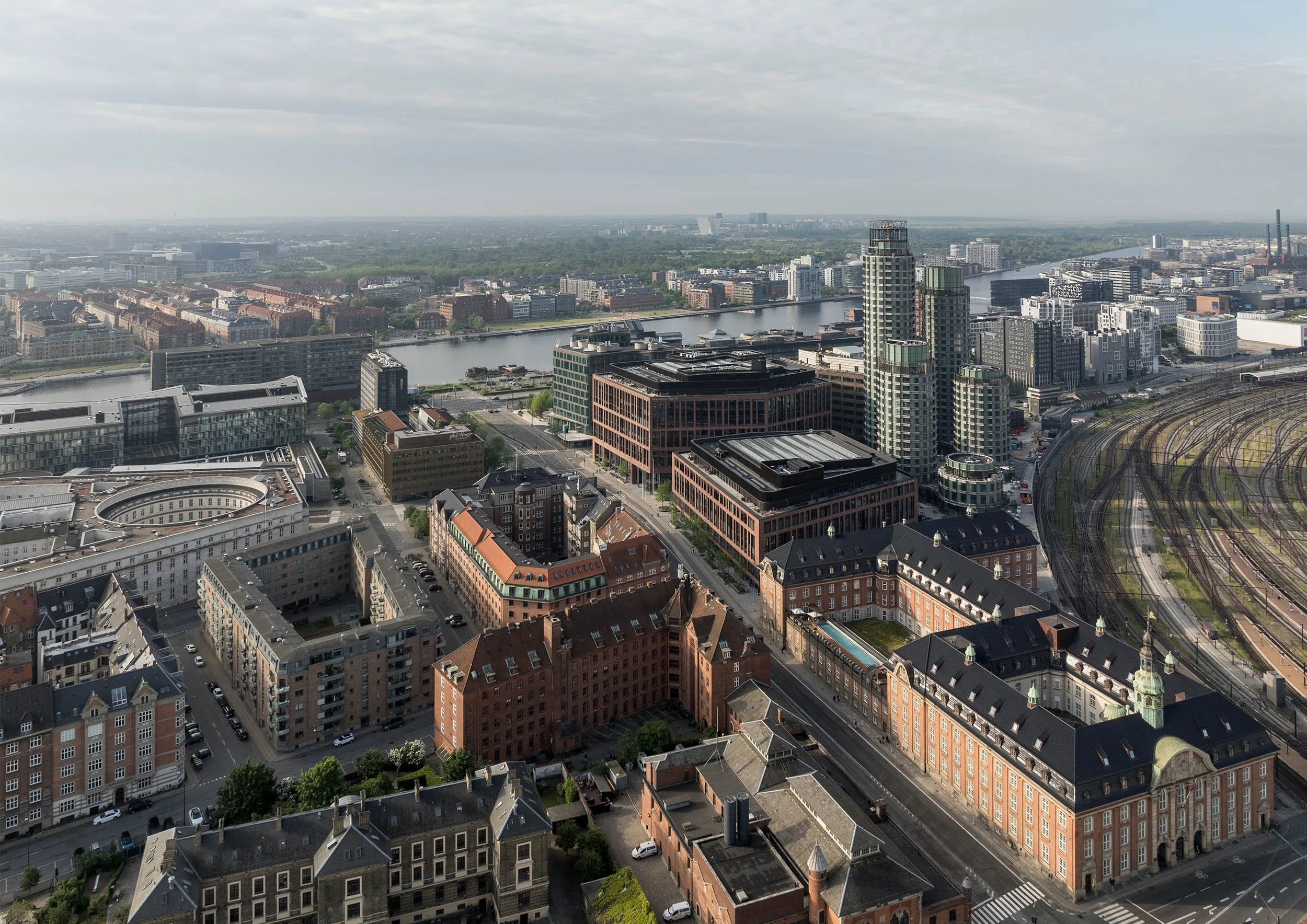
The Post District (Postbyen) is one of Copenhagen’s most dynamic and centrally located new urban districts, right next to Copenhagen Central Station. We developed the master plan as the foundation for the local plan, building and façade design, and landscape design – through and including the authority project phase – for the entire new district. The neighborhood creates a new connection between the historic city, the industrial areas, and the waterfront.
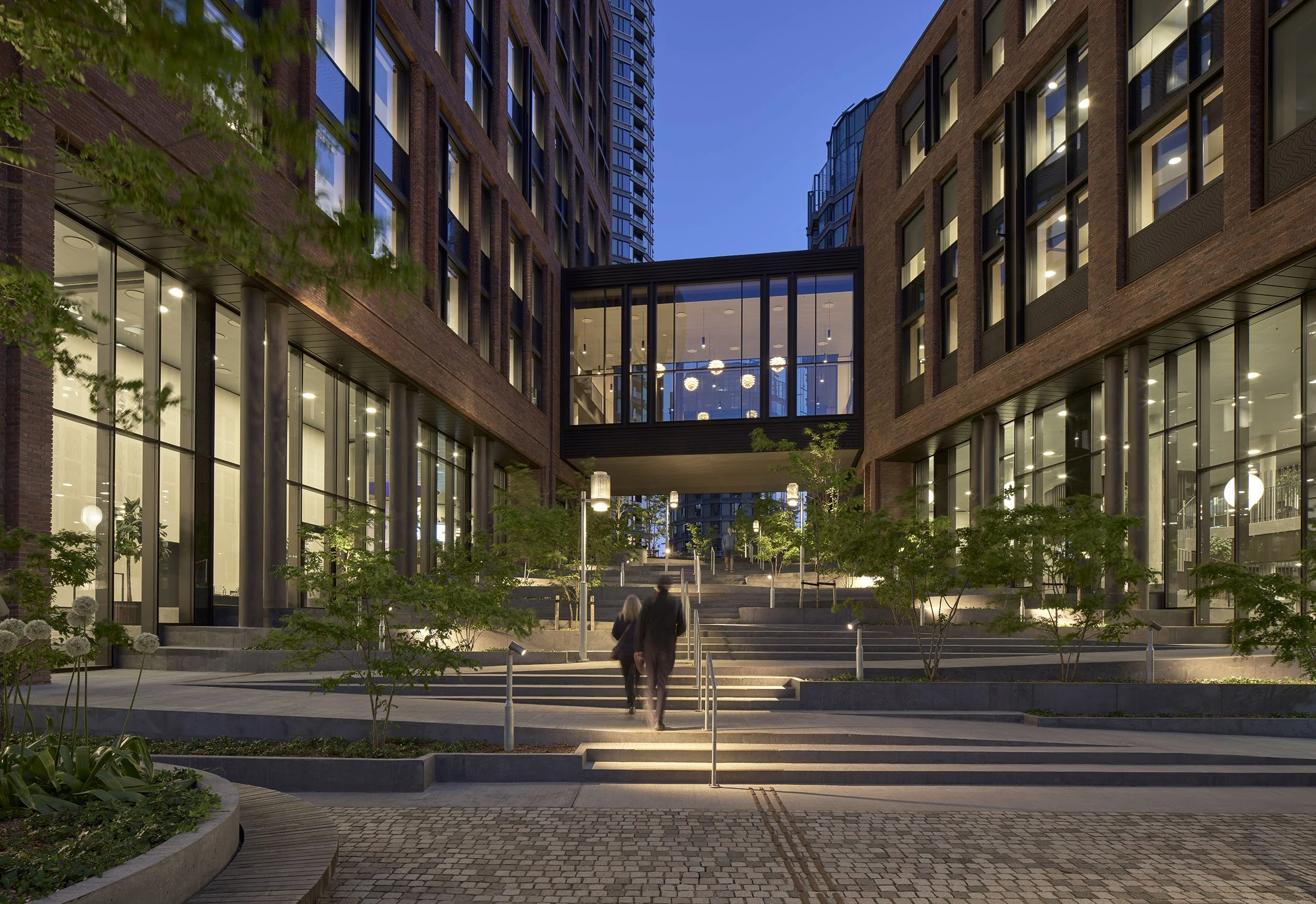
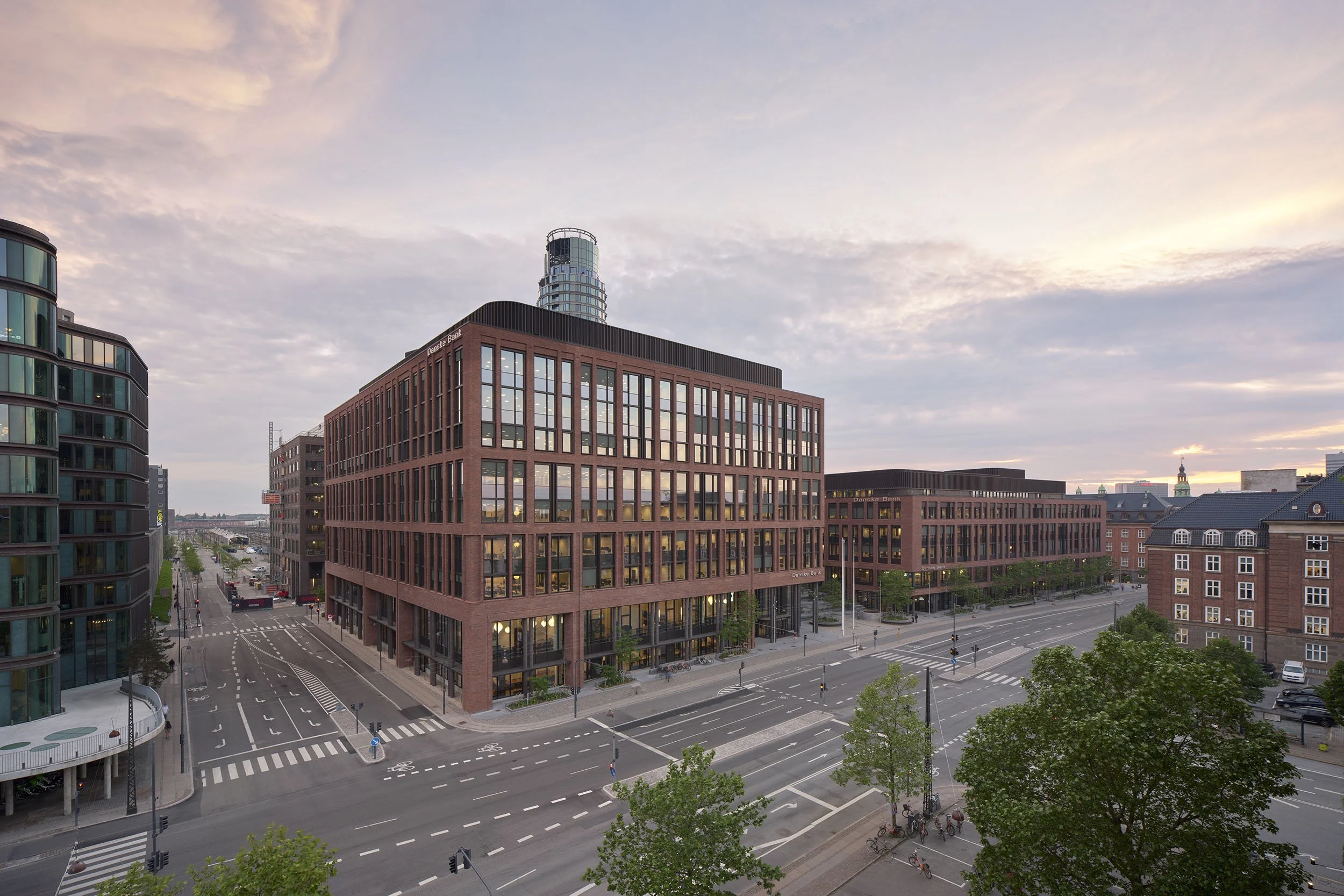
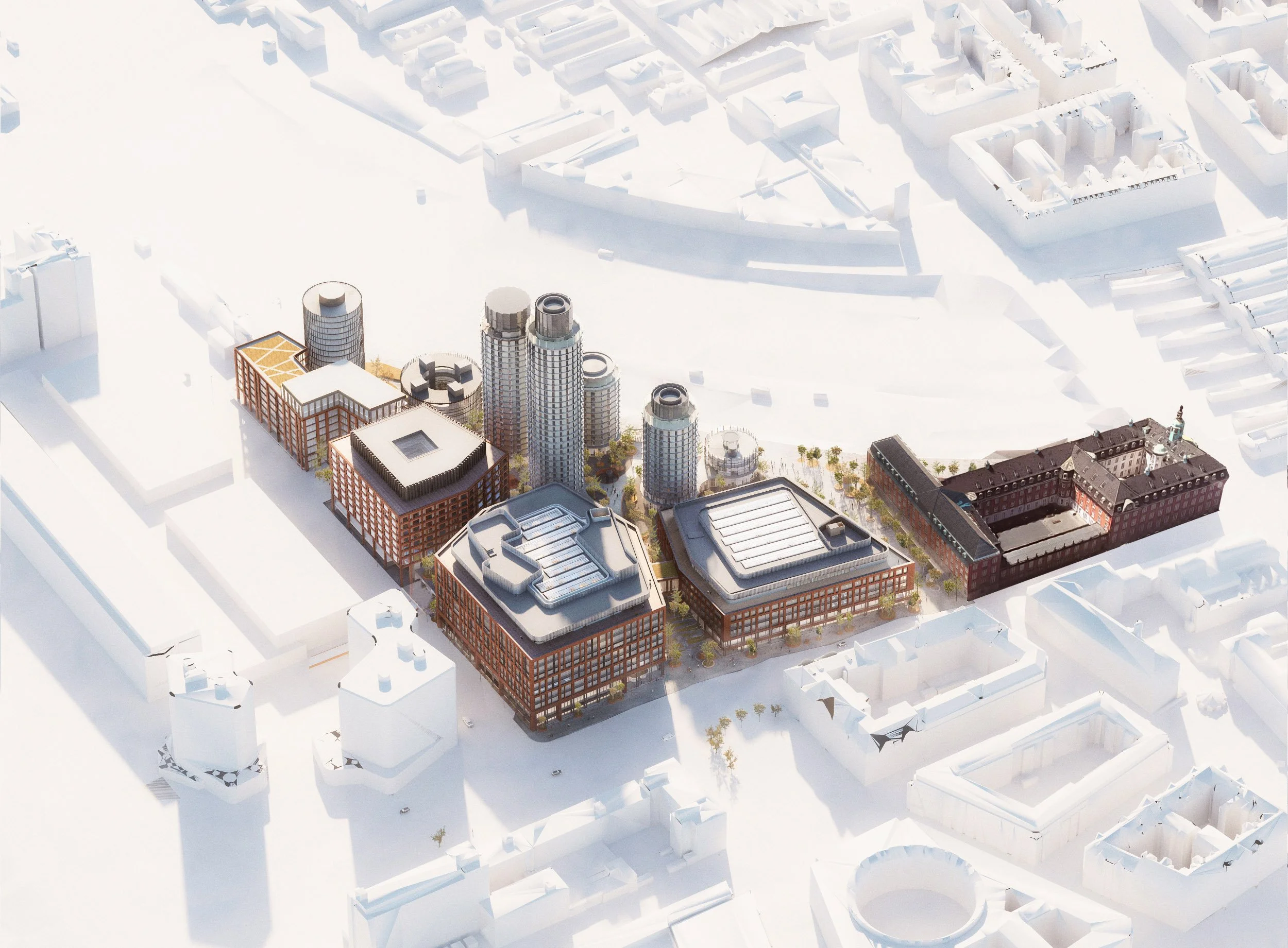
The Post District includes Danske Bank’s Headquarters, five residential towers with apartments and serviced hotel apartments, the multi-tenant office building “The Stamp,” affordable housing, student housing, and public spaces. A new, inviting public realm runs through Postbyen, with green niches, places to linger, evening sun, and views across the rail yard.
The area was previously known as Postgrunden. From 1912 until 2017, it served as the center for mail distribution in Eastern Denmark. The 1912 Central Post Office building has been transformed into the Hotel Villa Copenhagen. The Copenhagen Postal Center from 1979 has been demolished, and the area is now open to the public.
Urban connections and new links
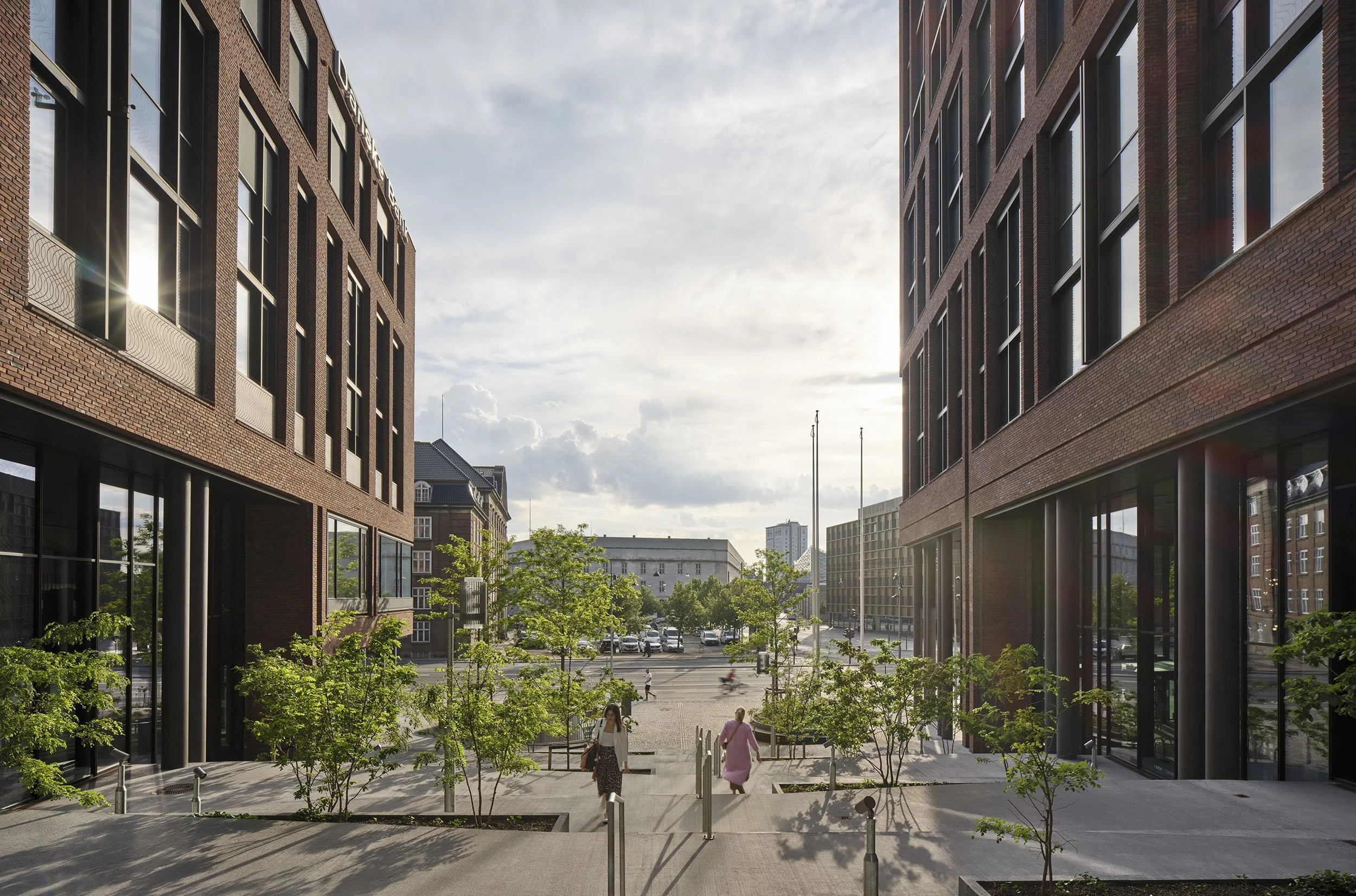
To integrate the new district with the surrounding historic neighborhoods near the Glyptotek, we extended the axes from Stoltenbergsgade, Niels Brocks Gade, and Hambrosgade into the site – passing between Danske Bank’s two buildings and up onto the raised plateau. In this way, the Post District brings the defining qualities of the surrounding city together into a cohesive whole and establishes new connections.
Danske Bank’s headquarters and “The Stamp” align in height with the former Central Post Office building and the headquarters buildings along the waterfront. Red brick façades create continuity with the area’s distinctive red perimeter blocks and the historic masonry post office building.
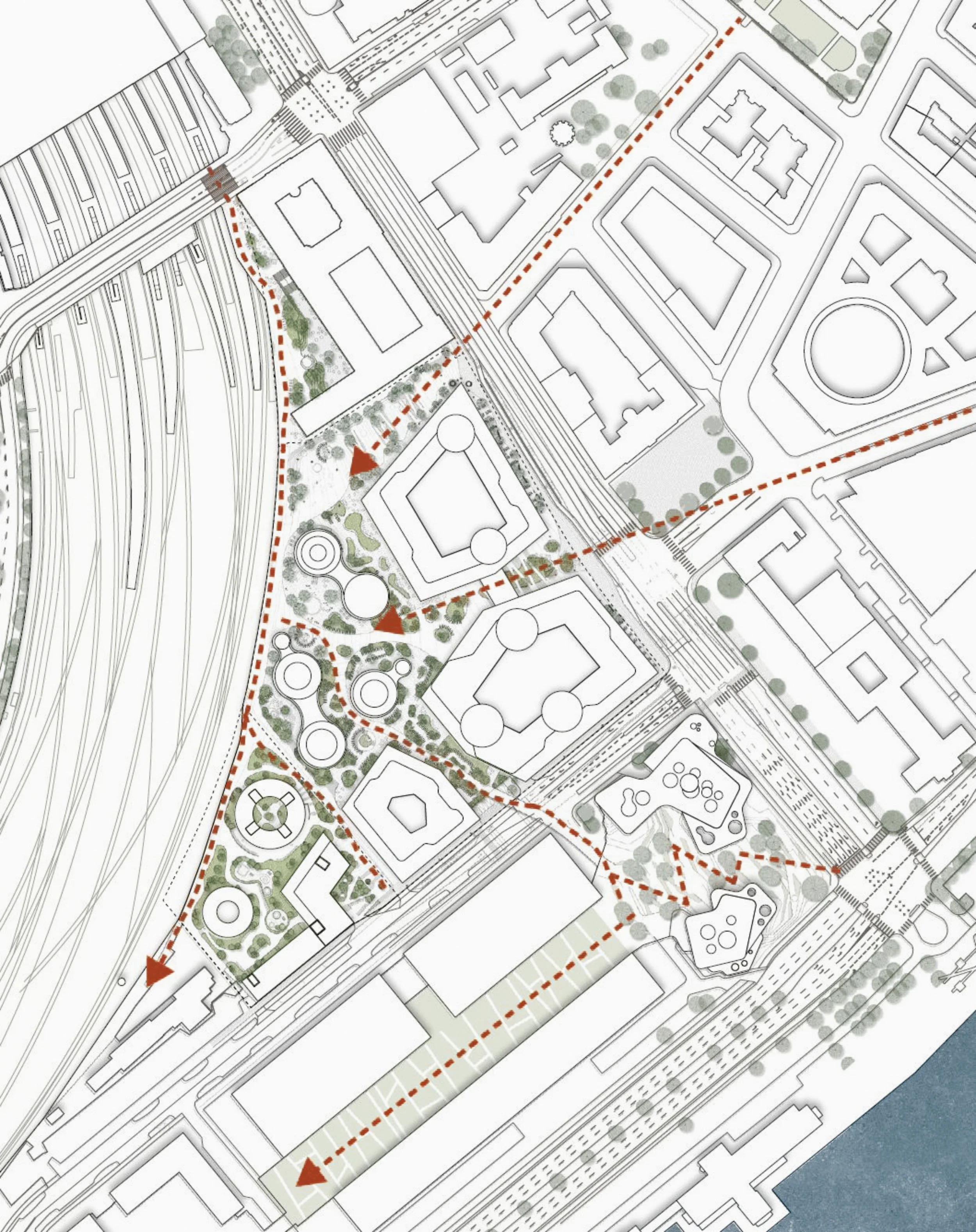
The axes of the surrounding streets extend into Postbyen, creating continuity between old and new.
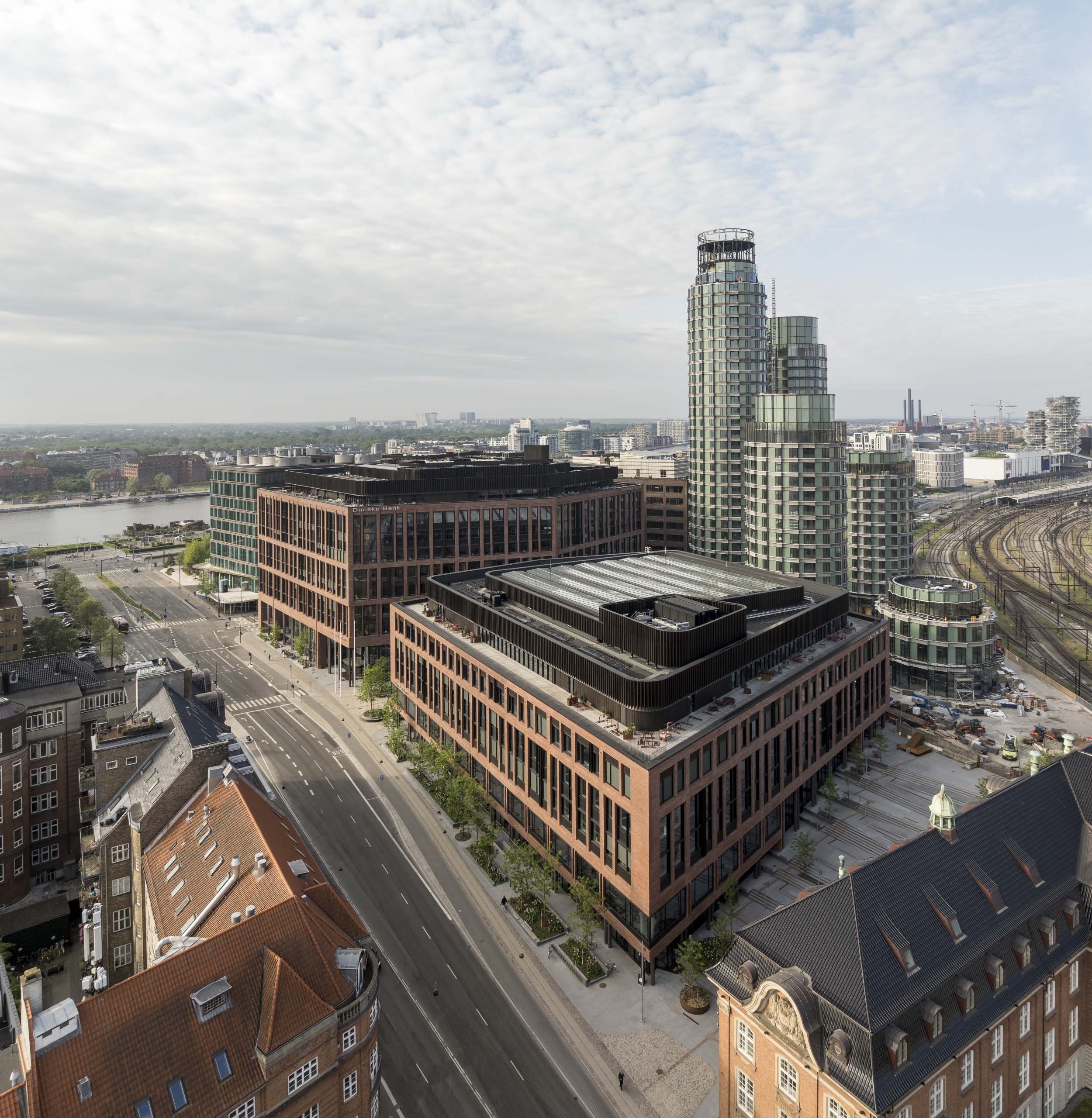
The five round towers stand freely. They are slender and upward-reaching, ensuring daylight and spaciousness in the green outdoor areas. Their airy expression and materials reference the industrial character of the rail yard and the Meatpacking District.
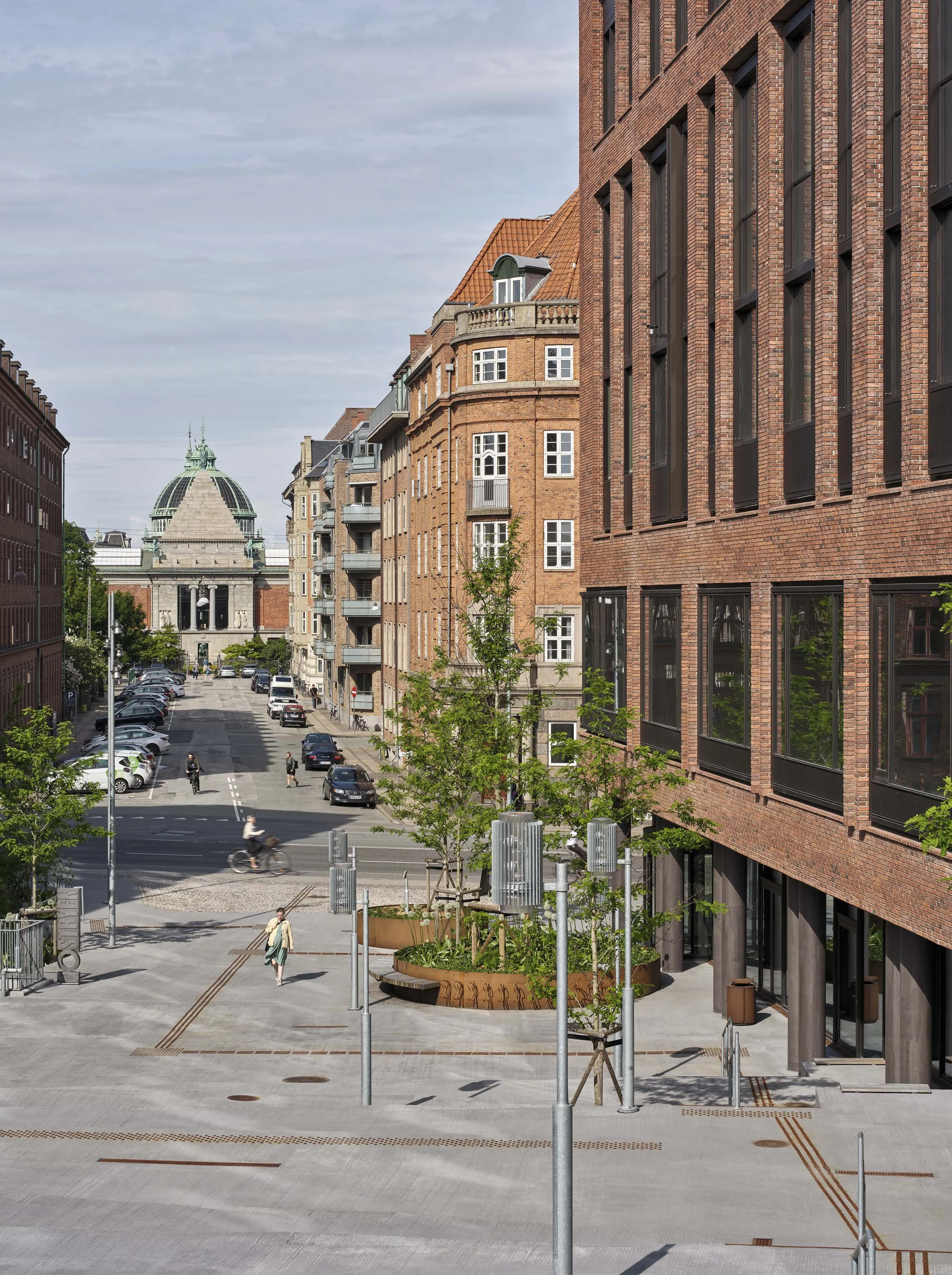
The axis from the Glyptotek continues between the Villa Copenhagen Hotel and the smaller office building, respecting the cultural heritage of the Glyptotek.
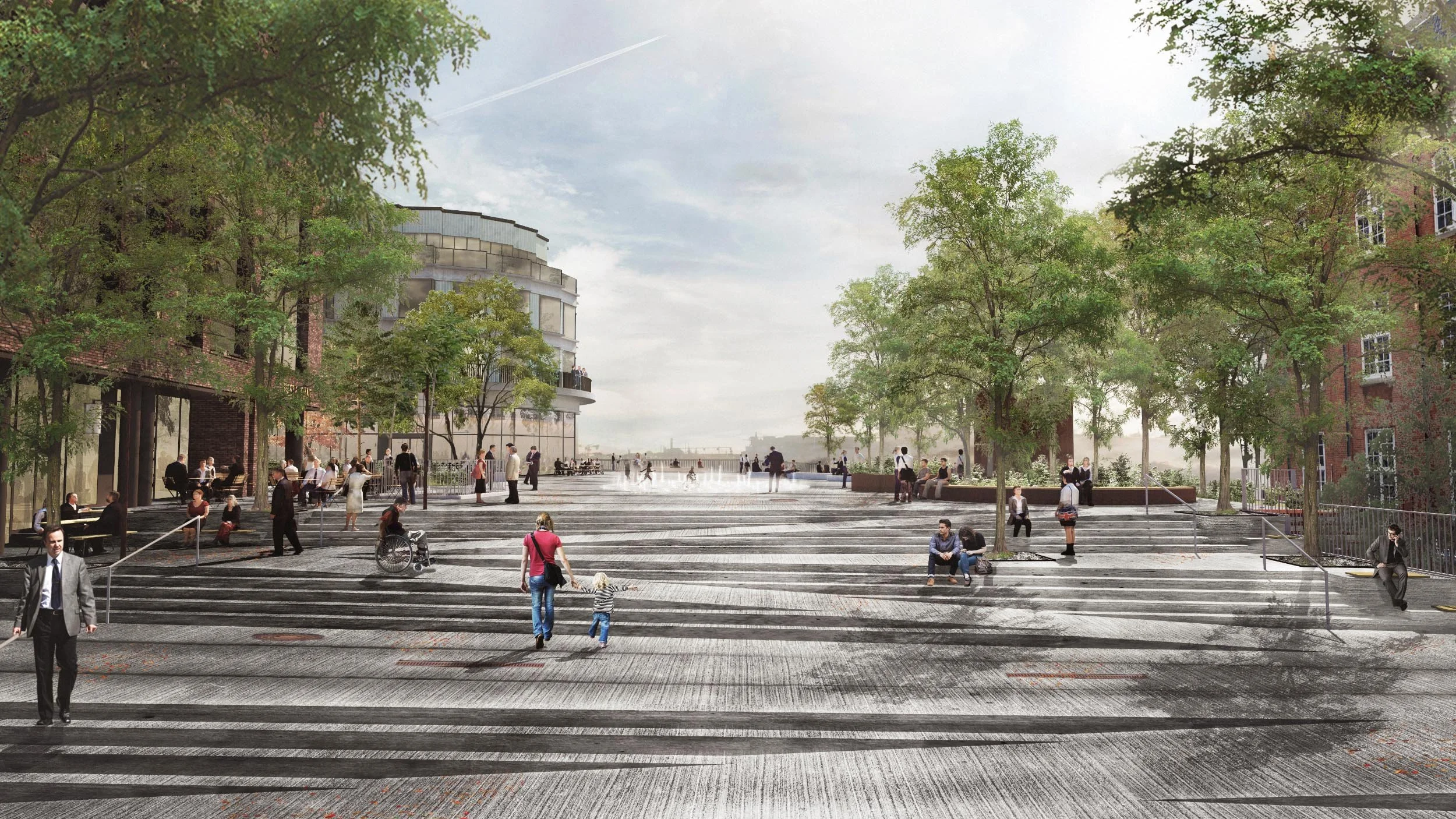
The dynamics of rails, ties, and switches are reflected in the plaza’s patterned concrete paving. Just as plants naturally take root between train tracks, the plaza’s green pockets settle like deposits between vertical elements of concrete, hardwood, or steel. These serve as public seating, edges, and boundaries between areas.
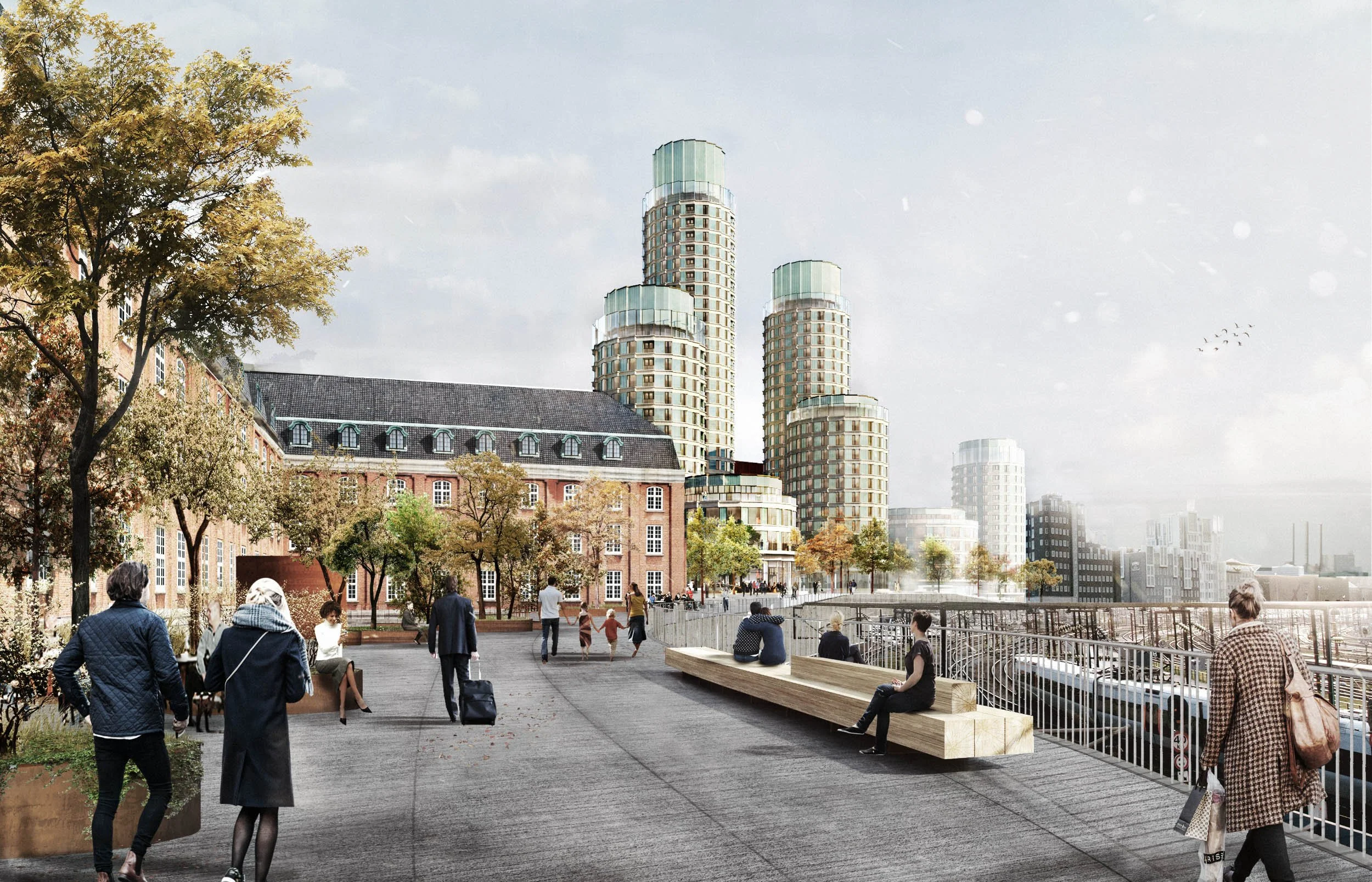
The public realm runs like a lifeline through the area, connecting Central Station with the large headquarters buildings along the waterfront.
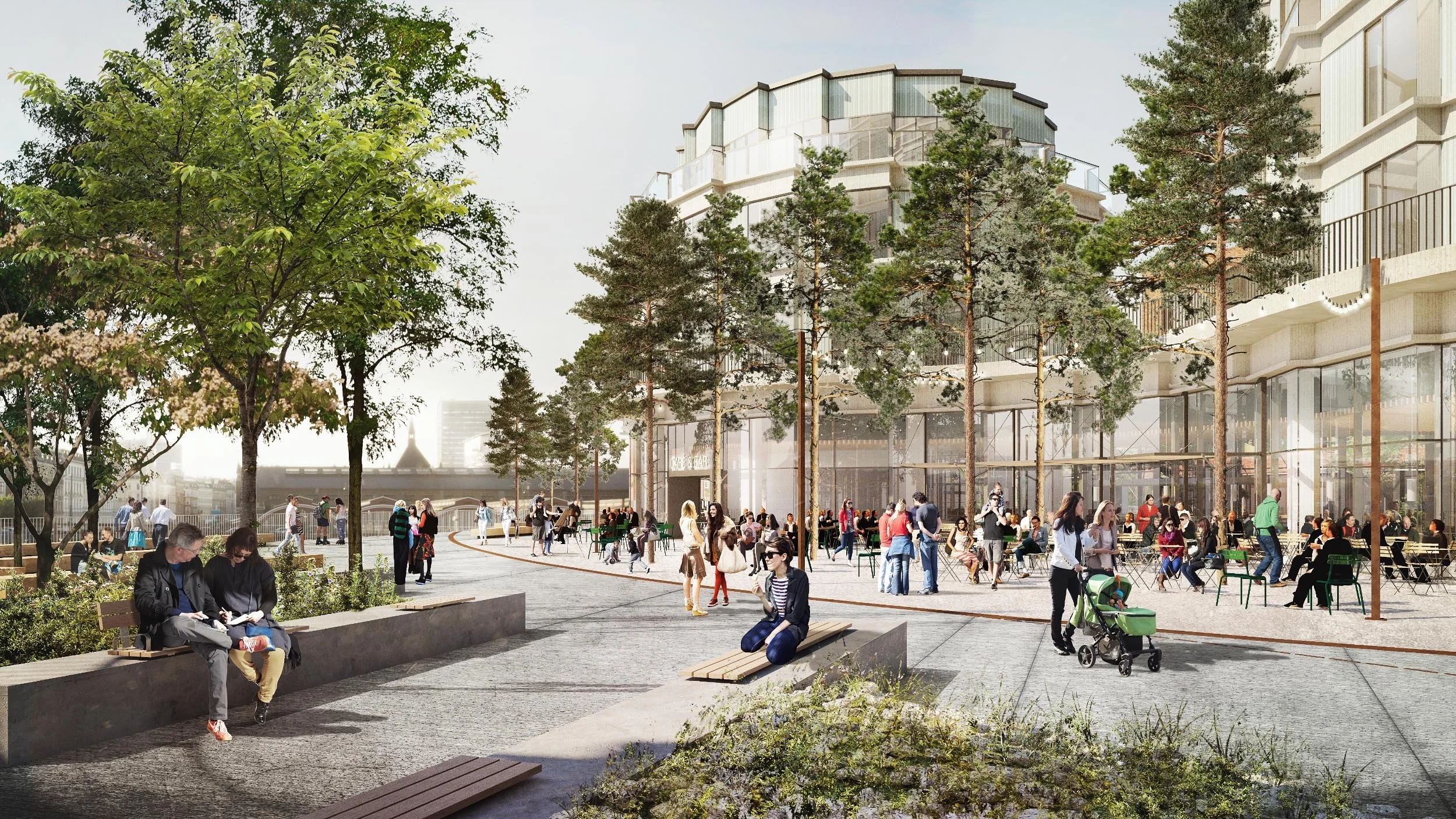
Different zones for rest and relaxation.
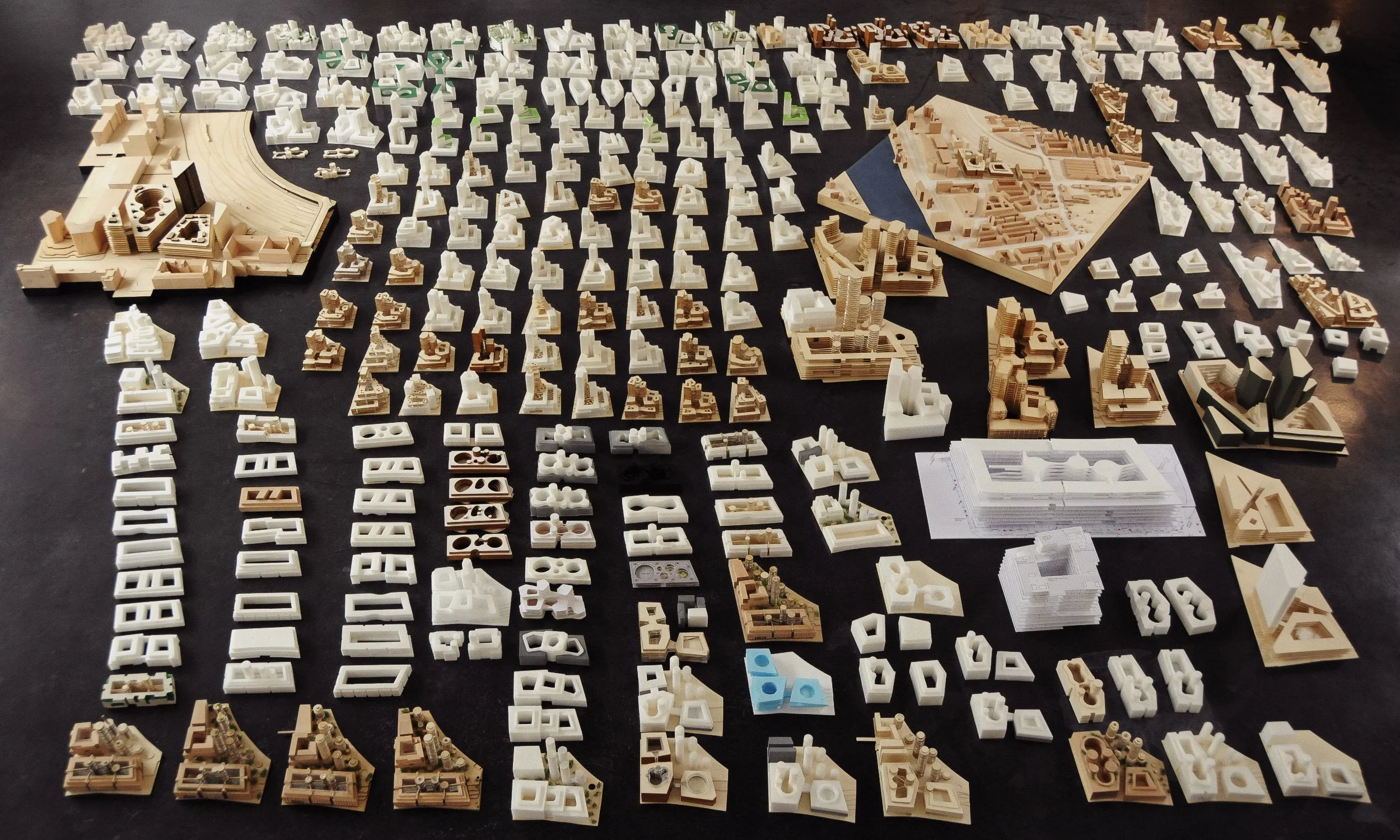
Shown here are the many models built during the process of finding the right concept for the master plan and Danske Bank’s headquarters.
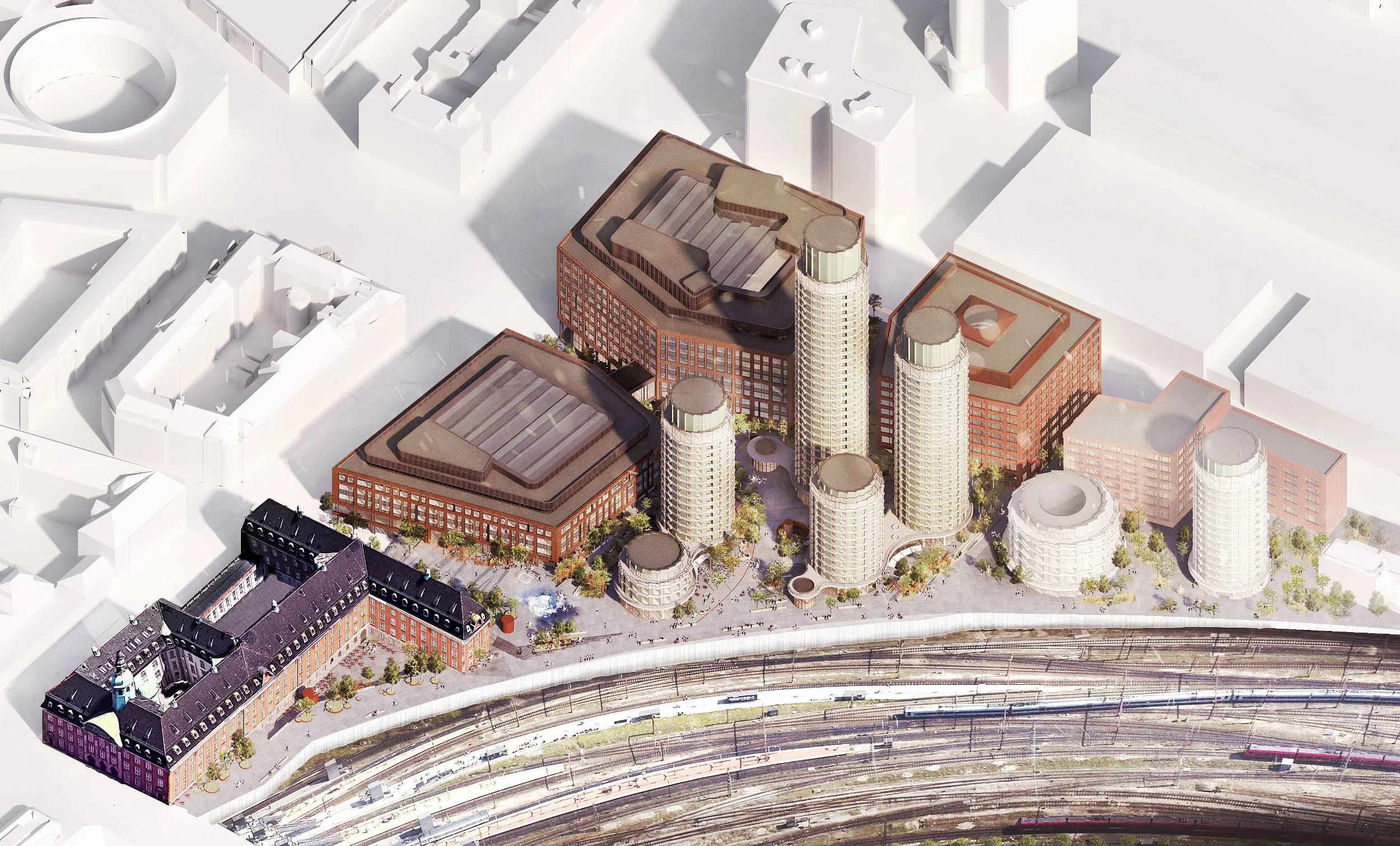
The large west-facing plaza is an extraordinary place—a lively, man-made landscape that follows the rhythm of the rail yard. It is one of the few places in the city with a long, open view to the west, where you can see the horizon and follow the sun all the way to sunset.