
The Circus Building
Type
Restoration, modernization, and interior design
Façade and signage
Vestibule & entrance hall
Foyers
Bars
Staircases
Restrooms
Adress
Jernbanegade 8, København, Danmark
Area
700 m²
Client
Balder A/S og Wallmans
Authority
Slots- og Kulturstyrelsen
Design Consultant for the Verner Panton Collection
Verner Panton Design AG / Carin Panton von Halem
Recreating Verner Panton’s colours
Verner Panton Design AG
kt.COLOR
Furniture design
Verner Panton Design AG
Engineer
Norconsult
Color Archaeologist
Københavns Konservator
Stone Restoration Specialist
Akantus Stenkonservering
Lighting Consultant
Lightscapes ApS
Year
2025
Awards
2026 Copenhagen Building Award
2026 Copenhagen Building Award, Audience Award
Videographer
Adam Morris Philp
Photographer
Adam Mørk
The Circus Building, built in 1886, is a listed building with great cultural and historical significance for Copenhagen. It’s identity has always been closely linked to circus joy, and entertainment. We have restored this iconic building in close collaboration with the Danish Agency for Culture and Palaces. A key feature of the restoration is the recreation of Verner Panton’s iconic color and light universe, originally designed for the public areas in 1983.
The Circus Building was designed by architect Henrik Vilhelm Brinkopff. Built in 1886 and listed as a heritage building in 1988. In 1983, the grand dome hall, curved corridors, and foyers were given their distinctive colors and interiors by architect Verner Panton.
In our restoration work, the goal has been to honor the building’s cultural and historical significance as a place for entertainment, to preserve its distinctive architecture and unfold its history for future generations. To ensure the building continues to function for many years to come, we have modernized it with the utmost respect for the architectural and atmospheric choices made throughout its history.
”We’ve worked on conserving historic building elements, recreating architectural features that had been lost, and adding new functions and modern comfort to ensure the building can be used for many years to come. The art lies in weaving together the layers of the building’s history into a coherent whole, where all elements resonate despite their different historical origins. I believe we’ve succeeded. The Circus Building now offers both historic depth and modern comfort.”
Signe Baadsgaard
Partner & Architect, Lundgaard & Tranberg
Verner Panton’s universe of color and light comes alive again
A key feature of the restoration is the recreation of Verner Panton’s iconic color and light universe in The Circus Builidng’s public areas. The use of color and lighting is central to the building’s identity, as Panton created a dialogue between light, color, architecture, and function. The original colors, paint types, and gloss levels were rediscovered through color-archaeological studies carried out by the Copenhagen Conservator and recreated in close collaboration with Verner Panton Design AG og kt.COLOR.
As an additional layer, we have designed an interior that meets the client Wallmans’ requirements for functionality, usability, and operations, while also supporting Panton’s architectural and experiential vision for the space. The interior design is based exclusively on Verner Panton’s own furniture, objects, and lamps, all kept in harmony with the colors of the surrounding rooms.
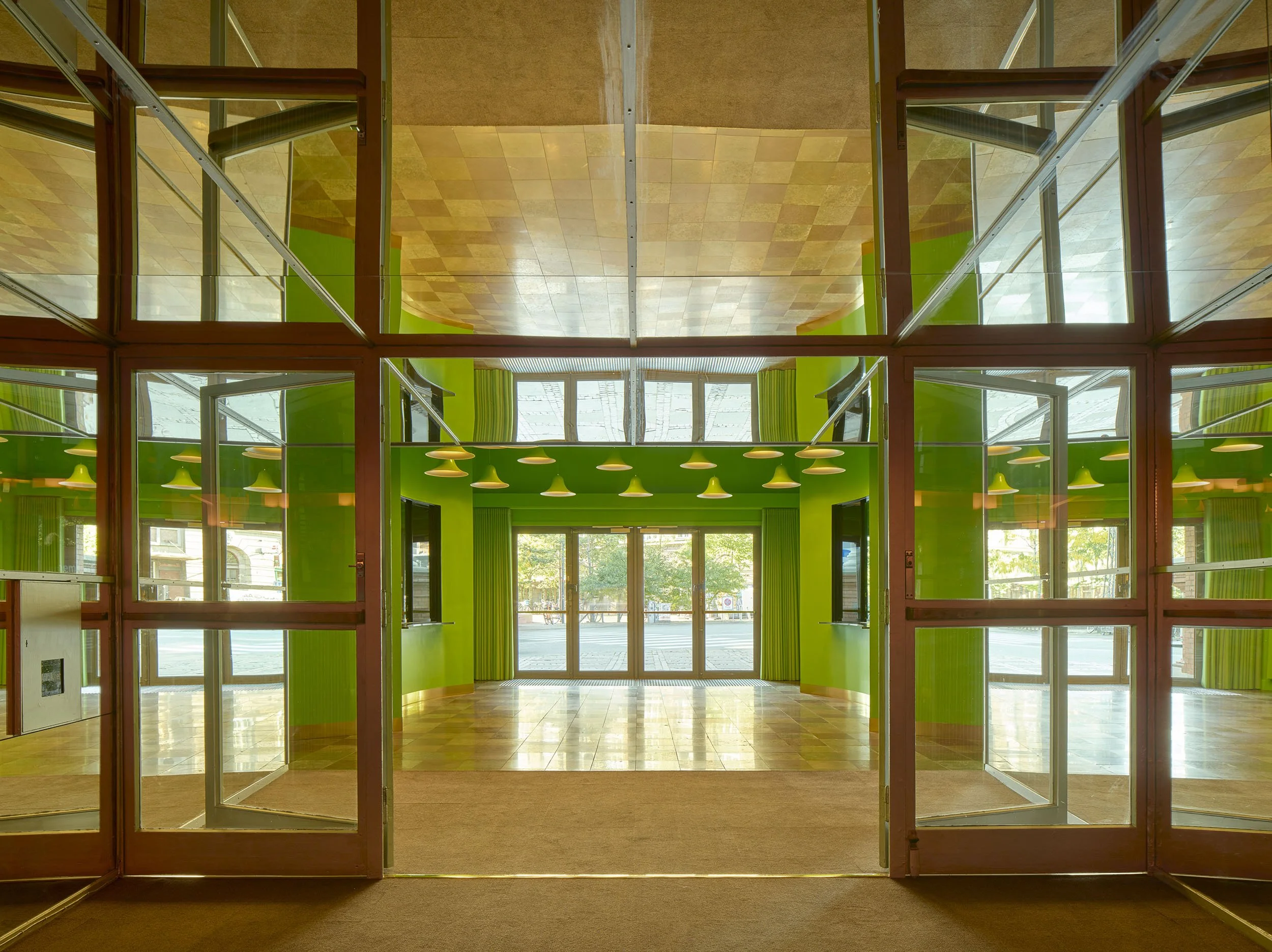
Panton originally colored the vestibule green, but over the years it had turned purple, and his lighting composition with pendant lamps had been removed. The 28 pendants have now been reinstated in their original positions, and the room once again shines in a lively green. We have also reestablished the circular layout of the space. The ticket booths feature concave fronts that form a circular room. It provides more space for the staff than the original rooms did.
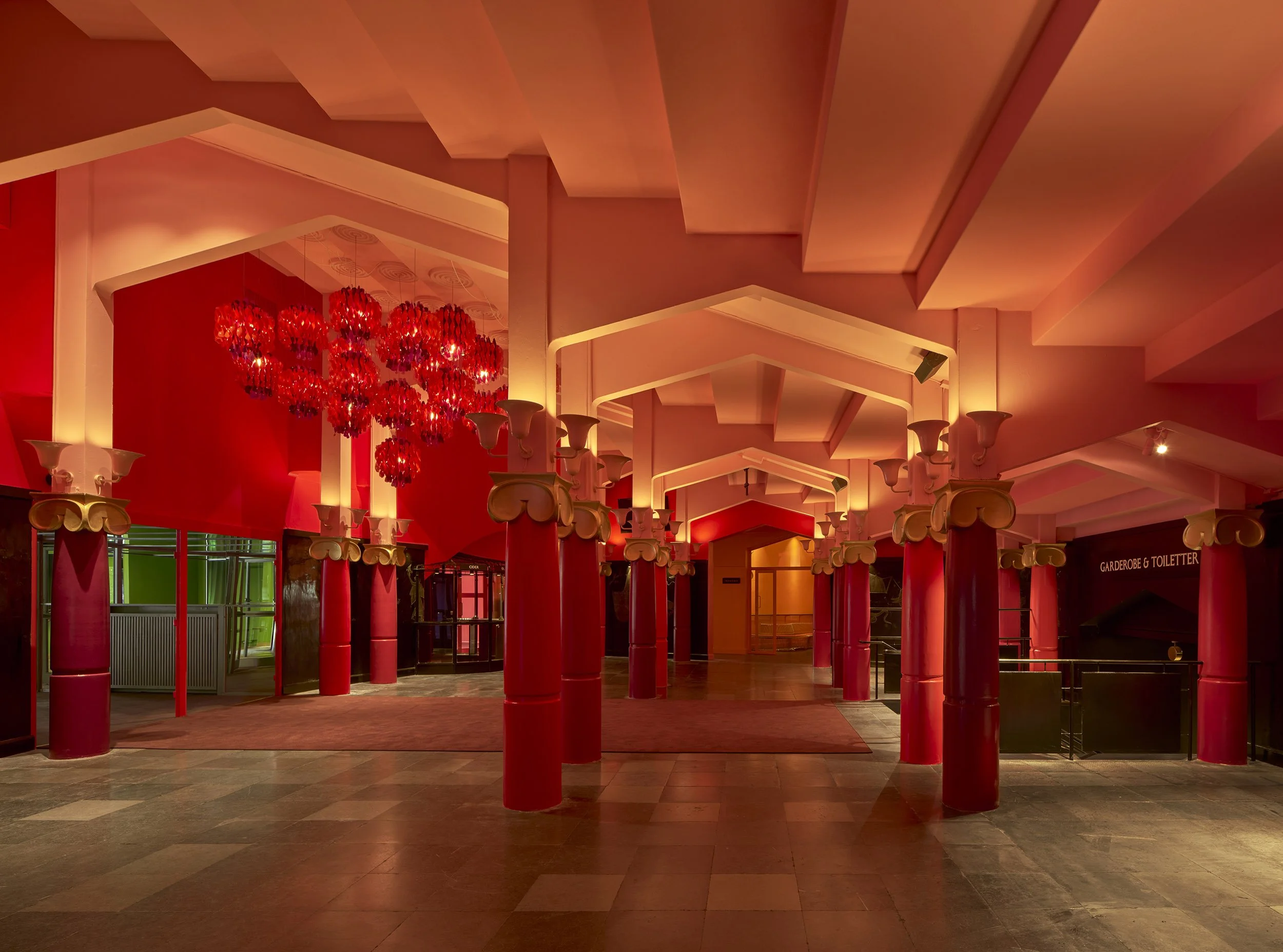
Verner Panton chose red for the central foyer. Since 1984, the shade had gradually changed, becoming colder and muddier over time. We have restored it to a warm, clear red in collaboration with Verner Panton Design AG and ktCOLOR. The beautiful continuous Öland stone floor dates back to the reconstruction in 1914. It had been hidden under carpet for about 20 years but has now been uncovered and carefully restored.

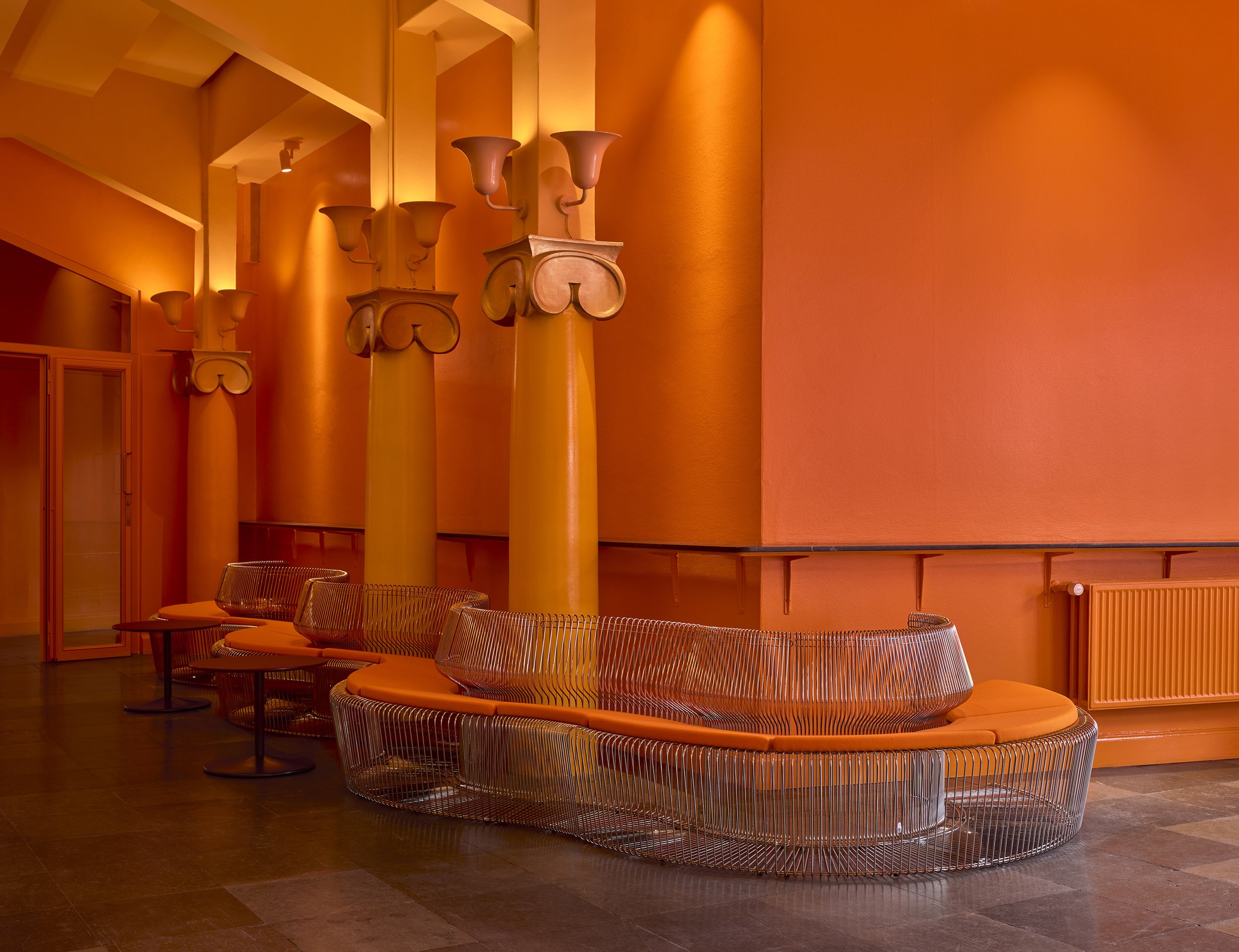
The orange/yellow foyer adjoins the red foyer, a combination rooted in the color wheel, where red and yellow sit side by side. The columns are painted in yellow tones that continue along the progression of the color wheel. The black, glossy bar is a contemporary interpretation of the bars designed by Verner Panton in 1983.
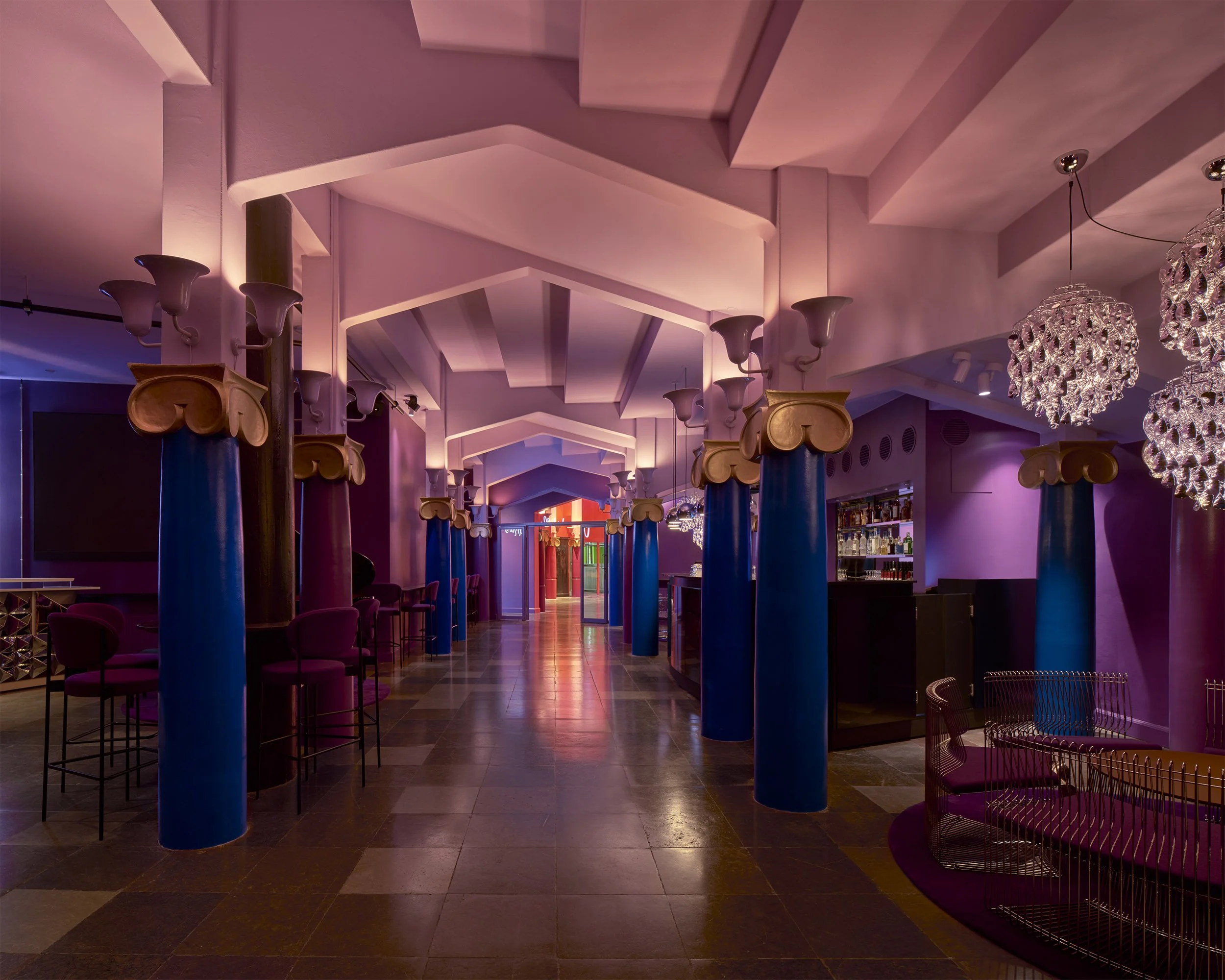
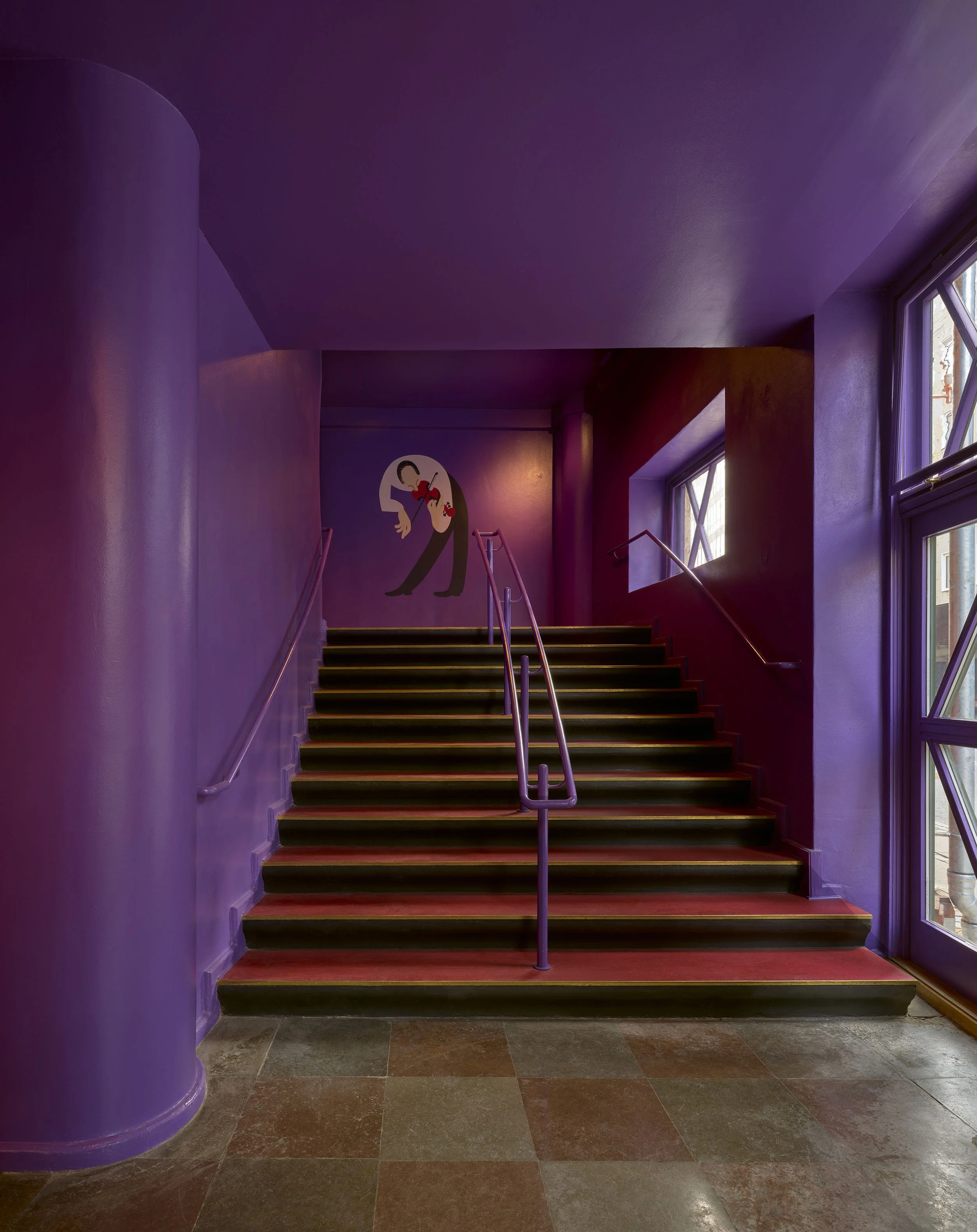
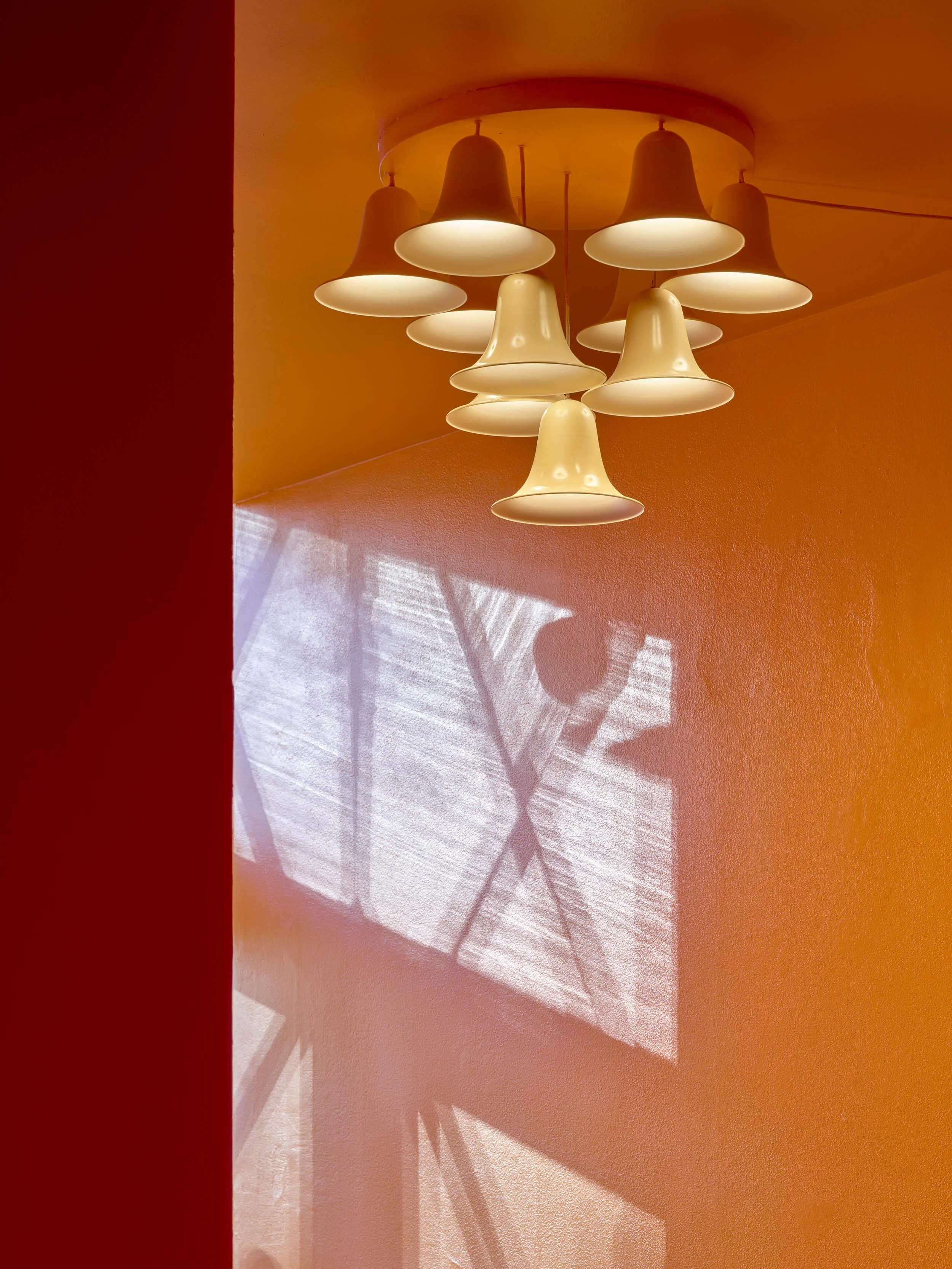
Blue-violet is a secondary color on the color wheel. As in the wheel, the blue-violet and red rooms sit side by side. The lilac foyer’s color palette extends toward blue in the coloration of the columns. The foyer ceilings are painted in a light shade of the room color, serving as reflectors for the upward-facing Panton light fixtures mounted on the columns—originally designed by Verner Panton for Cirkusbygningen. As part of the restoration, the ceilings have been coated with custom-colored acoustic plaster to improve sound quality in the three foyers.
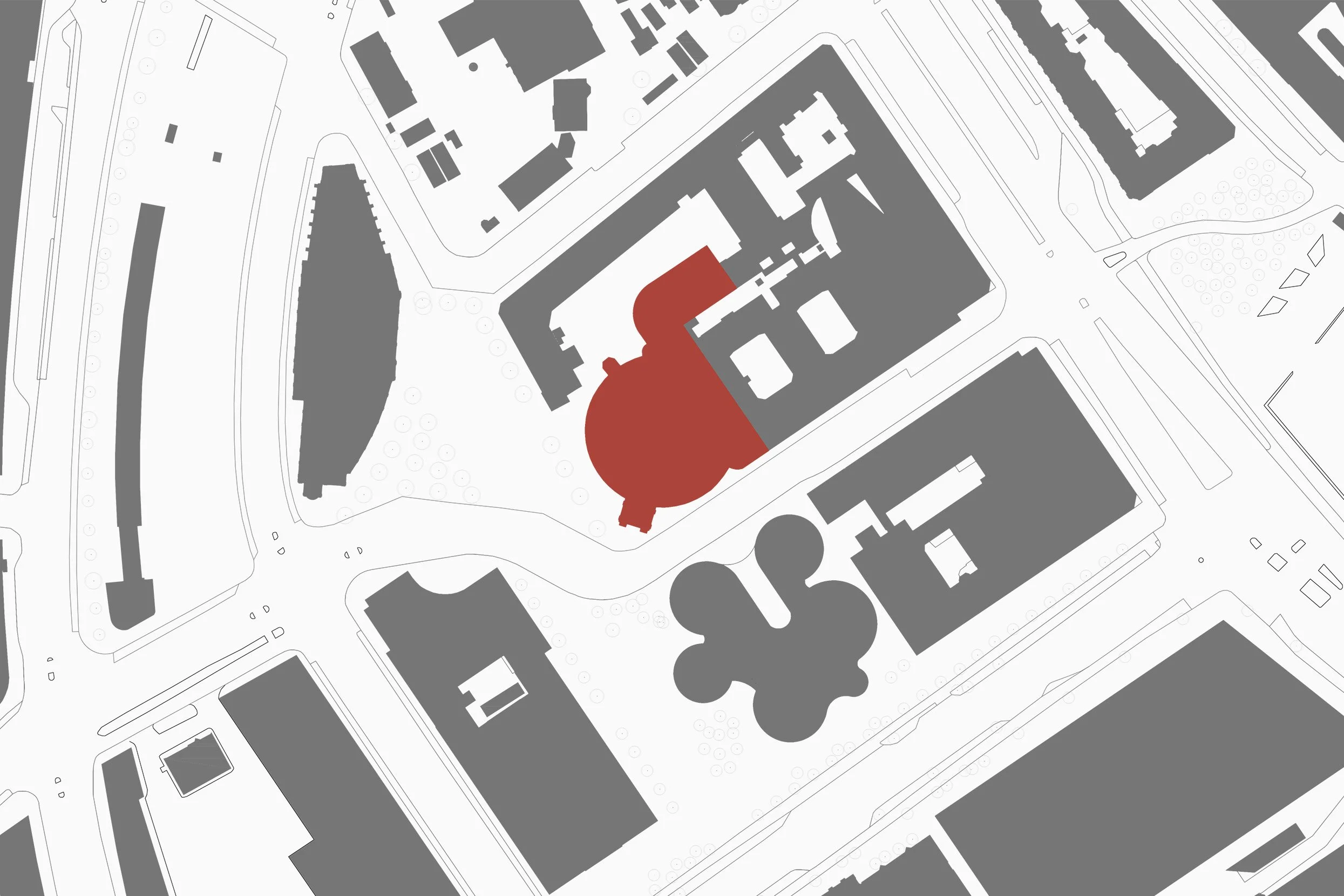
Site plan
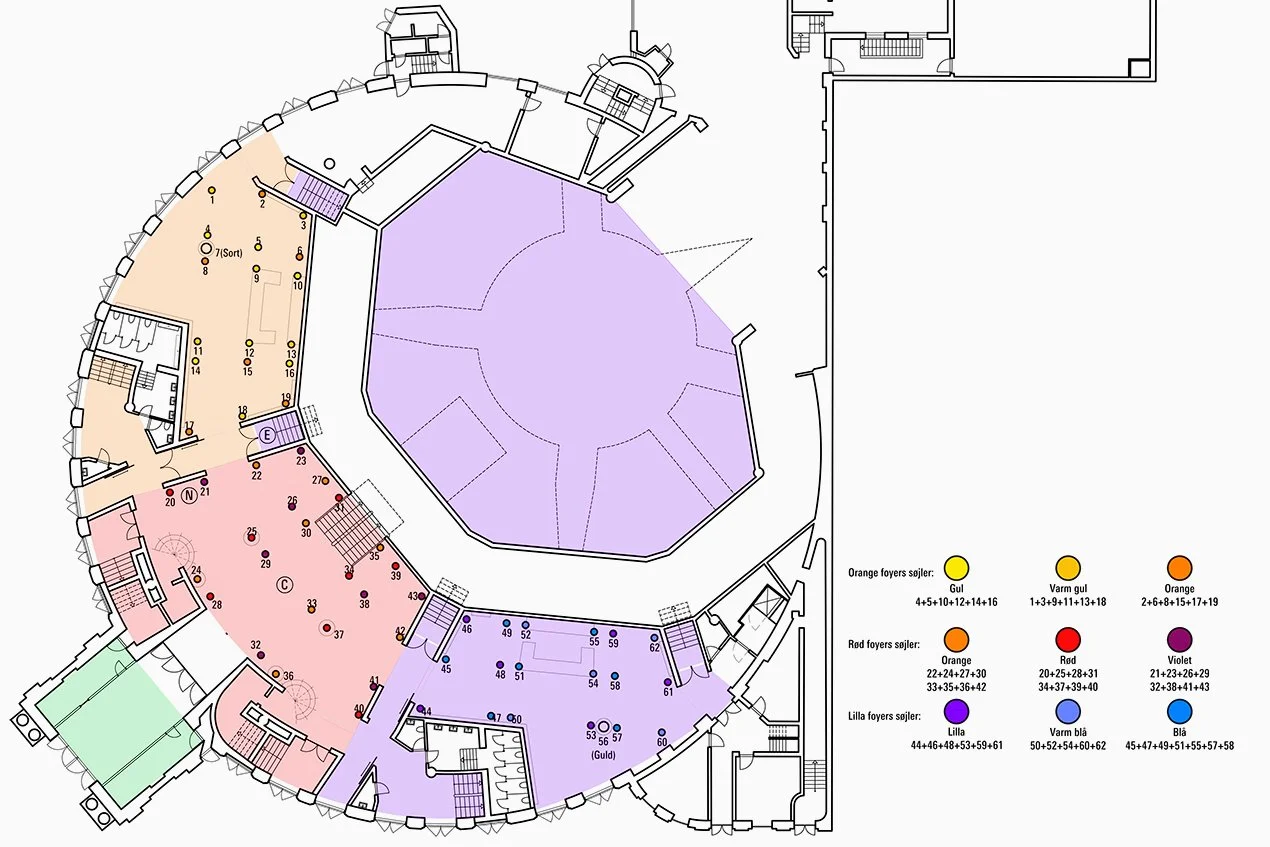
Floor plan showing Verner Panton’s overall color scheme in the vestibule, the three foyers, and the auditorium, as well as the areas included in the color-archaeological survey.

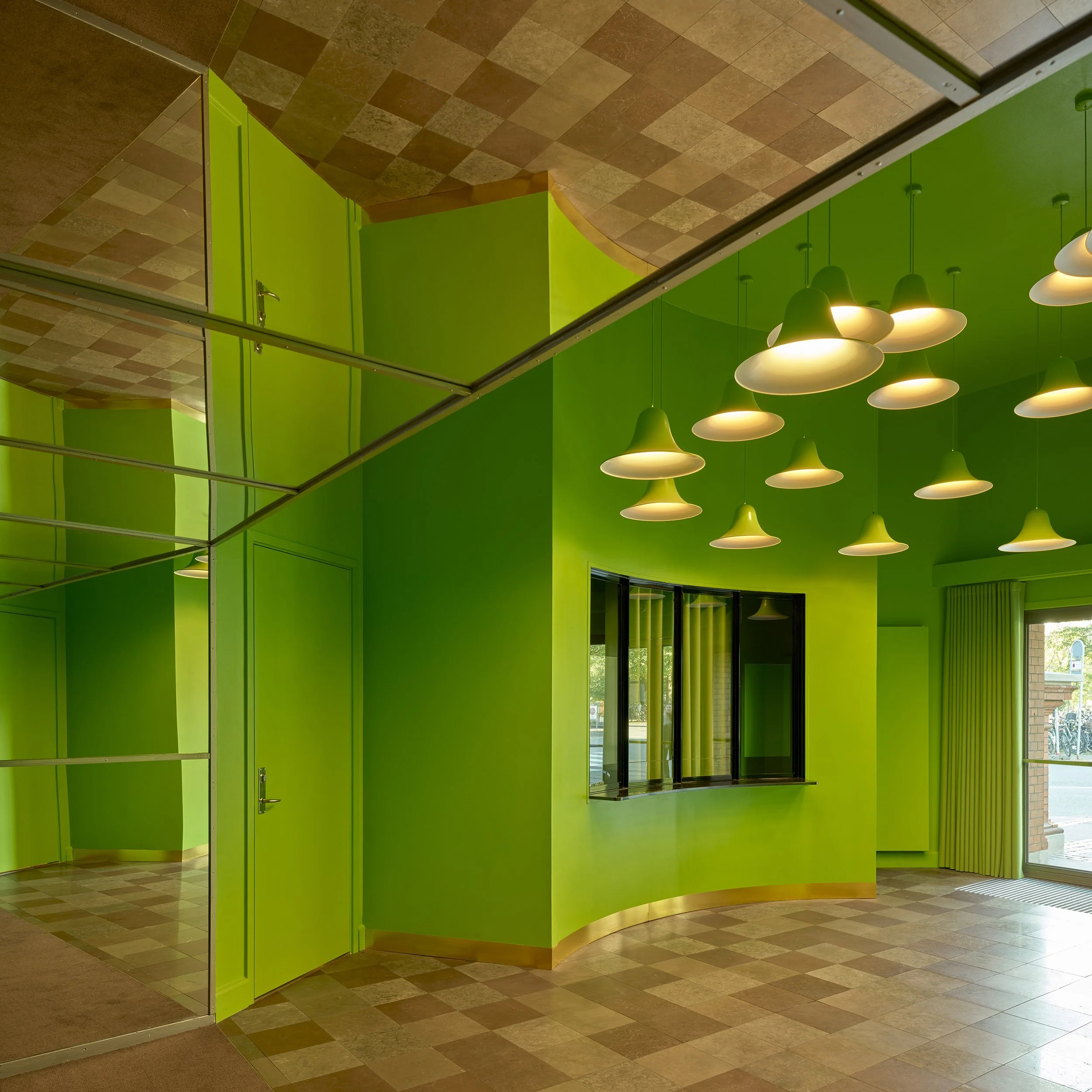
The original mirrored wall cladding in the vestibule between the entrance hall and central foyer has been preserved. The vestibule has also received a new floor in Öland stone, tying it together with the other public areas on the ground floor.
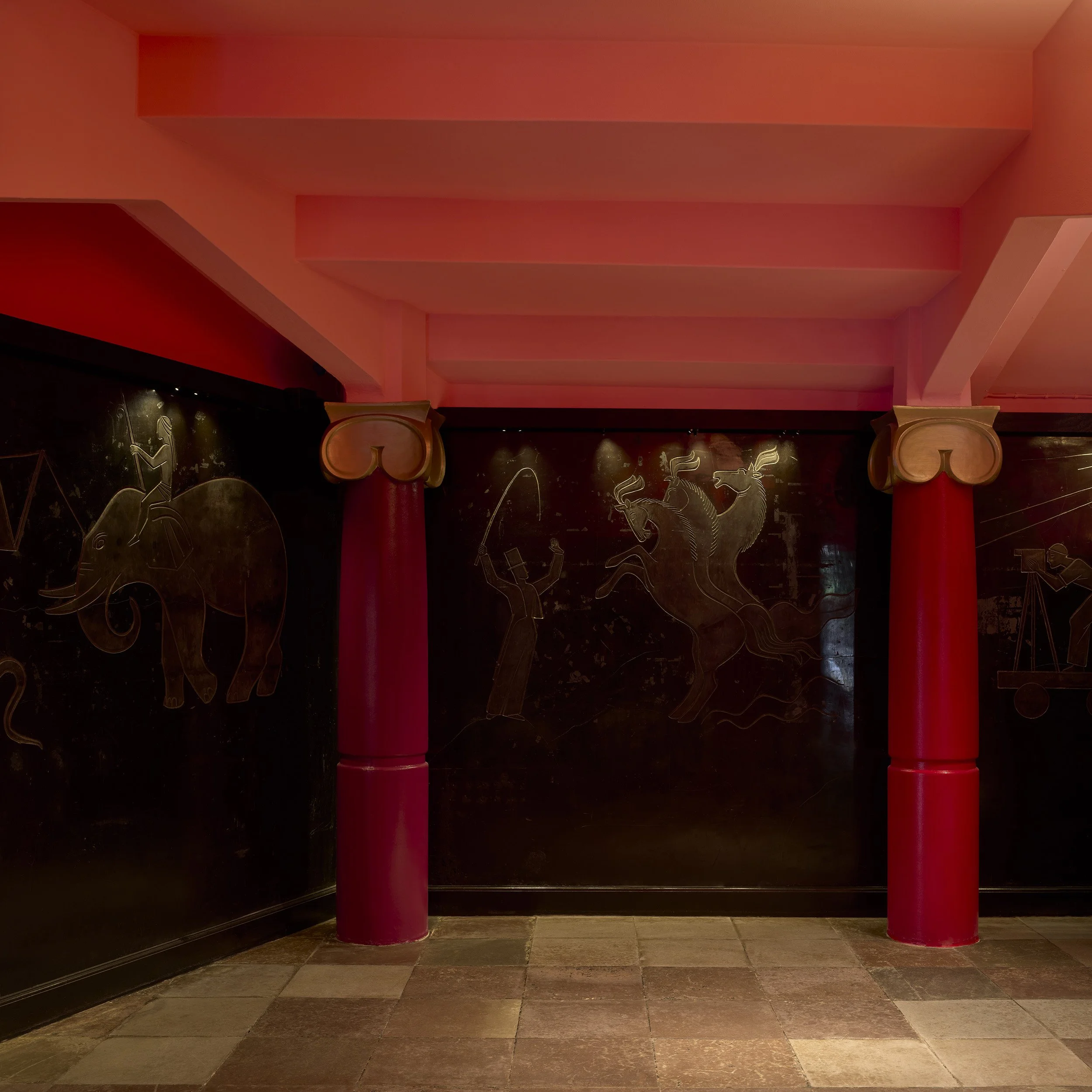
On the walls of the central foyer, there are black stucco marble reliefs. These were created during the 1938 renovation by sculptor Olaf Stæhr-Nielsen and stucco artist Ove H. Svensson, depicting various stylized circus motifs. We have conserved the reliefs to restore the beautiful, simple expression and refined interplay between the glossy surfaces and matte figures.
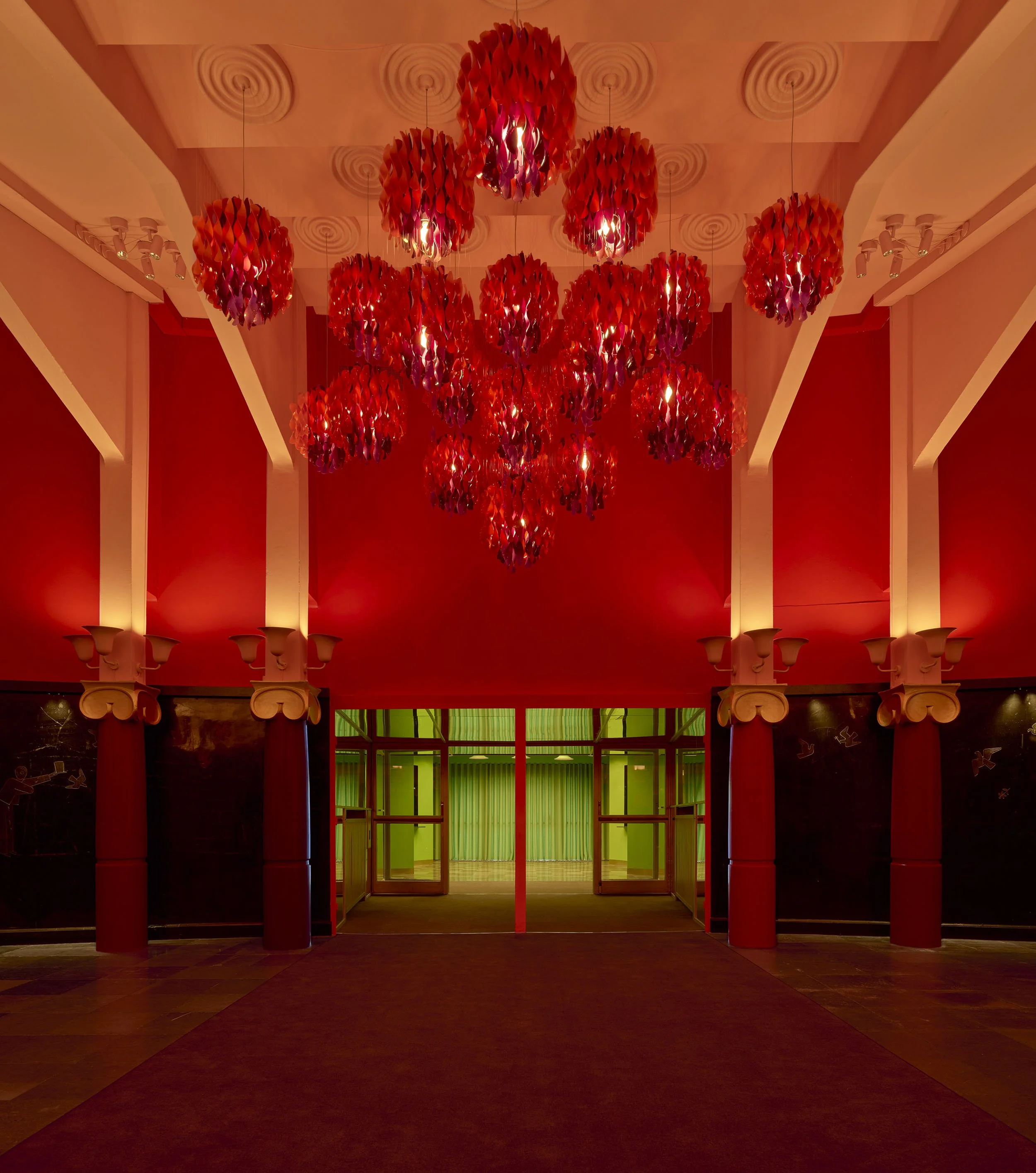
The green entrance vestibule and the red central foyer follow Verner Panton’s original color scheme. The meeting of the complementary colors red and green creates an optimal visual stimulation. The large arrangement of red Spiral chandeliers is part of the new interior design project.
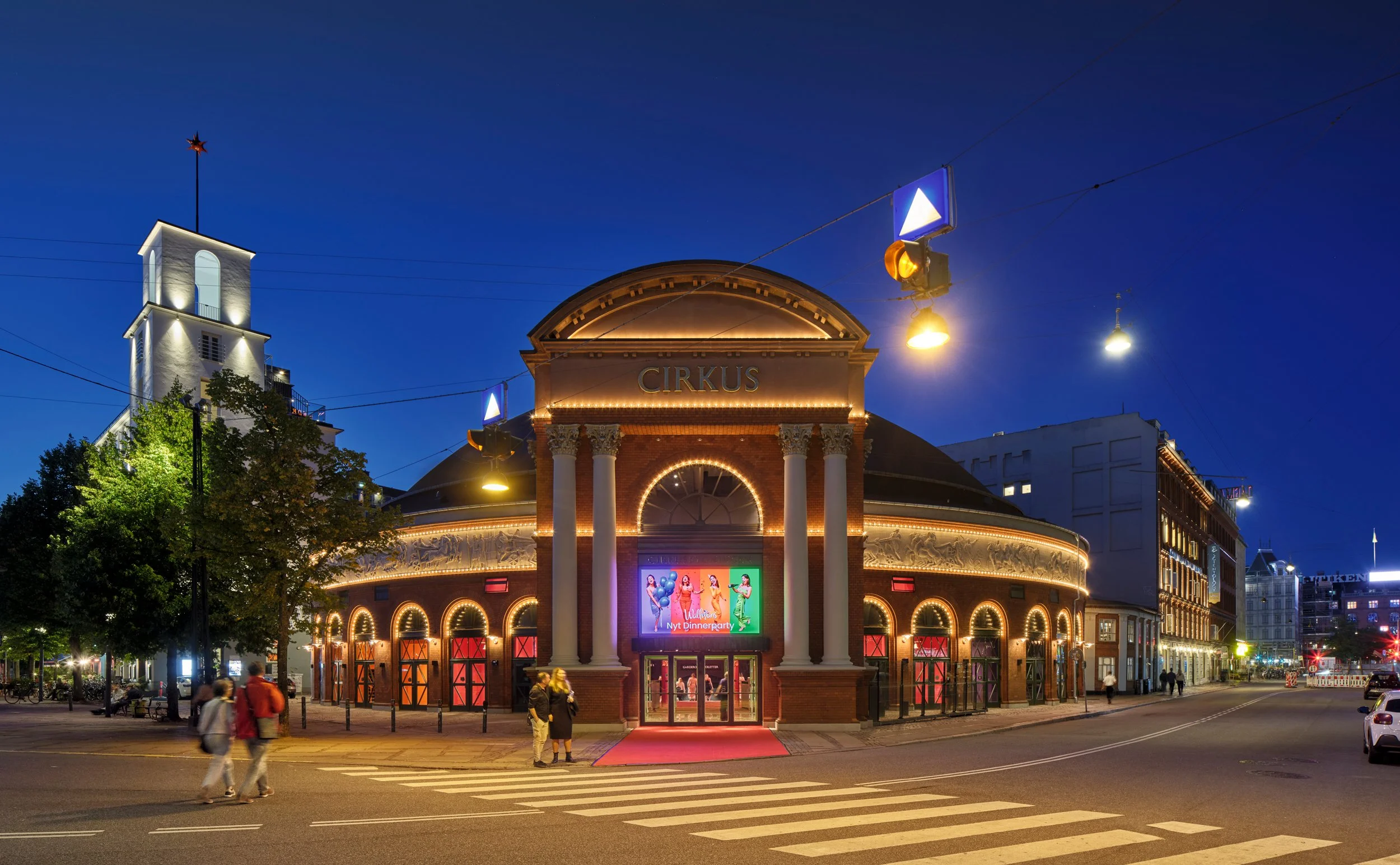
Cirkusbygningen has been restored externally with great respect for its original architectural expression from 1914. The façade sections have been painted in a deep portal green, and some of the shaped bricks in the red glazed masonry have been replaced. The distinctive horse-racing frieze encircling the building has been refurbished. Gutters and downspouts have been replaced, and the original domed roof has been sealed and cleaned. The arched window above the entrance has been reinstated, and the entrance doors from 1938 have been restored.
The Circus Building Through the Years:
1886
Cirkusbygningen is constructed between 1885-1886 and inaugurated on May 8, 1886. It was designed by architect Henrik Vilhelm Brinkopff, and the Alexander frieze was created by sculptor Frederik Hammeleff.
1914
On March 7, Cirkusbygningen burns down. Only the outer walls of the rotunda, including the Alexander frieze, and the entrance remain. The building is rebuilt by architect Holger Jacobsen and engineer Cock-Clausen.
1938
The building undergoes a renovation by architect Ernst Kühn. It is used for circus performances in the summer and as a cinema during the winter, operating under the name World Cinema.
1984
The building is restored by the City Architect’s Directorate and Tivoli’s architectural studios. The grand dome hall, curved corridors, and foyers are designed, colored, and lit by architect Verner Panton.
1988
Cirkusbygningen, including the side and rear buildings, is officially listed as a protected heritage site.
2003
Wallmans takes over the use of Cirkusbygningen for dinner shows. Seats in the main hall are removed, podiums are built on top of the tiered seating, and ticket offices in the vestibule as well as bars in the foyers are altered.